
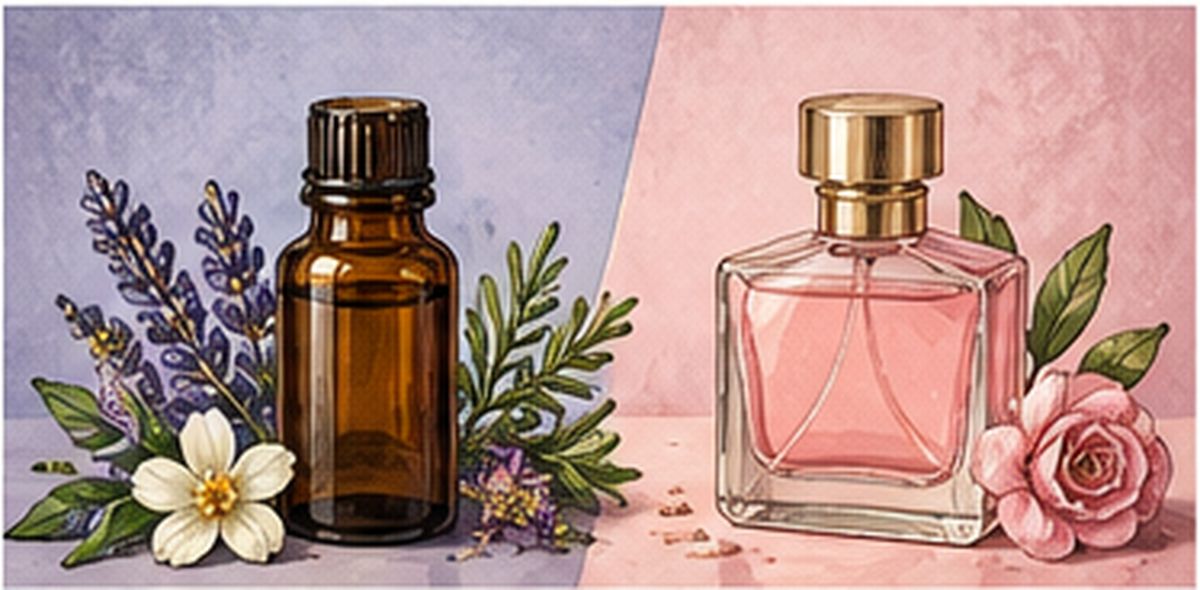
Essential oils and fragrance oils can both give soap a scent, but they are not interchangeable in either purpose or behaviour.
Essential oils are discussed as plant-derived aromatic materials with properties beyond scent. Fragrance oils are primarily used for fragrance. Fragrance oils can provide a stronger and longer-lasting smell, while essential-oil fragrances may not last as long.
There is another distinction that matters enormously to the soap maker: fragrance can change how the soap behaves while you are working with it.
Why fragrance can affect your design
Some floral essential oils can make soap thicken extremely quickly. Certain fragrance oils can do the same. That may be manageable once you have experience, but it can be frustrating when you are trying to create a detailed swirl or artistic design.
A beginner can interpret this sudden thickening as a failed formulation when the real problem is that the chosen fragrance gave very little working time.
For early practice, I prefer better-behaved essential oils such as basil, eucalyptus, lemon and lemongrass. The important principle is to first learn how your soap normally behaves and only then move to scents that demand faster handling.
Is fragrance necessary?
No. Fragrance is not an essential part of soap.
A plain bar without fragrance, colour, clay, fruit or herbs is still soap. Fragrance-free products can also be a deliberate choice for people who react to fragrances or essential oils. So when choosing between essential oil, fragrance oil and no fragrance at all, do not think only about smell. Consider how long you want the scent to last, why you are adding it, and how the material affects the behaviour of the soap during making.