
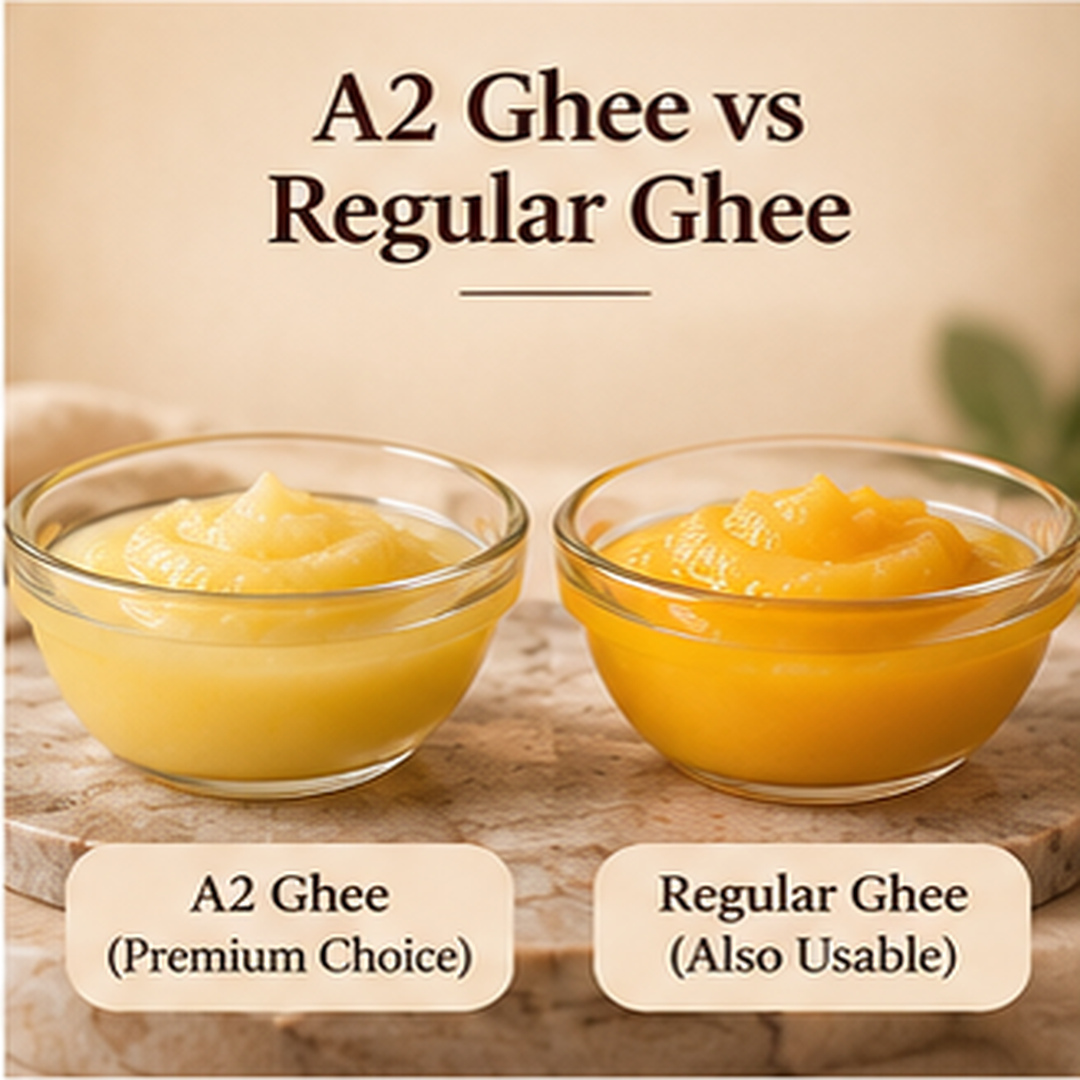
A2 cow ghee is not compulsory for Shat Dhota Ghrita.
I prefer good-quality A2 cow ghee when the intention is to position the finished product as a premium preparation, but regular good-quality ghee can also be used.
Why Is A2 Ghee Often Preferred?
A2 cow ghee was discussed as a premium raw-material choice.
When somebody intends to create a higher-end product and charge accordingly, I prefer beginning with a higher-quality ghee.
The reasoning is straightforward: premium positioning should be supported by the quality of the raw materials.
Does Regular Ghee Still Work?
Yes.
In terms of achieving the washed, creamy texture, regular ghee can also work.
The washing process is still able to transform the texture from grainy and greasy toward a softer, smoother ghrita.
So the product does not fail simply because the label does not say A2.
When Might Regular Ghee Make More Sense?
Cost can become important when working with:
- price-sensitive customers;
- larger quantities;
- bulk orders.
In those situations, a good regular ghee may be a practical option.
Not every product needs the same raw-material positioning.
Is More Expensive Always Better?
The more useful question is whether the quality matches the way the product is being positioned.
If you are presenting something as a premium product and charging a higher price, I prefer using a better-quality raw material.
If affordability is the priority, regular ghee remains an option.
What Should Matter Most?
Do not become so focused on one label that you forget the basic requirement.
Start with good ghee.
A2 may support premium positioning, but it is not the only ghee from which a washed ghrita can be created.
Key Takeaway
A2 ghee is a premium preference, not an absolute requirement. Regular good-quality ghee can also be used successfully. Choose the raw material according to the quality level and positioning you want for the finished product.