SCI, SLSA and SLS may sound similar, but they should not be treated as interchangeable ingredients.
In the shampoo-bar workshop, SCI and SLSA are the surfactants selected for mild solid shampoo cleansing, while SLS is specifically distinguished as the harsher sulfate ingredient.
Understanding the abbreviations is important because SLSA and SLS can be particularly easy to confuse when purchasing ingredients.
What Is SCI?
SCI stands for Sodium Cocoyl Isethionate.
It is used as a main cleansing and lathering surfactant in the shampoo bars.
It is discussed as mild and capable of creating substantial lather without the same drying character associated in the workshop with sulfate surfactants.
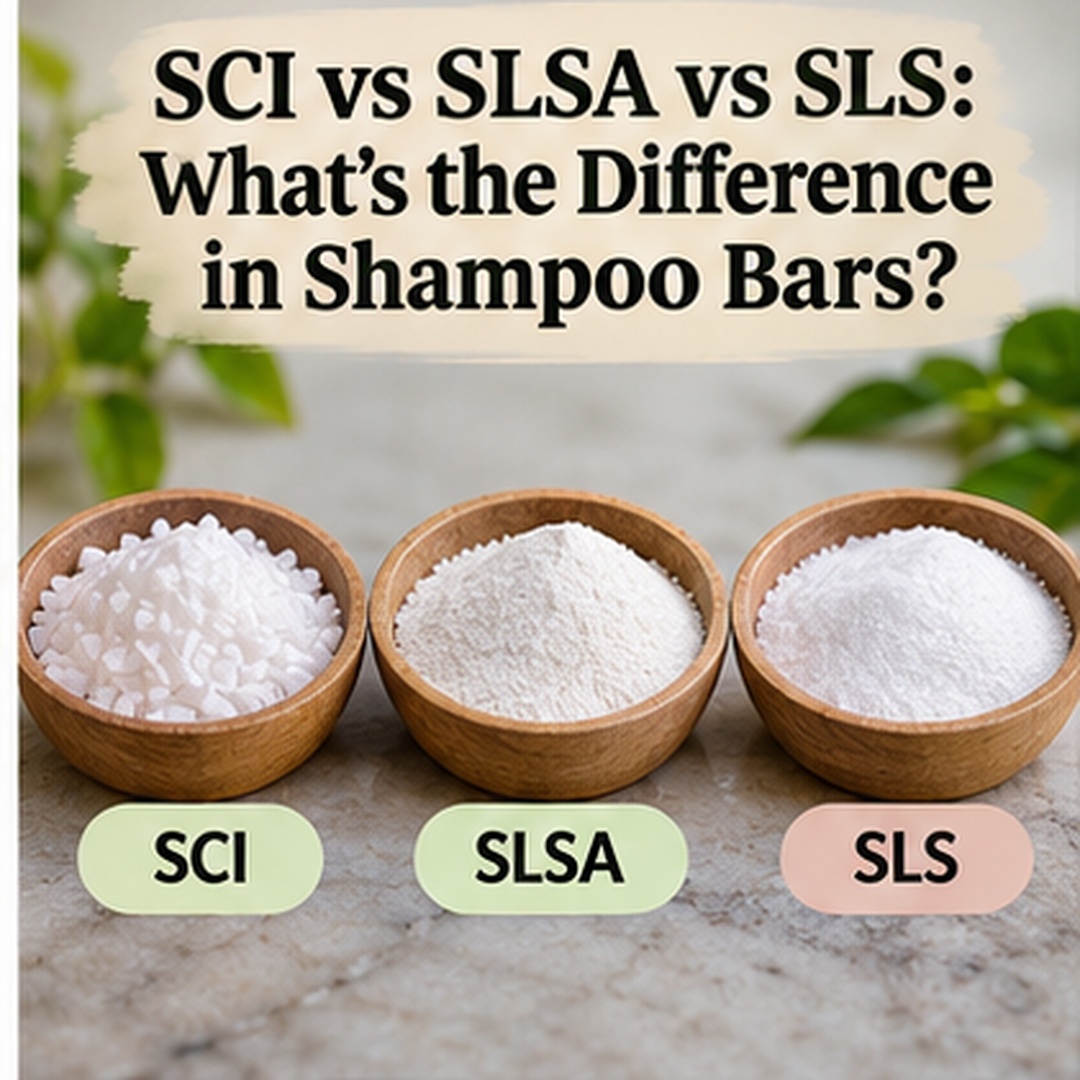
SCI can be supplied in different physical forms, including powder and small needle-like pieces.
The needle form can remain visible in a handmade bar and create a textured appearance.
What Is SLSA?
SLSA stands for Sodium Lauryl Sulfoacetate.
It is also used as a mild cleansing surfactant.
One of its useful characteristics is the type of lather it produces.
The workshop distinguishes between creamy foam and bubbly or fluffy foam, with SLSA particularly associated with the fluffy bubbles consumers often enjoy in shampoo.
Is SLSA the Same as SLS?
No.
This is the most important distinction.
SLSA is not SLS.
SLS stands for Sodium Lauryl Sulfate.
In the workshop, SLS is described as much harsher and more drying on hair.
Because SLS and SLSA can both be supplied as powders and their names are very similar, the ingredient can easily be misunderstood when ordering from a vendor.
Always check the full ingredient name.
Do not assume that an extra letter in an abbreviation is unimportant.
SCI vs SLSA: Do They Do the Same Job?
They overlap because both contribute cleansing and lather, but they are discussed as giving somewhat different lather characteristics.
SCI is used as a primary cleanser and provides substantial lather.
SLSA contributes particularly fluffy, bubbly foam.
This is useful because a cleansing product does not have to produce dramatic bubbles in order to cleanse, but consumers often enjoy visible foam.
Lather therefore contributes not only to cleansing performance but also to the sensory experience of using the shampoo bar.
Why This Distinction Matters
When evaluating or purchasing ingredients for shampoo bars, names matter.
Three abbreviations can look almost identical while referring to materials that are treated very differently in the formulation.
The key distinction to remember is:
SCI and SLSA are the mild shampoo-bar surfactants discussed here. SLS should not be mistaken for SLSA simply because the names are similar.
Related Articles
Shampoo Bar vs Soap Bar: What’s the Difference?
Why Does pH Matter in a Shampoo Bar?