
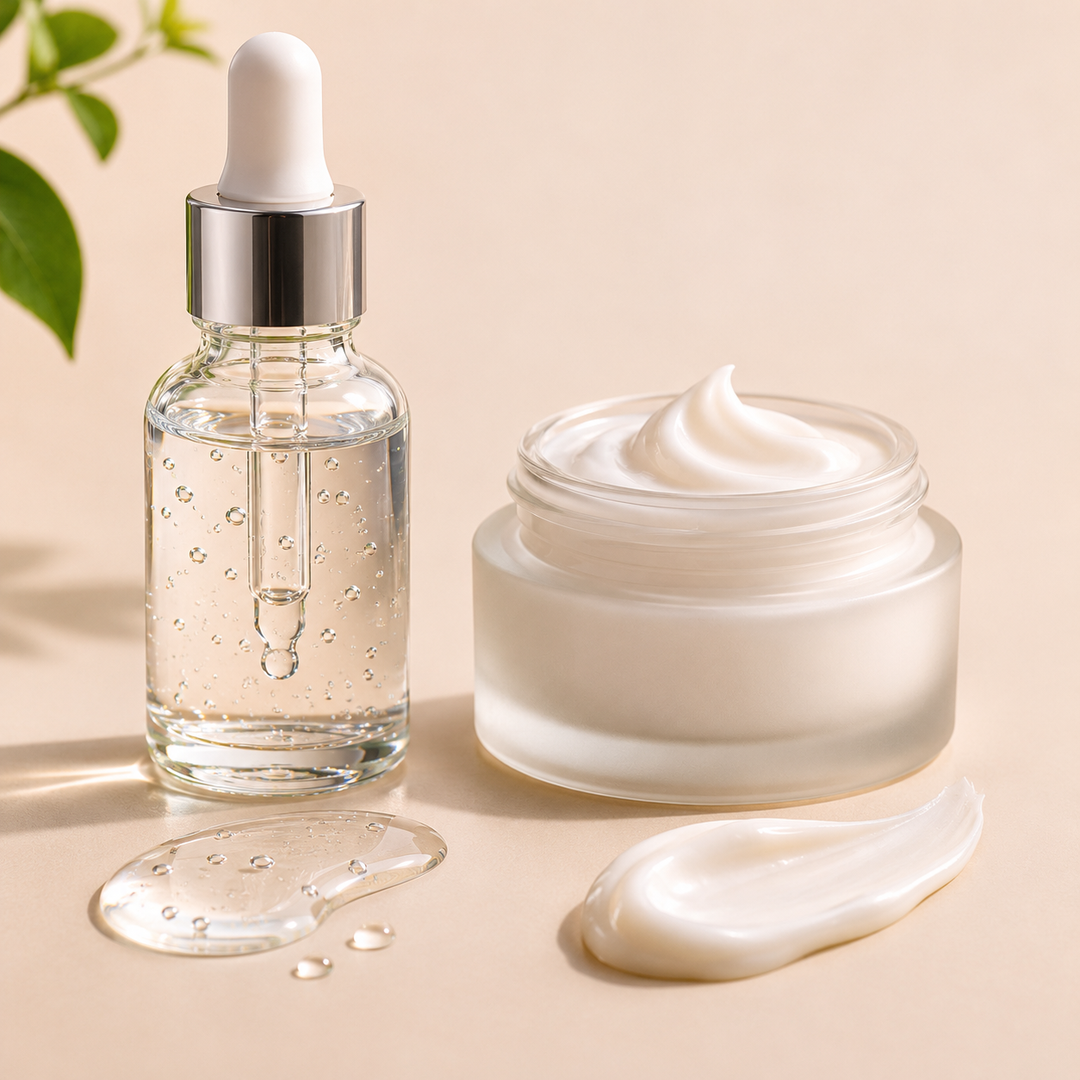
A face serum and a moisturizer are both skincare products, but their primary purposes are different. A moisturizer is generally designed to keep the skin hydrated, soft and comfortable, while a face serum is developed to address specific concerns such as acne, pigmentation, dullness, dryness or signs of ageing.
The important distinction is not simply the texture of the product. It is what the product is intended to do.
What Does a Moisturiser Do?
The main purpose of an ordinary moisturizer is to maintain moisture in the skin.
Dry skin often looks dull and may show fine lines more prominently. Keeping the skin moisturised helps maintain a softer and more comfortable appearance.
Moisturisers are generally used in larger quantities than serums because they are intended to be spread and massaged over the skin.
However, moisturisers are not limited to hydration alone. Specialised treatment creams can also contain active ingredients selected for particular skin concerns.
What Makes a Face Serum Different?
A face serum usually contains concentrated active ingredients selected for a specific purpose.
For example, a serum may contain ingredients intended to help with acne, improve the appearance of pigmentation, support hydration or address fine lines.
Many facial serums are water-based. They contain active ingredients in a lightweight base and are designed to spread easily without the heavy feeling associated with some creams.
This is why serums are often described as targeted skincare products.
The focus is on delivering ingredients selected for a particular concern.
Why Are Serums Usually Lighter Than Creams?
A conventional cream or lotion often contains oils and ingredients that create a richer texture.
A water-based serum generally contains much less oil, or none at all.
As a result, it may feel almost like water or have a slightly thicker consistency.
This lightweight texture is useful for people who dislike greasy or heavy products.
However, a serum does not have to be completely watery. Some serums are intentionally made slightly thicker to improve the application experience.
Can a Serum Also Moisturise the Skin?
Yes.
Not every serum is intended for acne or pigmentation.
A hydrating serum may contain ingredients such as hyaluronic acid, allantoin or D-panthenol, which are selected for their moisturising properties.
This means that hydration is not exclusive to creams.
Likewise, specialised creams can contain ingredients for concerns beyond dryness.
Which Should You Choose?
If your main concern is maintaining skin moisture, a moisturising product may be your primary consideration.
If you want to address a particular concern, such as acne marks or fine lines, a serum developed for that purpose may be more relevant.
The most useful approach is to understand what the product does rather than choosing it only because it is called a serum or a cream.
A serum is not automatically better than a moisturizer. The right product is the one whose purpose matches your skin’s needs.
Related Topics
- High vs. Low Molecular Weight Hyaluronic Acid: What’s the Difference?
- How Do You Choose the Right Serum for Your Skin Type?
- Why Do Some Face Serums Feel Sticky?
- Why Are Face Serums Usually Sold in Small Bottles?

