Facial Peels
Learn about facial peels through our educational guides covering glycolic, lactic, salicylic, PHA and yellow peels, along with skin suitability, peel strength, treatment frequency, visible peeling, neutralization and aftercare.
Whether you are trying to choose the right peel for a particular skin concern or understand what to expect before and after treatment, start with our complete Facial Peels Guide and then explore the individual topics below.

Complete Facial Peels Guide
Understand the different types of facial peels, how they vary in strength, which skin concerns they are suited for and what to expect during and after a peel treatment.
Glycolic Peel vs Lactic Peel: What’s the Difference?
Glycolic and lactic peels are used for many similar surface concerns, but they differ in strength and treatment character.
Learn how they compare for tanning, mild pigmentation, fresh acne marks and skin glow.
Which Facial Peel Is Best for Oily and Acne-Prone Skin?
Different peels are better suited to different skin conditions.
Learn why salicylic acid peel is particularly associated with oily and acne-prone skin and why the treatment may sometimes be focused only on affected areas.
Which Facial Peel Is Best for Sensitive Skin?
Sensitive skin generally requires a milder approach to facial peeling.
Learn why PHA peel is discussed as a gentler option and how it differs from stronger glycolic, lactic and salicylic peels.
Can You Use Serum After a Facial Peel?
Freshly peeled skin may temporarily become more sensitive.
Learn why serum is usually paused after a peel, what can be used during the recovery period and when serum can be introduced again.
Why Is a Neutralizer Used After a Facial Peel?
Many acidic facial peels are followed by a neutralizer to bring the acidic treatment action to a controlled end.
Learn what a neutralizer does, why it is used and why it also needs to be removed after completing its role
Why Does Skin Peel a Few Days After a Yellow Peel?
Yellow peel behaves differently from many milder surface peels because visible peeling can be delayed.
Learn why the skin may first feel soft, then rough and begin visibly peeling only after a few days.
How Often Should You Use a Facial Peel?
There is no single facial-peel schedule that works for every treatment or every skin type.
Learn how peel strength, peel type and individual skin response influence how frequently a facial peel should be used.
Does a Facial Peel Have to Make Your Skin Visibly Peel?
Not every facial peel produces obvious flakes or visible skin shedding.
Learn why mild peels may still work on accumulated dead surface skin even when you cannot see the skin peeling away.
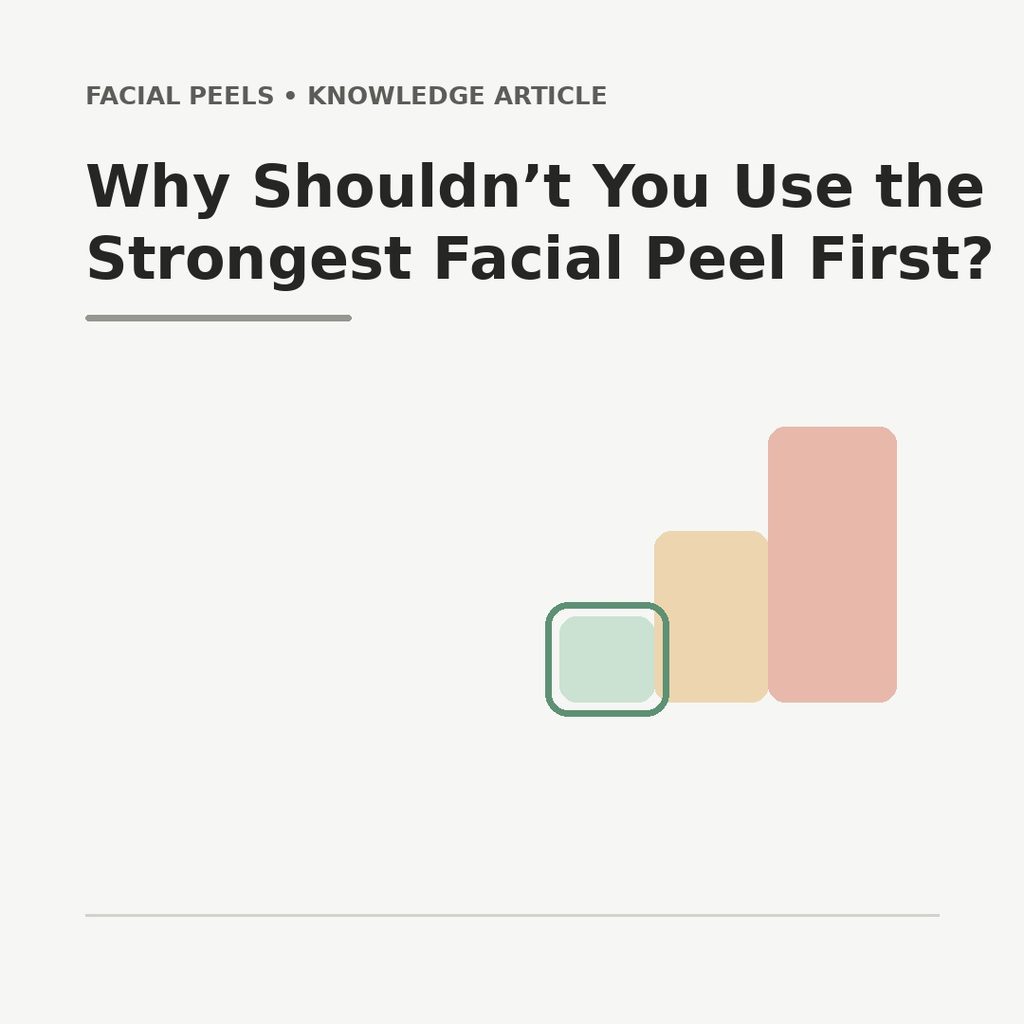
Why Shouldn’t You Use the Strongest Facial Peel First?
A stronger peel does not automatically mean a better treatment.
Learn why it is better to begin with a milder peel, observe how the skin responds and increase strength only when necessary.
Want to Learn Facial Peel Formulation Step by Step?
These guides explain the concepts behind facial peel selection, strength, skin response, frequency and aftercare.
If you want to move beyond individual concepts and learn the complete formulations and practical preparation methods in a structured course, explore the dedicated ZestChest Institute Facial Peels Course.