130 Students Enrolled

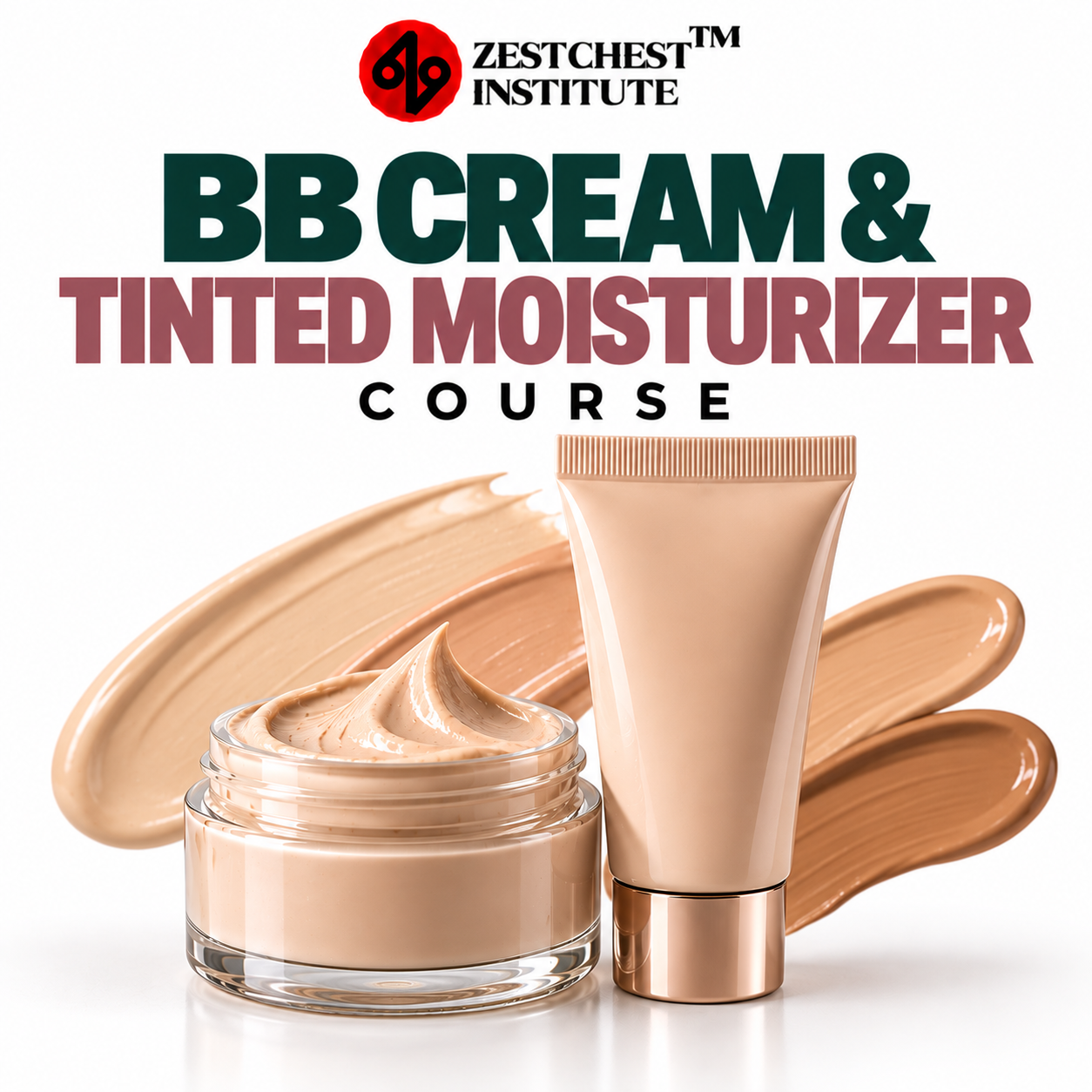
BB Cream & Tinted Moisturizer

Kč1,495.51

Learn to formulate BB Creams and Tinted Moisturisers from scratch using Argan Oil, Vitamin E, Zinc Oxide and mineral pigments. Master five skin-tone pigment blends, customised shade creation, emulsification, moisturisation and cosmetic coverage.

- +
Learn Online, From AnywhereAccess your course remotely
Lifetime Course AccessRevisit your course lessons anytime
Supplier Details IncludedSupplier information for enrolled students
Certificate IncludedCertificate provided as part of the course

Discover the science of combining skincare with colour cosmetics in our Online BB Cream and Tinted Moisturiser Making Course, taught by Dr. Soma Datta at Zestchest Institute.

This practical cosmetic formulation workshop teaches you to develop two multifunctional skincare products from scratch, combining moisturisation, skin-tone coverage and a natural-looking makeup finish.

Learn to work with mineral pigments such as Red Iron Oxide, Yellow Iron Oxide, Black Iron Oxide and Titanium Dioxide to create customised shades for different skin tones.

Develop Two Distinct Skincare and Makeup Formulations

Tinted Moisturiser

Learn to formulate a lightweight moisturising lotion that combines hydration with sheer, natural-looking colour coverage.

BB Cream (Beauty Balm or Blemish Balm)

Develop a richer cream formulation designed to provide additional moisturisation and greater cosmetic coverage compared with a tinted moisturiser.

Master Mineral Pigment Blending and Shade Creation

Rather than relying on ready-made skin-tone pigments, learn how to combine individual mineral pigments to develop your own customised shades.

The workshop covers five reference skin-tone blends, ranging from light to deep skin tones, along with techniques for creating intermediate shades and adjusting colour intensity.

Understand the role of pigment dispersion, colour balance and pigment concentration in developing smooth, uniform and natural-looking coverage.

Understand the Science Behind Product Texture

Work with functional formulation ingredients such as Argan Oil, Sorbitol, Glycerin, Xanthan Gum, Glyceryl Monostearate (GMS), Cetyl Alcohol, Emulsifying Wax, Beeswax, Polysorbate 20, Zinc Oxide and Vitamin E.

Learn how humectants, emollients, emulsifiers and consistency-building ingredients influence cream texture, spreadability, moisturisation and sensory characteristics.

The workshop also discusses incorporating compatible skincare actives, mineral UV filter ingredients, fragrance selection, preservation and product stability.

Whether you are a beginner, handmade cosmetic maker, skincare enthusiast, makeup professional or aspiring beauty brand owner, this course provides practical formulation knowledge to develop your own range of tinted skincare and complexion-enhancing cosmetic products.
  • Understanding the differences between BB Creams, Tinted Moisturisers, Foundations and Primers.
  • Understanding the principles of combining skincare with colour cosmetics.
  • Developing lightweight moisturising lotions and richer cream-based formulations from scratch.
  • Understanding hydration, cosmetic coverage and natural-looking makeup finishes.
  • Working with Red Iron Oxide, Yellow Iron Oxide, Black Iron Oxide and Titanium Dioxide.
  • Preparing five reference mineral pigment blends for different skin tones.
  • Creating customised intermediate shades by combining pigment blends.
  • Understanding pigment concentration, colour intensity and coverage.
  • Understanding pigment dispersion and uniform colour distribution in emulsions.
  • Working with Argan Oil, Jojoba Oil, Olive Squalane and alternative carrier oils.
  • Understanding the differences between Sorbitol, Glycerin, Propanediol and Propylene Glycol as humectants.
  • Working with Glyceryl Monostearate (GMS), Emulsifying Wax and Polysorbate 20.
  • Understanding the use of Cetyl Alcohol, Beeswax and Xanthan Gum as consistency-building ingredients.
  • Understanding how emulsifier combinations influence emulsion stability and skin feel.
  • Understanding the water phase, oil phase, pigment dispersion phase and cool-down phase.
  • Developing smooth, spreadable formulations with different levels of cosmetic coverage.
  • Understanding the formulation applications of Zinc Oxide and Titanium Dioxide.
  • Exploring compatible additional skincare ingredients such as Vitamin E, D-Panthenol, Allantoin, Niacinamide and Urea.
  • Understanding the importance of pH when incorporating additional cosmetic actives.
  • Working with Phenoxyethanol, Sodium Benzoate, Potassium Sorbate, Iscagard and Geogard ECT preservation systems.
  • Understanding fragrance selection and fragrance-free formulation options.
  • Troubleshooting product thickness, waxy skin feel, pigment distribution and emulsion stability.
  • Understanding product packaging, costing, pricing and brand positioning.

Two Principal Formulations

1. Tinted Moisturiser

A lightweight, lotion-based formulation combining moisturisation with sheer cosmetic coverage.

Formulated using Sorbitol, Argan Oil, Xanthan Gum, Glyceryl Monostearate (GMS), Cetyl Alcohol, Vitamin E and customised mineral pigment blends.

Learn to develop a smooth, easily spreadable tinted moisturiser for everyday use and a natural-looking makeup finish.

Understand how to customise colour intensity, moisturisation, viscosity and skin feel.

2. BB Cream (Beauty Balm or Blemish Balm)

A richer cream-based formulation designed to provide greater moisturisation and cosmetic coverage compared with a tinted moisturiser.

Formulated using Glycerin, Argan Oil, Polysorbate 20, Glyceryl Monostearate (GMS), Emulsifying Wax, Cetyl Alcohol, Beeswax, Zinc Oxide, Vitamin E and customised mineral pigment blends.

Learn to balance emulsion stability, cream consistency, pigment concentration, spreadability and coverage.

Mineral Pigment Blend Formulations

Learn to create five reference skin-tone pigment blends using four individual mineral pigments:

  • Titanium Dioxide
  • Red Iron Oxide
  • Yellow Iron Oxide
  • Black Iron Oxide

The course provides pigment blend formulations for:

  • Light skin tone
  • Light to medium skin tone
  • Medium skin tone
  • Medium to deep skin tone
  • Deep skin tone

Learn to create additional intermediate shades by modifying and combining these reference pigment blends.

Additional Formulation Variations and Customisation

  • Lightweight, low-coverage tinted moisturisers.
  • Richer, higher-coverage BB creams.
  • Untinted moisturising lotion and cream bases.
  • Customised skin-tone coverage and colour intensity.
  • Alternative carrier oil and humectant combinations.
  • Shea Butter-enriched moisturising formulations.
  • Vitamin E and Provitamin B5-enriched variations.
  • Allantoin and Niacinamide-enriched formulations.
  • Fragrance-free tinted skincare products.
  • Formulations incorporating mineral UV filter ingredients.

Explore ingredient substitutions, texture adjustments and customised pigment blends to develop your own range of tinted skincare products.

  • Instructor: Dr. Soma Datta
  • Course format: Online recorded workshop
  • Two principal skincare and colour cosmetic formulations
  • Five reference skin-tone pigment blend recipes
  • Practical demonstration of two customised pigment blends
  • Detailed cosmetic ingredient theory and functionality
  • Step-by-step practical manufacturing demonstrations
  • Lightweight lotion and rich cream formulation techniques
  • Mineral pigment blending and dispersion
  • Customised shade creation and coverage adjustment
  • Emulsifier selection and emulsion formulation
  • Humectant, emollient and consistency modifier applications
  • Mineral UV filter ingredient considerations
  • Active ingredient incorporation and formulation customisation
  • Product texture and sensory optimisation
  • Preservation, pH and product stability considerations
  • Detailed formulation notes
  • Raw material, equipment and packaging supplier details
  • Product costing, pricing and brand positioning guidance
  • Student questions and answers included in the workshop
  • Lifetime access to course materials
  • Access to previous and updated workshop recordings
  • Free participation in future live sessions of the same workshop whenever conducted

Who is this course suitable for?

Beginners, skincare enthusiasts, makeup professionals, handmade cosmetic makers, cosmetic formulators, existing skincare and makeup brand owners, and aspiring beauty entrepreneurs.

Reviews

There are no reviews yet.

Only logged in customers who have purchased this product may leave a review.

Scroll to Top