Shampoo seems like a simple product: apply it to wet hair, create lather and rinse it away. But once you start looking at what a shampoo is actually expected to do, it becomes much more interesting.
A shampoo has one fundamental job: cleansing the hair and scalp. Yet we also expect it to feel pleasant, produce satisfying lather, have the right thickness, smell good, rinse cleanly and suit a particular hair concern. Some people want help with dandruff, some with dryness and frizz, some with dull or damaged hair, and others are primarily concerned about hair fall.
This is why I prefer to think of shampoo not as a single recipe, but as a cleansing base designed around a purpose. Once you understand the roles played by different categories of ingredients, it becomes much easier to understand why two shampoos can look, feel and perform quite differently even though both are essentially cleansers.
What Does “Sulphate-Free” Shampoo Actually Mean?
Sulphates such as SLS and SLES are very strong cleansers. Strong cleansing is useful when you are trying to remove grease, stains or heavy dirt from clothes, utensils or other surfaces. Hair and skin generally do not require that degree of cleansing.
My concern with repeated use of very strong cleansers is that they can remove too much of the natural oil from the skin and scalp, leaving them feeling dry and dehydrated. This is one reason people increasingly look for sulphate-free shampoos and other sulphate-free cleansing products.
But sulphate-free does not mean surfactant-free. Shampoo still needs ingredients that cleanse.
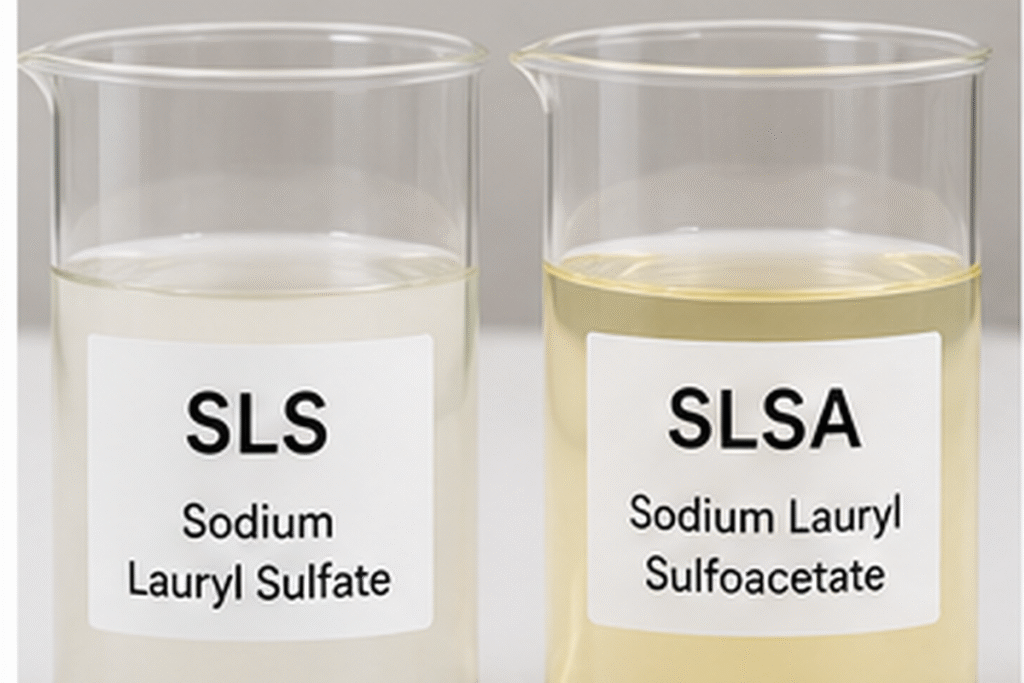
Milder surfactants can be used instead. Examples discussed include sodium lauryl sulfoacetate (SLSA), decyl glucoside, caprylyl/capryl glucoside, lauryl glucoside, coco glucoside and coco betaine/CAPB.
One distinction is particularly important: SLSA is not SLS. Despite their similar abbreviations, they were used very differently in the shampoos discussed here. The similar names can be confusing, so it is worth understanding SLS vs SLSA: Are They the Same Thing in Shampoo?
For a closer look at the term itself, read What Does Sulphate-Free Shampoo Actually Mean?
What Does “Paraben-Free” Mean?
Parabens are preservatives. Removing parabens from a shampoo does not mean that a water-based shampoo no longer needs preservation.
A paraben-free formulation therefore requires other preservation choices. The detailed preservation system is part of the formulation and isn’t reproduced here.
This illustrates something important about “free from” claims. Removing one ingredient does not remove the function it was performing. The shampoo still has to work as a complete product system.
Remember: Shampoo Is a Wash-Off Product
One of the most useful things to remember when evaluating shampoo claims is how little time shampoo actually spends on your hair.
You apply it, massage it through the scalp and hair, and rinse it away. Contact may last from around half a minute to a couple of minutes. Shampoo therefore shouldn’t be expected to perform like a leave-on serum, oil or treatment.
Its primary contribution is cleansing. Depending on its ingredients, a shampoo may also support softness, help with particular scalp concerns, reduce the feeling of dryness, improve detangling or support damaged hair.
But there is a limit to what a wash-off product can reasonably be expected to do.
What Is Actually Inside a Shampoo?
Instead of trying to memorise long ingredient lists, it is easier to understand shampoo ingredients according to what they do.
A liquid shampoo may contain several functional categories:
- surfactants and co-surfactants;
- foam boosters;
- thickeners;
- humectants;
- conditioning materials;
- emollients;
- chelating agents;
- pH-adjusting ingredients;
- active ingredients;
- fragrance or essential oils;
- preservation ingredients.
Not every shampoo needs every category. Different combinations produce different textures and performance characteristics.
Surfactants do the cleansing
The easiest way to understand a surfactant is to think of it as the part of shampoo responsible for pulling dirt, grease and oil away from a surface so that they can be rinsed away with water.
Different surfactants behave differently. Some cleanse strongly and some mildly. Some produce considerable foam, while others may cleanse effectively without creating dramatic lather.
Does More Lather Mean Better Cleansing?
No.
Consumers often associate abundant foam with a powerful or high-quality shampoo, which is why a shampoo may contain ingredients specifically intended to improve the lathering experience.
But foam and cleansing are not the same thing.
A shampoo can cleanse effectively without enormous amounts of foam. Conversely, a very foamy shampoo isn’t automatically a better cleanser.
Explore this distinction in more detail in Does More Lather Mean a Shampoo Cleans Better?
Does Thicker Shampoo Mean Better Shampoo?
Not necessarily.
A very watery shampoo can be inconvenient because it runs through your fingers before reaching your scalp. Thickness therefore serves a practical purpose.
But successful shampoos can have very different textures—fluid, thick and creamy, or distinctly gel-like.
Consumers may associate the very thick consistency of commercial shampoos with quality, but thickness has to coexist with cleansing, lather, stability and ease of dispensing.
If you tend to associate a thick consistency with quality, read Does Thicker Shampoo Mean Better Quality?
Why Can’t You Simply Swap One Shampoo Ingredient for Another?
Two surfactants might both cleanse, yet substituting one for another can change the shampoo’s thickness, lather, creaminess, stability, cleansing and overall sensory experience.
A useful analogy is sugar and jaggery.
Jaggery can be an alternative to sugar, but that doesn’t mean the finished food will taste exactly the same. Similarly, an alternative cosmetic ingredient isn’t necessarily an identical replacement.
This is also why shampoo development requires considerable testing. Excellent thickness may come with insufficient lather. Excellent lather may accompany an undesirable texture. Something oily may improve feel but reduce foam.
The objective isn’t to maximise one characteristic. It is to find the right balance between several characteristics at once.
Humectants, Emollients and Conditioning Ingredients Are Not the Same
These terms are easily confused.
A humectant is used to help attract and retain moisture. Glycerin is one example.
An emollient, such as an oil or butter, contributes softness. But there is a complication when putting oils into shampoo: shampoo is designed to wash things away. A natural oil may soften hair while washing but largely rinse away.
Conditioning ingredients can improve softness and detangling and make hair feel more manageable.
This creates one of the fundamental tensions in shampoo:
Shampoo removes. Conditioner deposits.
This distinction is explored further in Why Doesn’t a Conditioning Shampoo Work Like a Conditioner?
If too much conditioning material is introduced into shampoo, cleansing and lather can suffer. That’s why a “conditioning shampoo” shouldn’t necessarily be expected to perform like a separate conditioner.
Natural Oils and Silicone Oils Behave Differently
Natural oils and butters such as argan oil and shea butter can contribute softness, but they tend to wash away in a rinse-off shampoo.
Dimethicone behaves differently. Because it doesn’t rinse away as readily, it can leave a coating on the hair, helping frizz sit flatter and contributing to a smoother, shinier appearance.
This returns us to the sugar-and-jaggery principle: a natural alternative may exist, but that doesn’t mean it produces precisely the same result.
Instead of asking only:
“Is there a natural alternative?”
a more useful question is:
“What property am I trying to achieve, and will the alternative achieve that property to the same degree?”
For a closer comparison, read Natural Oils vs Silicones in Shampoo: What’s the Difference?
Choosing Shampoo Around Your Hair Problem
Rather than putting every attractive ingredient into one bottle, begin with the problem the shampoo is intended to address.
Hair fall concerns
A herbal shampoo can be designed around ingredients such as hibiscus, shikakai, amla, neem, bhringraj and curry leaves.
But the important conceptual point is that a herbal shampoo is still shampoo. Adding herbs doesn’t change its fundamental wash-off nature or turn it into a leave-on hair-growth treatment.
Dandruff
Anti-dandruff shampoo is better understood as a targeted shampoo category, rather than automatically being a better everyday shampoo.
The approach here is to use an anti-dandruff shampoo when dandruff is actually present. Once the problem resolves, an ordinary shampoo can again be used rather than continuing unnecessary exposure to anti-dandruff actives.
Dull or flat-looking hair
Hair can look dull, dehydrated or lifeless, particularly after repeated colouring, straightening or perming.
An important lesson here is that even a desirable property such as volume isn’t desirable for everybody. Someone with very flat hair may appreciate additional volume; someone whose hair is already fluffy may not.
So an ingredient or effect cannot simply be labelled “good.”
Good for whom, and for what result?
Damaged and breakage-prone hair
A useful way to visualise damaged hair is to imagine a cylindrical pipe with damaged or broken areas along its surface. If those irregular areas can be filled, the surface appears smoother and more uniform.
Protein ingredients such as hydrolysed keratin were discussed in this context, while collagen was discussed in relation to elasticity and reducing the tendency of hair to snap when stretched.
Dry and frizzy hair
Frizz was approached as hair that is dry and dehydrated and doesn’t sit smoothly.
A shampoo designed around this concern can combine gentle cleansing with moisturizing, softening, detangling and coating functions.
Again, the principle matters more than simply collecting fashionable ingredients:
Design the shampoo around the hair problem instead of adding actives without a clear purpose.
If you’re deciding between different types of shampoo, see How Do You Choose the Right Shampoo for Your Hair Concern?
Why Can Adding Oil Reduce Shampoo Lather?
Oils, butters, lanolin and other greasy materials can affect lather.
This is one of the compromises involved in trying to make a cleanser behave more like a moisturizing product. More moisturization and a creamier feel may result in less dramatic foam.
That doesn’t automatically make the shampoo worse. It simply demonstrates again that formulation is a balance.
Learn more about this formulation trade-off in Why Does Adding Oil to Shampoo Reduce Lather?
Why Are Some Shampoo Ingredients There Even Though They Don’t “Benefit Hair”?
Not every ingredient needs to be a hero ingredient.
Some ingredients exist because the product itself needs to remain stable and usable.
Chelating agents are one example. They were used as part of maintaining product stability, with sodium gluconate discussed as a more natural choice and EDTA as a stronger non-natural alternative.
This is useful when reading ingredient labels: an ingredient doesn’t have to promise shinier or healthier-looking hair to have an important reason for being in the bottle.
Why Does pH Matter?
pH isn’t only relevant as a hair-and-skin consideration. It can also affect the physical behaviour of shampoo.
Changing pH can influence thickness, and too much adjustment can cause viscosity to break down rather than continue increasing.
This illustrates another recurring principle:
In a shampoo system, changing one thing can alter something else.
Transparent, Creamy or Pearly: Does Appearance Affect Cleansing?
Shampoo can be transparent, opaque, creamy or pearly.
A pearly appearance doesn’t itself mean a shampoo cleans better. It changes the visual and sensory experience.
And that leads to an interesting question about premium shampoo.
What Makes a Shampoo Feel “Premium”?
Think about orange juice.
You can buy juice from a roadside stall, order it in a good restaurant or have it served in a five-star hotel. The fundamental purpose of the drink hasn’t changed dramatically, but the glass, presentation, surroundings, consistency and entire experience have.
Shampoo can work similarly.
Premium perception can come from texture, appearance, fragrance, packaging, reliable dispensing, labels and even whether the bottle survives storage and transport without leaking.
The formulation matters, but price cannot always be explained by searching the ingredient list for one dramatically expensive “magic” ingredient.
Development work that consumers never see—testing texture, fragrance, lather, appearance and packaging—is also part of the product.
Are Ready-Made Shampoo Bases a Good Option?
Ready-made bases can be convenient, but they come with a trade-off.
You may not know everything that has gone into the finished base, and there is less freedom to modify it. Adding too much additional material can disturb a base already formulated to behave in a particular way.
For consumers, there is a related lesson: look beyond the prominent ingredient on the front of the bottle and consider the complete product.
Does “Herbal” Mean Fresh Plant Juice Should Go Into Shampoo?
No.
Fresh plant juices, coconut milk and similarly fibrous materials were specifically discouraged in these shampoo formulations because their fibres can create a much greater microbial problem.
Even preservation doesn’t mean that anything can simply be put into a water-based product.
So fresh, herbal and natural shouldn’t automatically be interpreted as “better to put directly into the bottle.”
Liquid Shampoo or Shampoo Bar?
Both can cleanse hair.
The main distinction here wasn’t hair type. The strongest argument for shampoo bars was environmental: a waterless bar can reduce dependence on plastic bottles.
Consumer habit is perhaps the bigger obstacle. People are accustomed to shampoo coming from bottles and bars being used for body cleansing.
There is also an important distinction between surfactant-based shampoo bars and cold-process soap-style bars. They shouldn’t automatically be considered the same product merely because both are solid.
For a more focused comparison of the two formats, read Liquid Shampoo vs Shampoo Bars: What’s the Difference?
Is Sulphate-Free Shampoo Suitable for Coloured Hair?
The sulphate-free shampoos discussed here were considered suitable for fashion-coloured and highlighted hair because they avoid the stronger sulphate cleansing system associated with faster stripping of colour.
This is another case where more cleansing isn’t necessarily better cleansing when preservation of colour is part of the objective.
Explore this question in more detail in Is Sulphate-Free Shampoo Better for Coloured or Highlighted Hair?
Should You Dilute Shampoo Before Applying It?
You can, but it isn’t necessarily required.
Diluting shampoo makes it milder, but it can also make it harder to generate the lather the shampoo was designed to produce.
More importantly, a finished shampoo has already been designed around a particular balance of water, cleansing and lather. Changing that balance at the point of use changes the experience.
Common Shampoo Misunderstandings
A few simple ideas are worth remembering:
“More foam means better shampoo.”
Not necessarily. Foam and cleansing aren’t identical.
“Thicker shampoo is higher quality.”
Not necessarily. Thickness affects usability and perception but isn’t a standalone measure of performance.
“Natural alternative means identical replacement.”
No. Two ingredients can serve related purposes and still produce noticeably different results.
“A shampoo should condition like a conditioner.”
Their primary jobs are different: shampoo removes while conditioner is intended to deposit and retain conditioning material.
“The more active ingredients, the better.”
Not necessarily. Actives have particular purposes, and adding too much additional material can interfere with characteristics such as lather.
“Fresh botanical juice must be better.”
Not in these formulations. Fibrous fresh materials were specifically avoided because of the microbial problems they can create.
“Premium shampoo must contain completely different ingredients.”
Premium quality can also result from formulation development, texture, fragrance, packaging, reliability and the overall experience.
A Better Way to Choose Shampoo
Instead of starting with the marketing words on the front of the bottle, start with your actual hair and scalp concern.
Do you primarily need gentle everyday cleansing? Are you dealing with dandruff? Is your hair dull after repeated treatments? Is breakage the concern? Is it dry and frizzy? Is colour retention important?
Then remember what shampoo can realistically accomplish.
A shampoo is fundamentally a short-contact cleansing product. Its ingredients can make that cleansing milder, improve lather and texture, provide some softness, support particular hair concerns and make the experience much more pleasant. But trying to make shampoo perform every job of a conditioner, oil, serum and treatment misunderstands the product.
Perhaps the most useful lesson is that a good shampoo isn’t defined by one fashionable ingredient, enormous lather, extreme thickness or the word “natural.”
It is defined by balance: the cleansing system, the hair concern being addressed, the feel during use, the stability of the product and the experience it leaves behind.
Want to Learn How to Formulate Sulphate- and Paraben-Free Shampoos?
This guide explains the principles behind sulphate- and paraben-free shampoos—how cleansing systems work, why lather and thickness can behave differently, and how shampoos can be designed around different hair concerns.
If you want to move from understanding these principles to actually learning how to formulate and make the products, explore our Sulphate & Paraben Free Shampoos Course.
The course takes the subject into the practical formulation and making process that isn’t reproduced in this public guide.
Continue learning: Explore all Sulphate Free Paraben Free Shampoo guides →