Oily skin and acne-prone skin are related, but they are not the same condition.
A person can have oily skin without regularly developing acne.
That distinction changes how I approach aromatherapy for the skin.
What Is Oily Skin?
Oily skin produces enough sebum for the face to begin feeling shiny, sticky or heavy relatively soon after cleansing.
Some people notice that their skin becomes oily again within a short time even though they do not have significant acne.
For this person, the main concern is excess oiliness, not existing breakouts.
The goal is therefore not to dry the skin completely.
I look at the problem as one of balancing the oily feel while allowing the skin to remain comfortably moisturized.
What Is Acne-Prone Skin?
Acne-prone skin requires a different level of consideration because the person is already experiencing breakouts or develops them easily.
This changes both the essential-oil selection and the carrier.
Tea tree is one of the primary essential oils discussed for acne-focused applications. Cypress is also discussed, while citrus ingredients appear in relation to marks that may remain after acne.
The important public-facing principle is not the exact blend. It is that a product designed for simple oiliness should not automatically be treated as an acne product.
The Carrier Oil Matters Too
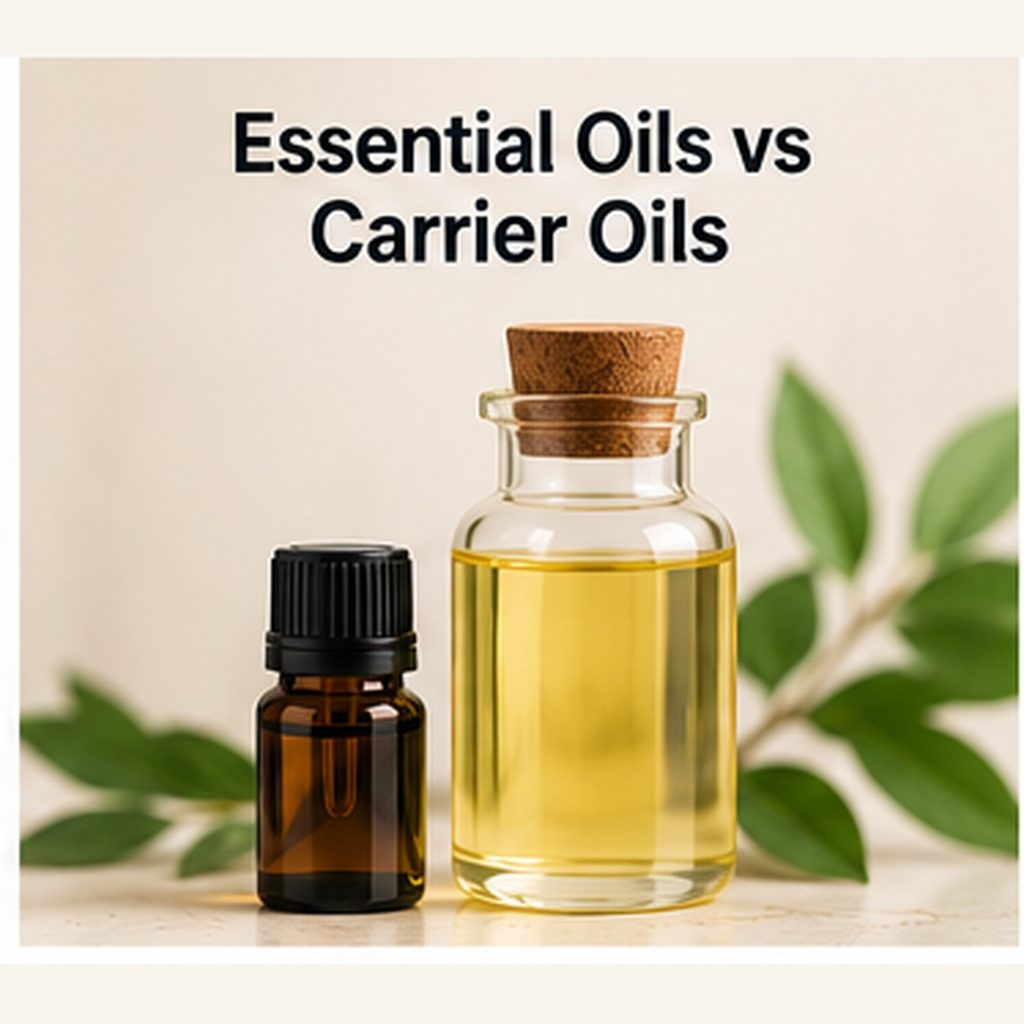
For acne-prone facial skin, I pay particular attention to the carrier.
I prefer lighter choices such as jojoba or argan.
A richer oil may be perfectly suitable for massage or dry skin but may not provide the same experience on a face that breaks out easily.
This is why choosing the right essential oil is only part of the decision.
Why Not Just Remove All the Oil?
Oily skin still needs normal skin oils.
The objective described in the workshop is not to remove every trace of sebum and leave the face completely dry.
The aim is to manage excessive oiliness and create a more comfortable balance.
Why This Distinction Matters When Buying Products
If your face feels shiny but you rarely develop pimples, your main problem may simply be oiliness.
If you regularly experience breakouts, you are dealing with an additional concern.
Products for the two situations therefore do not necessarily need to be identical.
When choosing an aromatherapy product, ask whether it has been designed for:
oil balance, or
acne-prone skin.
Those are not interchangeable descriptions.
The Useful Takeaway
Do not assume that every oily face requires an acne-focused product.
Start by identifying the actual problem.
If excess shine is the main issue, the product should be selected around that concern.
If frequent breakouts are present, both the essential-oil choices and the carrier need more careful consideration.
The more accurately you identify the concern, the easier it becomes to choose an appropriate aromatherapy product.