Hair fall is a common hair and scalp concern, and aromatherapy can be approached by selecting essential oils according to the specific condition of the scalp and hair.
The important principle is not to choose oils only because they smell pleasant or are popular. Hair fall, dandruff, greasy scalp and dry or damaged hair are different concerns, so the aromatherapy approach should also be different.
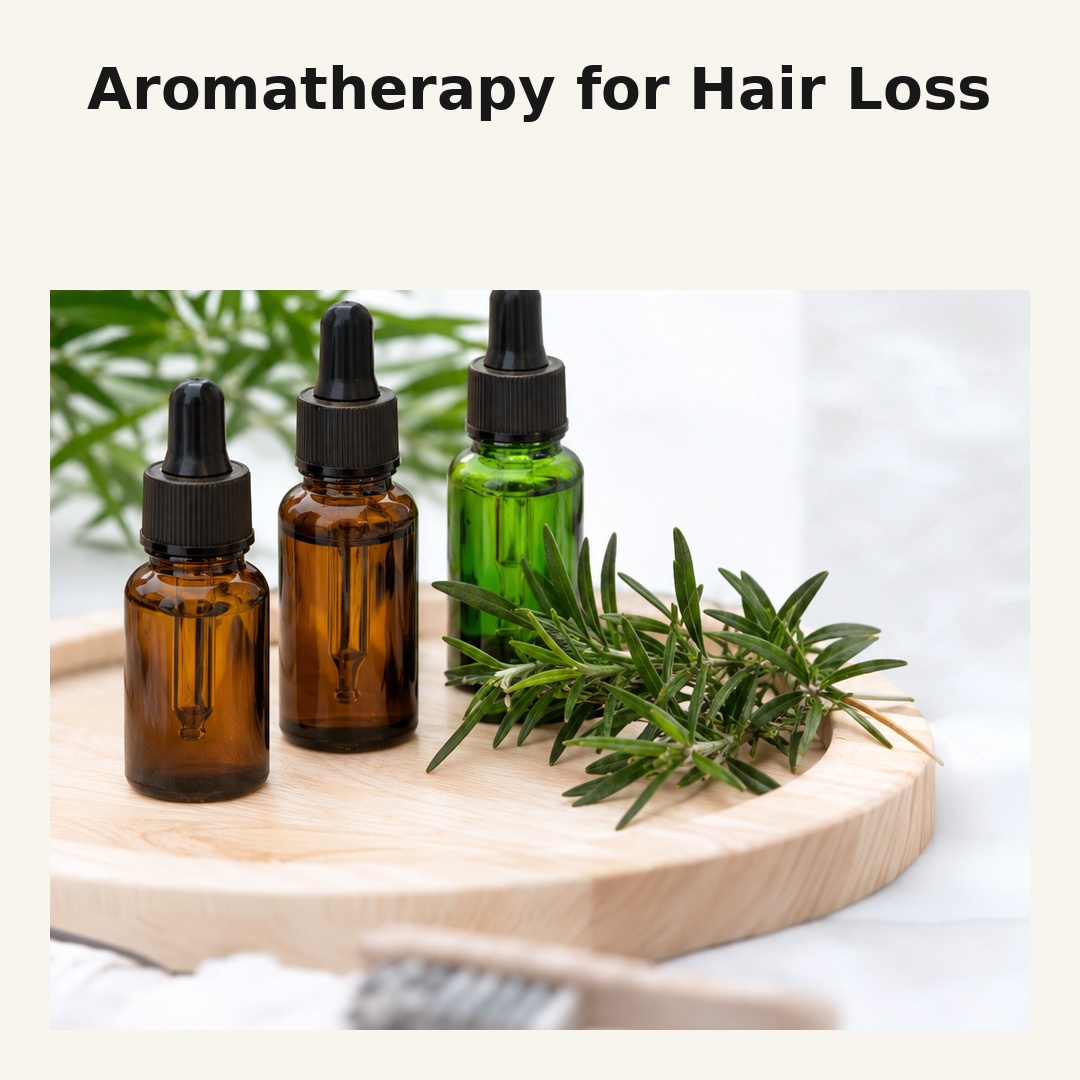
For hair-fall and hair-growth-support applications, rosemary essential oil is one of the main aromatic oils discussed.
Other aromatic materials such as cedarwood and curry leaf may also be considered in hair and scalp care.
How Is Aromatherapy Used for Hair Fall?
Aromatherapy for hair fall begins by identifying the actual hair and scalp concern.
Essential oils can then be selected according to the intended purpose of the product.
For example, the aromatic approach for hair fall may be different from the approach used for:
- Dandruff
- Greasy scalp
- Dry or damaged hair
- General scalp care
This is why one universal essential-oil blend should not automatically be used for every hair concern.
A clear understanding of the problem makes ingredient selection much more purposeful.
Rosemary Essential Oil for Hair Fall Support
Rosemary is one of the main essential oils discussed in connection with hair-fall and hair-growth support.
Within aromatherapy, rosemary is considered in relation to circulation and the follicle environment.
This makes it an important essential oil to understand when studying hair and scalp care.
However, rosemary essential oil should not simply be used because it is popular.
It should be selected according to the intended purpose of the product and incorporated into a suitable base.
Cedarwood for Hair and Scalp Care
Cedarwood is another aromatic oil discussed in hair and scalp applications.
Like rosemary, it may be considered in products intended for hair-fall or scalp-support applications.
The important thing is to use it with a clear purpose.
Aromatherapy works best when each oil is selected according to the concern rather than adding several oils without understanding why they are being used.
Curry Leaf in Hair-Care Applications
Curry leaf is also mentioned in the context of hair and scalp care.
Its inclusion reinforces an important aromatherapy principle:
You do not need hundreds of aromatic ingredients to create a thoughtful haircare approach.
It is more useful to understand a smaller selection of oils clearly and know why each one is being considered.
The objective should be purposeful selection rather than simply increasing the number of ingredients.
Hair Fall and Dandruff Are Different Concerns
Hair fall and dandruff both involve the scalp, but they should not automatically be treated as the same concern.
For hair-fall and hair-growth-support applications, rosemary, cedarwood and curry leaf may be considered.
For dandruff-related scalp care, tea tree and eucalyptus are among the essential oils discussed.
This distinction is important.
A product created for dandruff may not necessarily use exactly the same essential-oil selection as a product intended for hair-fall support.
Read more:
Aromatherapy for Dandruff: Which Essential Oils Are Used for Scalp Care?
What About Greasy Scalp?
A greasy scalp is another separate concern.
Someone experiencing excessive scalp oiliness may need a different approach from someone whose main concern is hair fall.
This is why aromatherapy should begin with the condition of the scalp rather than simply choosing a standard hair oil for everyone.
The concern comes first.
The aromatic ingredients should be selected after that.
Why Does the Carrier Oil Matter?
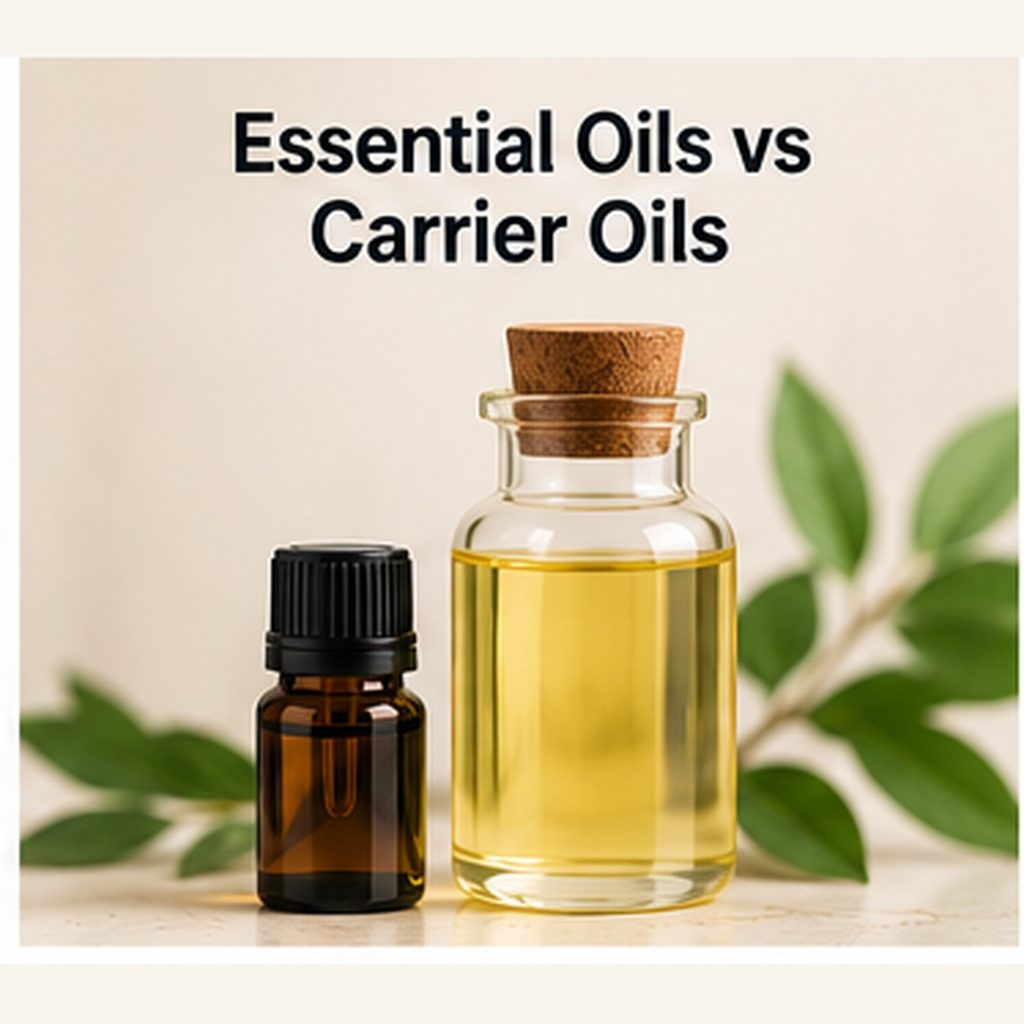
Essential oils are highly concentrated aromatic materials.
A carrier oil provides a base through which the essential oil can be distributed for topical applications.
Carrier oils such as jojoba and argan are discussed in hair and scalp-care contexts.
The right carrier depends on the intended application.
A product designed mainly for the scalp may require a different sensory feel from a product intended for dry or damaged hair lengths.
The carrier oil can affect:
- How the product spreads
- How light or rich it feels
- How suitable it is for the intended application
- The overall experience of the finished product
For a detailed explanation, read:
Essential Oils vs Carrier Oils: What’s the Difference?
and
How Do You Choose the Right Carrier Oil for Aromatherapy?
Can Rosemary or Other Essential Oils Be Applied Directly to the Scalp?
Essential oils are concentrated.
They should not be treated in the same way as ordinary carrier oils.
Using a suitable carrier or product base allows the aromatic material to be distributed across the scalp rather than being applied in a highly concentrated form.
This is an important part of topical aromatherapy.
Applying concentrated essential oils directly may increase the possibility of irritation, redness or burning.
For this reason, essential oils are generally considered as part of a complete product rather than as stand-alone oils applied directly.
Read more:
Can Essential Oils Be Applied Directly to the Skin?
Does More Essential Oil Mean Better Hair Care?
No.
Using more essential oil does not automatically create a better hair or scalp product.
Essential oils are already highly concentrated.
Increasing the amount simply to make the fragrance stronger can make the product unnecessarily intense.
A good aromatherapy approach focuses on balance and purpose.
The question should not be:
“How many essential oils can I add?”
It should be:
“Why am I choosing this particular oil for this particular hair or scalp concern?”
How Can Essential Oils Be Used in Hair Products?
Essential oils may be incorporated into different hair and scalp product formats.
Depending on the intended use, they may be included in:
- Hair oils
- Shampoos
- Conditioners
- Scalp-care products
- Other suitable hair preparations
The essential-oil blend itself is not automatically the finished product.
The complete formulation also includes the carrier or base, the intended method of use and the specific hair or scalp concern.
A Concern-Based Aromatherapy Approach to Hair Care
A simple way to understand hair and scalp aromatherapy is to separate the concerns.
Hair fall or growth support
Rosemary, cedarwood and curry leaf may be considered.
Dandruff
Tea tree and eucalyptus may be considered.
Dry or damaged hair
Carrier oils such as jojoba and argan may be considered according to the intended application.
Greasy scalp
The scalp condition should guide the aromatic and carrier selection rather than simply adding more oil.
This approach makes aromatherapy much easier to understand because every ingredient has a clear purpose.
Why Rosemary Is Often Discussed for Hair Care
Rosemary is one of the most important aromatic oils discussed in the hair-fall and hair-growth-support context.
Its relevance is linked to circulation and the follicle environment.
However, rosemary should still be considered as one part of the overall hair and scalp-care approach.
The carrier oil, finished product format and specific concern all remain important.
Using rosemary does not remove the need to understand the complete product.
Common Mistakes in Aromatherapy for Hair Fall
Several mistakes can make hair and scalp aromatherapy unnecessarily complicated.
Using the same blend for every hair concern
Hair fall, dandruff, greasy scalp and dry hair are different concerns.
Choosing an oil only because it is popular
Popularity should not replace concern-based ingredient selection.
Applying concentrated essential oils directly
Essential oils are highly concentrated and should be considered within a suitable base.
Assuming more essential oil is better
A stronger smell does not automatically mean a better haircare product.
Ignoring the carrier oil
The carrier affects how the product spreads, feels and suits the intended application.
Combining too many oils
A smaller number of clearly understood aromatic materials can be more useful than a very complicated blend without a clear purpose.
Related Aromatherapy Guides
How Can Essential Oils Be Used for Hair and Scalp Care?
Learn how essential oils may be selected for greasy scalp, dandruff, hair-fall support and dry or damaged hair.
Aromatherapy for Dandruff: Which Essential Oils Are Used for Scalp Care?
Understand how tea tree and eucalyptus are discussed in relation to dandruff and scalp care.
Essential Oils vs Carrier Oils: What’s the Difference?
Understand why essential oils and carrier oils perform different roles in topical aromatherapy.
How Do You Choose the Right Carrier Oil for Aromatherapy?
Learn how the intended use, product feel and application can influence carrier-oil selection.
Can Essential Oils Be Applied Directly to the Skin?
Learn why concentrated essential oils should generally be considered within a suitable carrier or product base.
What Is Aromatherapy?
Explore the complete guide to essential oils, carrier oils, fragrance notes, skin and hair applications and aromatherapy safety.
Final Takeaway
Aromatherapy for hair loss or hair fall should begin with the actual hair and scalp concern.
Rosemary is one of the main essential oils discussed for hair-fall and hair-growth support, while cedarwood and curry leaf may also be considered in hair and scalp applications.
The goal is not to combine as many essential oils as possible.
A better approach is to choose a smaller number of aromatic materials with a clear purpose, combine them with a suitable carrier or product base and match the finished product to the specific hair or scalp concern.