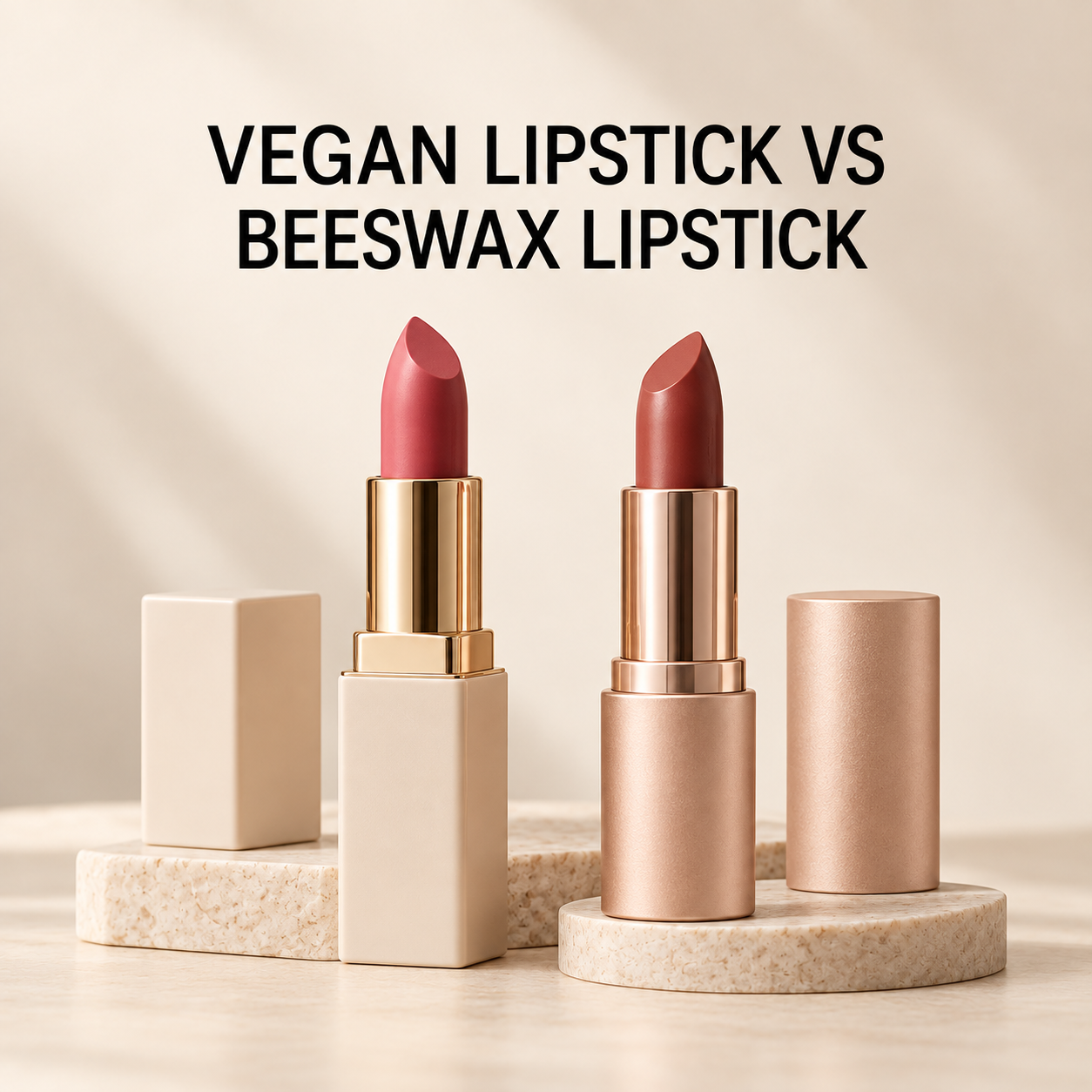
The main difference between a conventional beeswax lipstick and a vegan lipstick is the wax system used to create the bullet.
Beeswax comes from the beehive, so it is not considered vegan.
Why Is Beeswax Used in Lipstick?
Beeswax gives useful structure to lipstick.
It provides firmness while still retaining some softness and flexibility.
That balance helps create a bullet that holds its shape without behaving like a brittle piece of chalk.
Why Isn’t Beeswax Vegan?
Beeswax is an animal-derived ingredient because it is obtained from the beehive.
Even though bees are not necessarily killed to obtain the wax, it is still not considered a vegan ingredient.
What Can Be Used Instead?
Plant-based waxes discussed in lipstick making include:
- carnauba wax
- candelilla wax
These are useful for creating structure.
However, plant waxes can be quite hard.
This means you cannot simply remove beeswax and expect every other aspect of the lipstick to remain identical.
Why Is Texture More Challenging in Vegan Lipstick?
A lipstick must be:
- hard enough to remain a bullet
- soft enough to glide
- flexible enough not to break easily
- creamy enough to feel comfortable
Hard plant waxes can provide strength, but the finished system still needs enough emolliency and flexibility.
This is why vegan lipstick requires its own structural balance.
Does Vegan Lipstick Have to Be Matte?
No.
Vegan refers to the ingredient origin, not to whether the lipstick is matte, glossy or lightly coloured.
Texture and finish are separate decisions.
Key Takeaway
A vegan lipstick is not simply ordinary lipstick with beeswax removed.
Once beeswax is taken away, the structural system has to be reconsidered so the lipstick still has the right combination of hardness, flexibility and glide.