
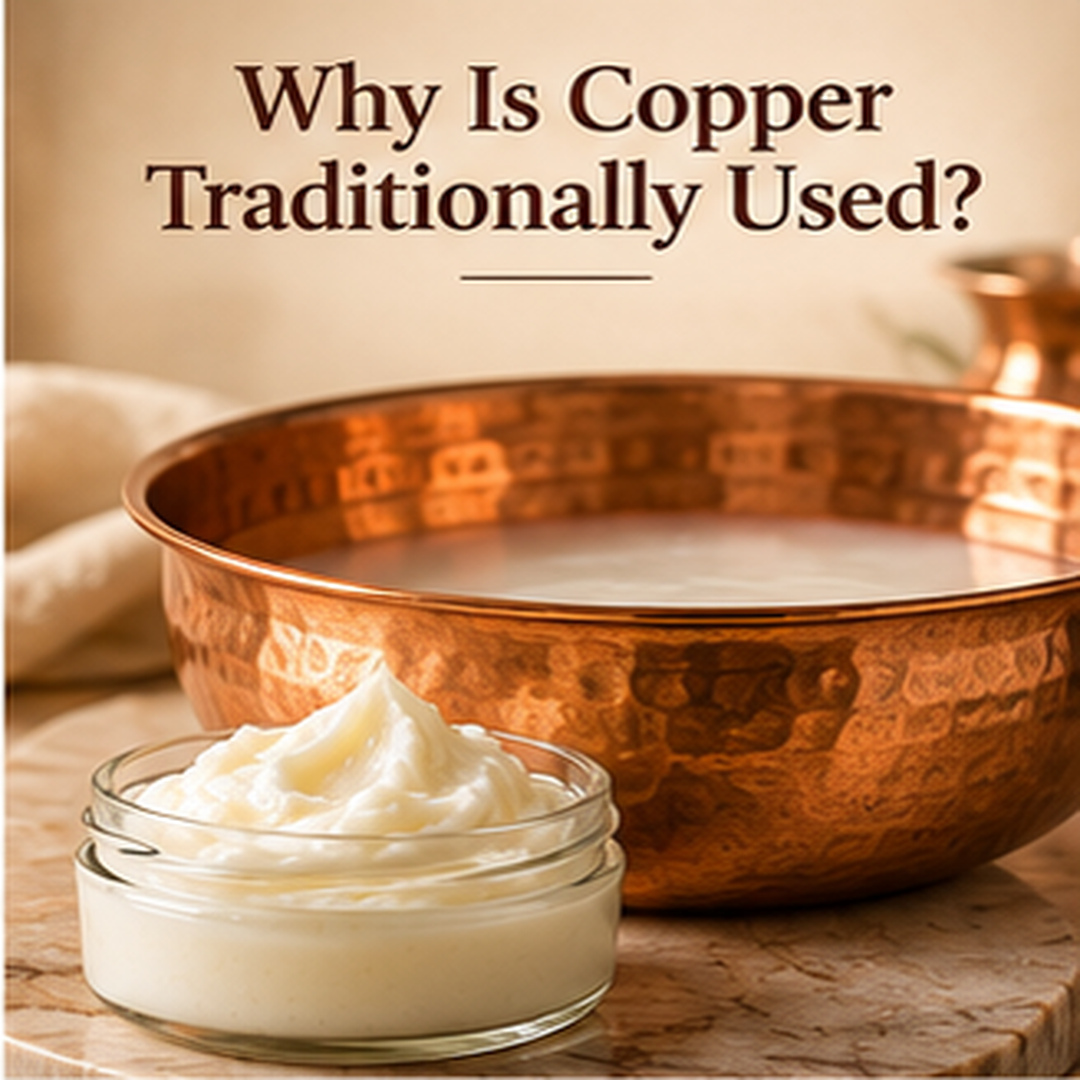
Copper is traditionally associated with the preparation of Shat Dhota Ghrita because the copper vessel is considered part of both the physical and traditional character of the product.
The copper discussed here is the reddish-coloured copper traditionally called tamba, rather than a yellowish copper alloy.
Copper Is Part of the Traditional Preparation
Shat Dhota Ghrita is traditionally prepared in contact with copper.
The traditional explanation is that water kept in contact with copper takes up some copper ions.
In the context of this preparation, copper was associated with:
cleansing;
preservation;
the traditional copper-ion concept;
the overall Ayurvedic-style character of the ghrita.
The copper vessel is therefore not simply chosen because it looks traditional.
It has a specific place in the way the preparation has historically been understood.
Copper and Washing Work Together
There are three ideas that are useful to separate.
First, repeated washing is used to cleanse and physically transform the ghee.
Second, the copper vessel contributes the traditional copper component.
Third, grinding the ghee with water changes its physical texture.
Together, these ideas explain why traditional Shat Dhota Ghrita is more than simply ghee stirred with water.
Does the Final Product Need to Be Stored in Copper?
No.
Copper belongs primarily to the traditional preparation concept.
The finished cream or ghrita can be packed in other suitable cosmetic packaging.
Glass, clay, acrylic and cosmetic plastic jars were all discussed as possible packaging choices.
A copper jar is therefore not required simply because copper was used in the traditional preparation.
Why Does This Matter When Buying Shat Dhota Ghrita?
The phrase “hundred-times-washed ghee” can make the product sound as though the only important factor is how many times ghee was mixed with water.
The traditional concept is broader than that.
It includes the transformation of the ghee, the repeated washing and the use of copper.
Understanding this helps distinguish the traditional concept from a product that is simply a soft ghee-based cream.
Key Takeaway
Copper is traditionally used in Shat Dhota Ghrita because it is considered part of the preparation’s cleansing, preservation and copper-ion concept. It belongs to the traditional method, but the finished product itself does not have to be stored in copper.