
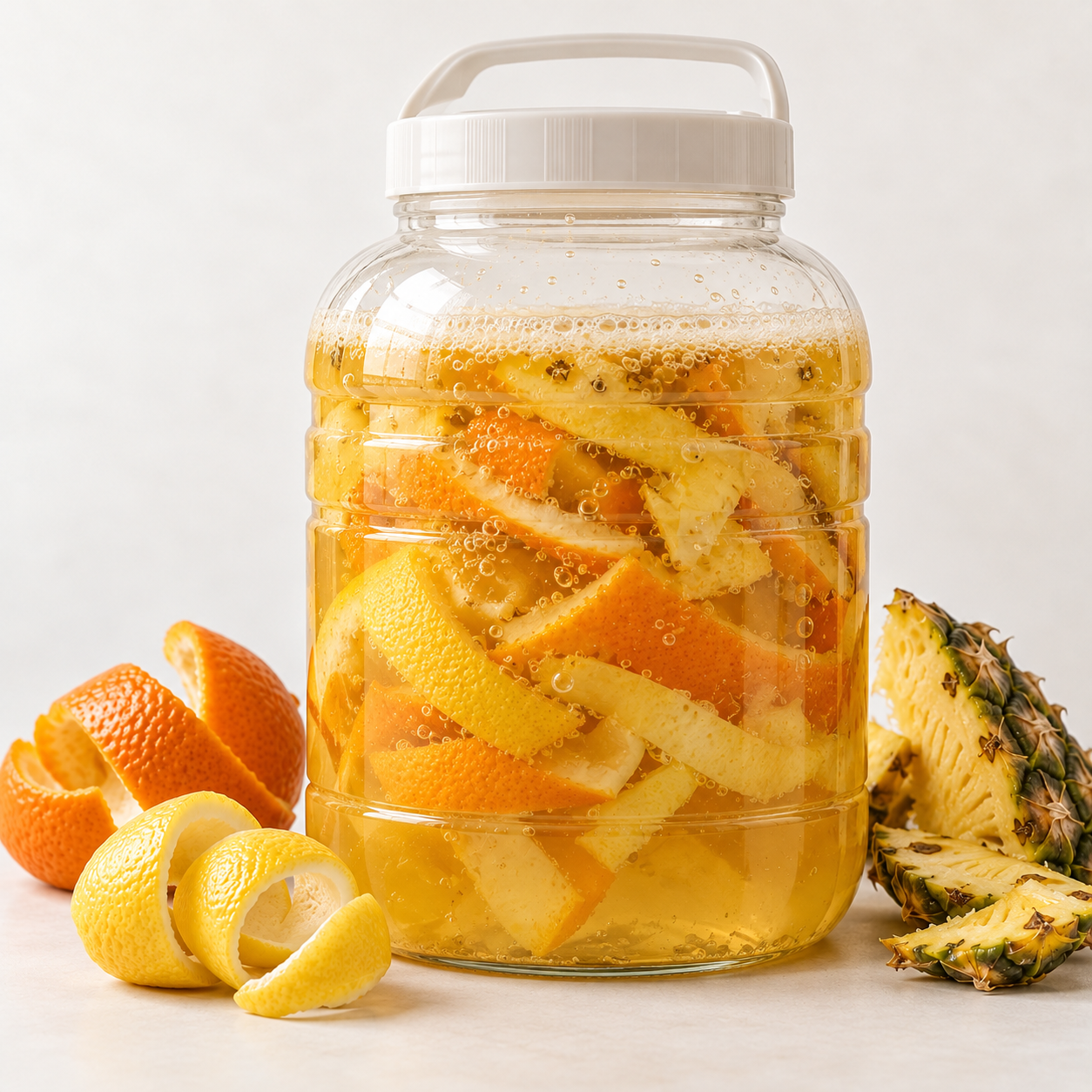
The fermentation container is an important part of working with bioenzyme.
I prefer plastic for active bioenzyme fermentation rather than glass or metal.
There are two main reasons discussed in the workshop: gas formation and the acidic character of the fermented liquid.
Fermentation Produces Gas
As fermentation becomes active, gas and fizz are produced.
That means pressure can build inside the container.
This is completely different from storing an ordinary still liquid.
The container needs to tolerate that activity.
Why Is Glass Not Preferred?
Glass does not have the same flexibility as plastic.
Plastic can expand slightly when pressure increases.
Glass can crack.
This is why I do not recommend glass for an actively fermenting concentrated bioenzyme batch.
Why Avoid Metal?
The fermented liquid becomes low in pH.
Because of this acidic character, I also avoid stainless steel, aluminium and other metal containers for the fermentation process.
What Type of Plastic Container Can Be Used?
Several practical options were discussed:
- reused plastic water bottles;
- soft-drink bottles;
- plastic buckets with suitable lids;
- larger plastic water-storage drums.
The exact size depends on whether you are working at home or producing larger quantities.
Why Does Headspace Matter?
A fermentation container should not be filled completely to the top.
Gas needs room.
If there is no room for expansion, pressure can deform the container or force it open.
Does Fermentation Need Monitoring?
Yes.
Active fermentation should never simply be sealed away and forgotten.
Gas production is strongest during the more active stage and then gradually reduces.
This change in fizz is also one of the observations used to understand how the fermentation is progressing.
Can Finished Bioenzyme Still Be Stored in Plastic?
Yes.
I prefer plastic even after filtration because a small amount of continuing fermentation may still remain possible.
What About Finished Cleaning Products?
The finished lower-bioenzyme-concentration products are different from concentrated active fermentation.
In the workshop, conventional packaging, including plastic and in some cases glass, was discussed for these finished products.
The strong preference for plastic mainly concerns concentrated fermenting bioenzyme.