
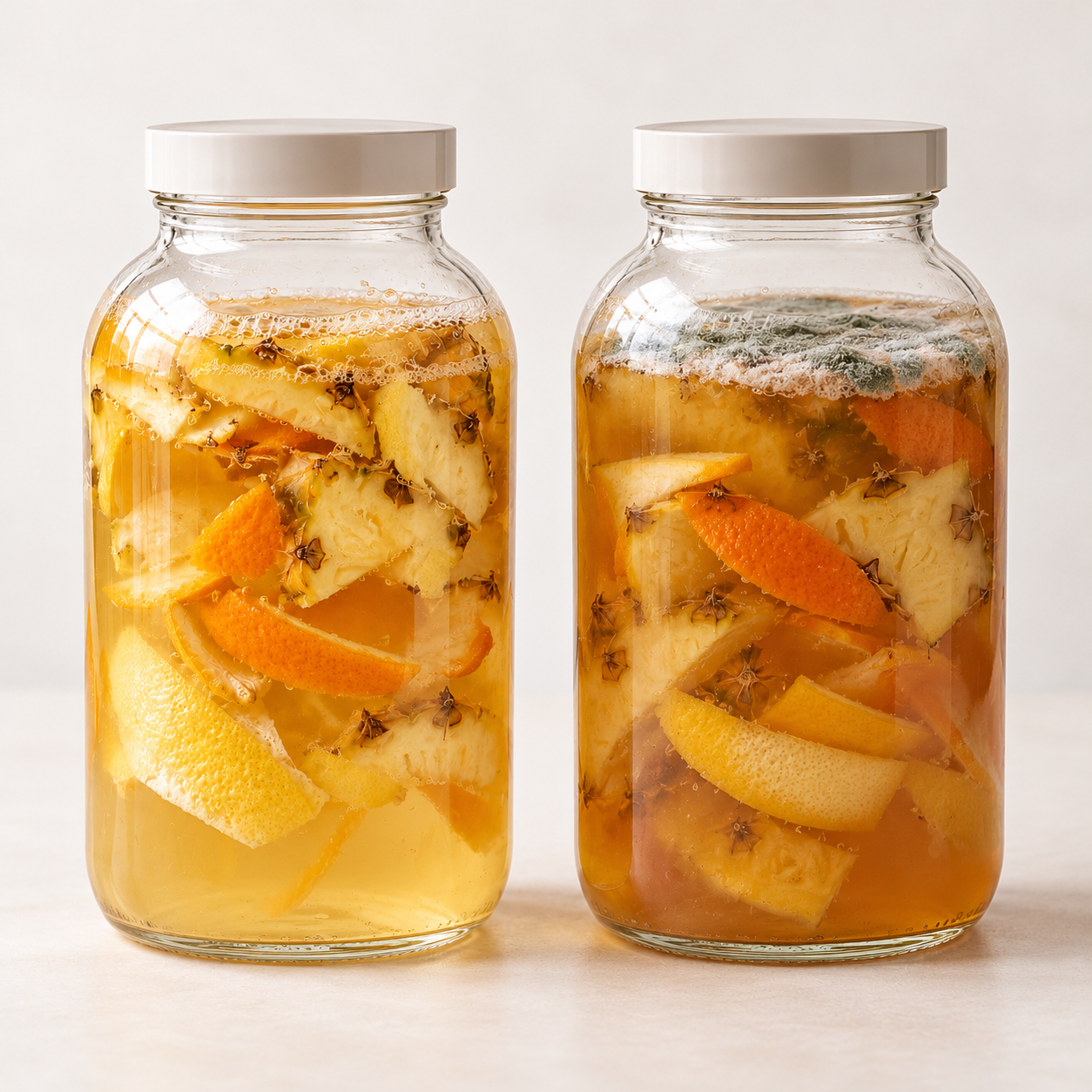
Bioenzyme fermentation is a living process, so appearance and activity can change as the batch develops.
One of the most important things to understand is the difference between normal fermentation activity and a genuine fungal problem.
What Does Normal Fermentation Look Like?
Active fermentation produces fizz and gas.
Citrus batches often show this activity more strongly than milder plant materials.
A rose or neem batch may appear less active than a lemon or orange batch.
That difference alone does not mean the batch has failed.
What Does Fungus Look Like?
The desired fermentation involves bacteria and yeast.
A fungal layer is not the intended result.
In the workshop, a problem fungal layer was described as:
- powdery;
- greenish or greyish;
- clearly visible on the surface;
- sometimes accompanied by an unpleasant smell.
I compared the physical layer to malai or milk cream because it sits on the top.
What Should You Do If You Notice a Small Fungal Layer?
If I catch a small surface layer early, I remove it thoroughly and continue observing the batch.
Humidity and insufficiently clean containers were discussed as possible contributors.
The important point is not to ignore visible fungal growth and allow the surface layer to become thicker and thicker.
What If the Batch Smells Very Bad?
If fungal growth becomes heavy and the batch develops a strong unpleasant fungal smell, I would not use it for dishes or personal-care applications.
In the workshop, I restricted that type of batch to toilet-cleaning use.
Does Bioenzyme Always Have the Same Colour?
No.
Colour depends on what was fermented.
A citrus-only preparation may be relatively light.
A mixed batch containing pineapple, orange and other material can naturally appear darker.
The sweetening material used in fermentation can also influence the colour.
So colour alone should not be used as the only quality test.
Does Less Fizz Mean the Batch Has Failed?
Not necessarily.
First, different plant materials ferment differently.
Second, gas production naturally slows as fermentation progresses.
A batch that was very active earlier can become much quieter later.
Why Observation Matters
Bioenzyme should not be judged only by one feature.
Look at the overall pattern:
- the type of raw material;
- changes in gas activity;
- smell;
- surface appearance;
- whether unwanted fungal growth is developing.
The fermentation process changes with time and temperature.
Understanding those changes makes it much easier to distinguish a naturally quieter batch from one that actually has a quality problem.