
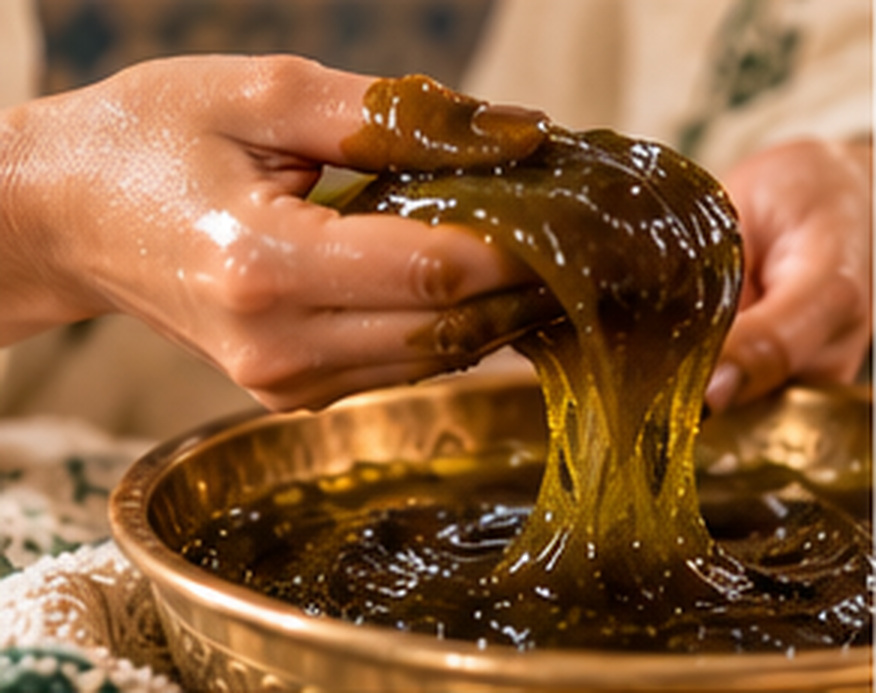
Traditional Beldi soap is designed to give a creamy feel rather than abundant bubbles. The workshop demonstration showed that the olive-oil-based traditional version became cream-like with continued rubbing, while more modern variations produced visible foam.
Creamy lather and bubbly lather are different
Lather does not always have to mean large bubbles. When the traditional soap is rubbed over wet skin, it can turn into a smooth, creamy layer. Even with more water and continued rubbing, the demonstration did not produce the kind of bubbly foam one might expect from an ordinary cleansing product.
Why was this characteristic desirable?
The original bathing ritual was not intended to finish as soon as foam appeared. The idea was to spend time massaging the product over the skin and gently exfoliating. A soap that creates a lot of bubbles can encourage us to rinse it away quickly. A creamier product encourages a longer massage.
Why do modern versions foam more?
Modern Beldi soaps may include oils such as coconut oil or castor oil, which were discussed in the workshop for their lathering contribution. These additions change the way a Beldi soap behaves without necessarily changing its familiar soft format. In the demonstration, the different versions clearly produced different amounts of foam.
Does the lather change after the soap is made?
In the live comparison, the soaps were still quite fresh. I observed that their lather could increase after resting for a few days. So the immediate foam seen in a freshly prepared product was not necessarily the final experience.
How to choose
If you want a slower massage-and-exfoliation ritual, the creamier traditional version makes sense. If you prefer the sensation of bubbles, look for a version specifically described as lathering. Neither should be mistaken for the other simply because both are called Beldi soap.