
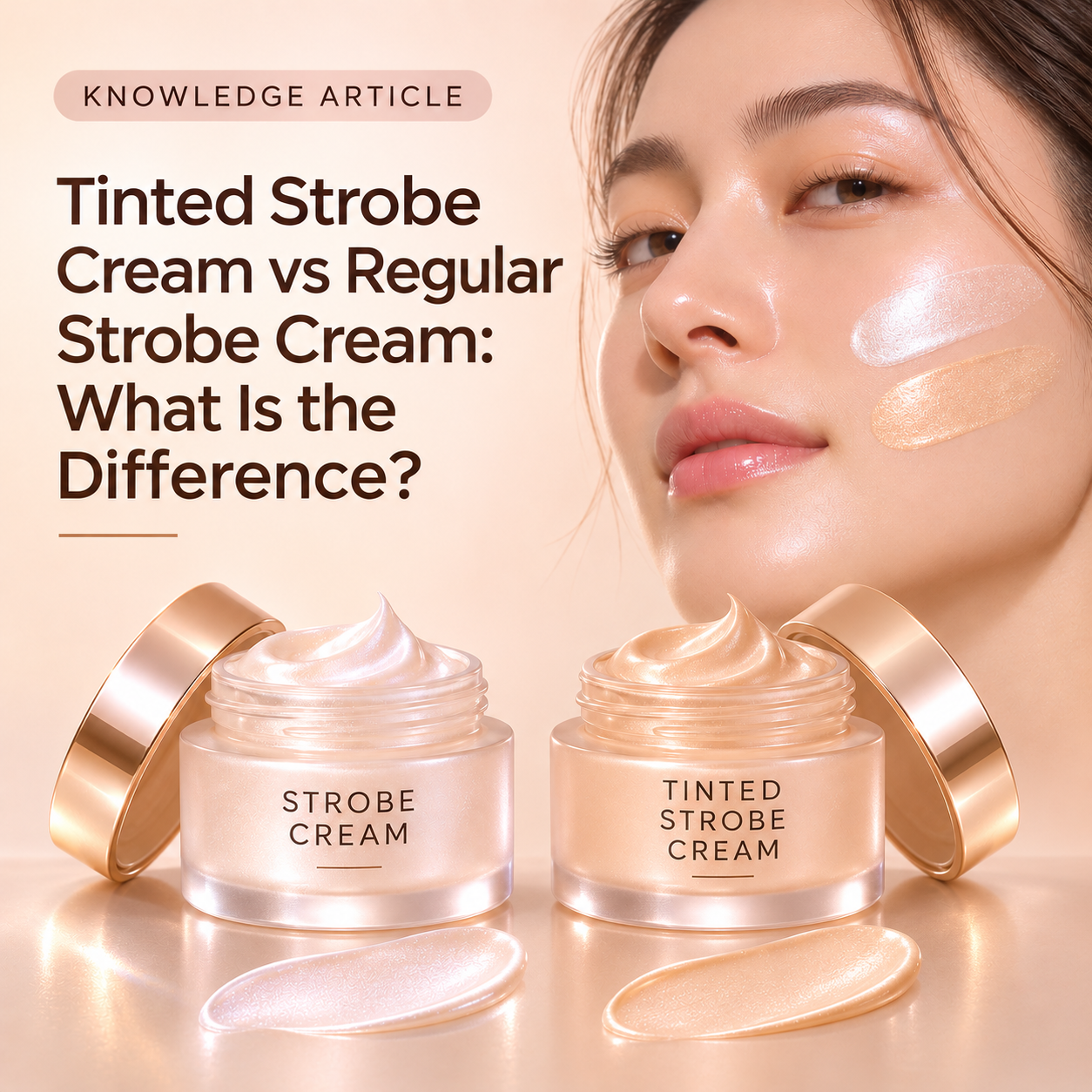
A regular strobe cream is primarily intended to create shine through light-reflecting mica. A tinted strobe cream adds coloured pigments, so it can change the visible base colour of the skin and provide some foundation-like coverage as well as luminosity.
Why mica alone does not provide the same coverage
A mica-based strobe product reflects light from the skin. It may make the face appear fresher or smoother under the right lighting, but it is not designed to conceal marks in the same way as a tinted foundation-like product. The immediate gloss should not be confused with actual colour coverage.
What changes when tint is included
During the demonstration, pigments are discussed for creating a skin-tone effect. A tinted variation visibly changes the appearance of the treated region and can soften the look of some marks. The result is different from the untinted strobe product, which creates a gleam without that same base-colour change.
Why colour matching is important
Tint needs to complement the person’s complexion. A mixture that looks intense by itself may look different once incorporated into a finished cosmetic product. If the tone is too red or otherwise mismatched, the result can appear unnatural. The lesson’s practical comparison shows why the final colour on the skin is more meaningful than the colour of a loose pigment.
What you should expect
A regular strobe cream is the simpler option for someone primarily seeking radiance. A tinted version may better suit someone who also wants some visible coverage. Neither appearance alone establishes improvements in underlying dark spots or marks. Choose by whether you want reflection, coverage, or both.