
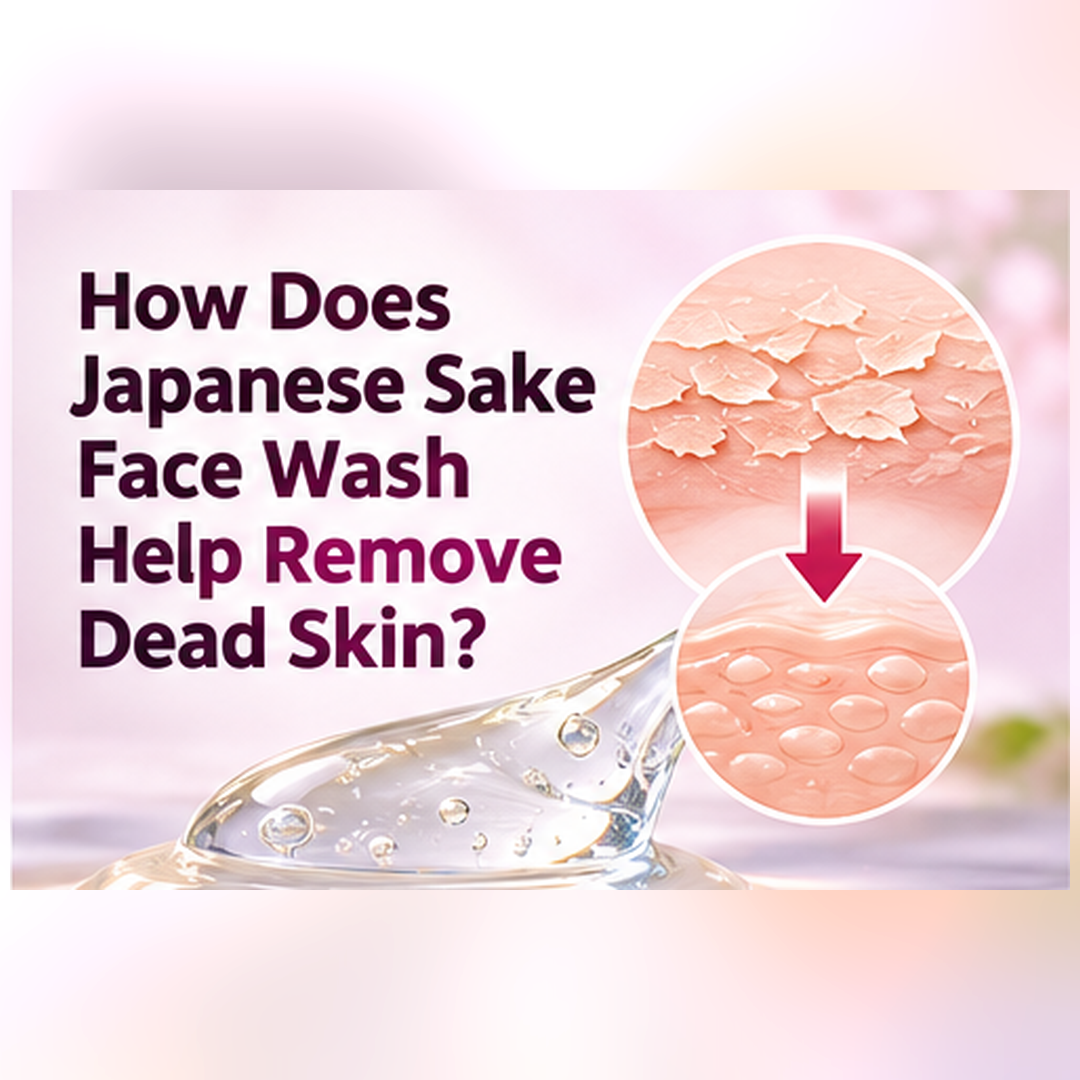
Japanese Sake Face Wash is designed to help remove accumulated dead surface skin cells through the exfoliating characteristics associated with Japanese sake vinegar.
The vinegar’s low pH is one of the main reasons it is selected for the cleanser.
Removing dull surface cells can make the skin appear smoother, cleaner and brighter.
Why Does Removing Dead Skin Matter?
Dead skin cells accumulate on the surface of the skin.
When this layer builds up, the skin can develop a dull appearance.
A cleanser that helps remove this accumulated material can improve how fresh and clear the skin looks after washing.
This is one of the reasons I particularly like Japanese Sake Face Wash.
The cleansing experience is associated not only with removing dirt and excess oil but also with making the skin appear brighter.
The resulting glow is an important characteristic of the product.
What Role Does Japanese Sake Vinegar Play?
The ingredient used here is Japanese sake vinegar, which is different from the alcoholic sake beverage.
Sake vinegar is discussed as having a low pH and exfoliating characteristics.
This is connected with helping loosen or remove dead surface skin cells.
The workshop also describes the vinegar as a rice-derived fermented ingredient associated with kojic acid, ferulic acid and amino acids.
These contribute to the wider skincare interest in fermented rice.
However, when discussing dead skin removal specifically, the key characteristic is the exfoliating action associated with the vinegar.
Why Can Skin Look Brighter After Exfoliation?
A useful way to understand this is to think about what happens when a dull surface layer is removed.
The skin underneath may look fresher and more even in appearance.
That is different from assuming that every brightening product works by the same process.
For Japanese Sake Face Wash, I emphasise the improvement in skin appearance associated with removing accumulated surface cells.
This helps explain why a cleansing product can provide an immediate-looking glow even though it is washed off.
How Does Exfoliation Relate to Other Skincare Products?
There is another important point.
The condition of the skin’s surface can affect how we think about the products applied afterwards.
If accumulated dead skin remains on the surface, I describe it as interfering with the penetration of subsequently applied skincare ingredients.
For example, a person may follow cleansing with a serum containing vitamin C, niacinamide or arbutin.
Removing the accumulated dull surface layer is discussed as helping those later products penetrate more effectively.
This does not mean the cleanser performs the same function as the serum.
The cleanser prepares and cleans the skin, while the leave-on product has its own intended purpose.
Is Applying Sake Vinegar Directly the Same as Using the Face Wash?
No. This is an important distinction.
Directly applying sake vinegar is discussed separately from using the finished facial cleanser.
The vinegar itself can produce a tingling sensation because of its low pH.
The finished face wash is a different product with other ingredients contributing to its overall properties.
Do not interpret an observation about direct vinegar application as an instruction to leave a face wash on the skin for the same length of time.
Does Exfoliation Replace Moisturisation?
No.
Japanese Sake Face Wash is still a cleanser.
Even when a cleanser is designed to avoid an excessively dry feeling, it does not replace a leave-on moisturiser.
Someone with extremely dry skin may need to follow washing with a light moisturising gel or cream.
The practical takeaway is that exfoliation, cleansing and moisturisation are related but different skincare functions.
Japanese Sake Face Wash is designed to combine cleansing with the exfoliating characteristics of sake vinegar, while additional skincare products can address the skin’s remaining needs.

