
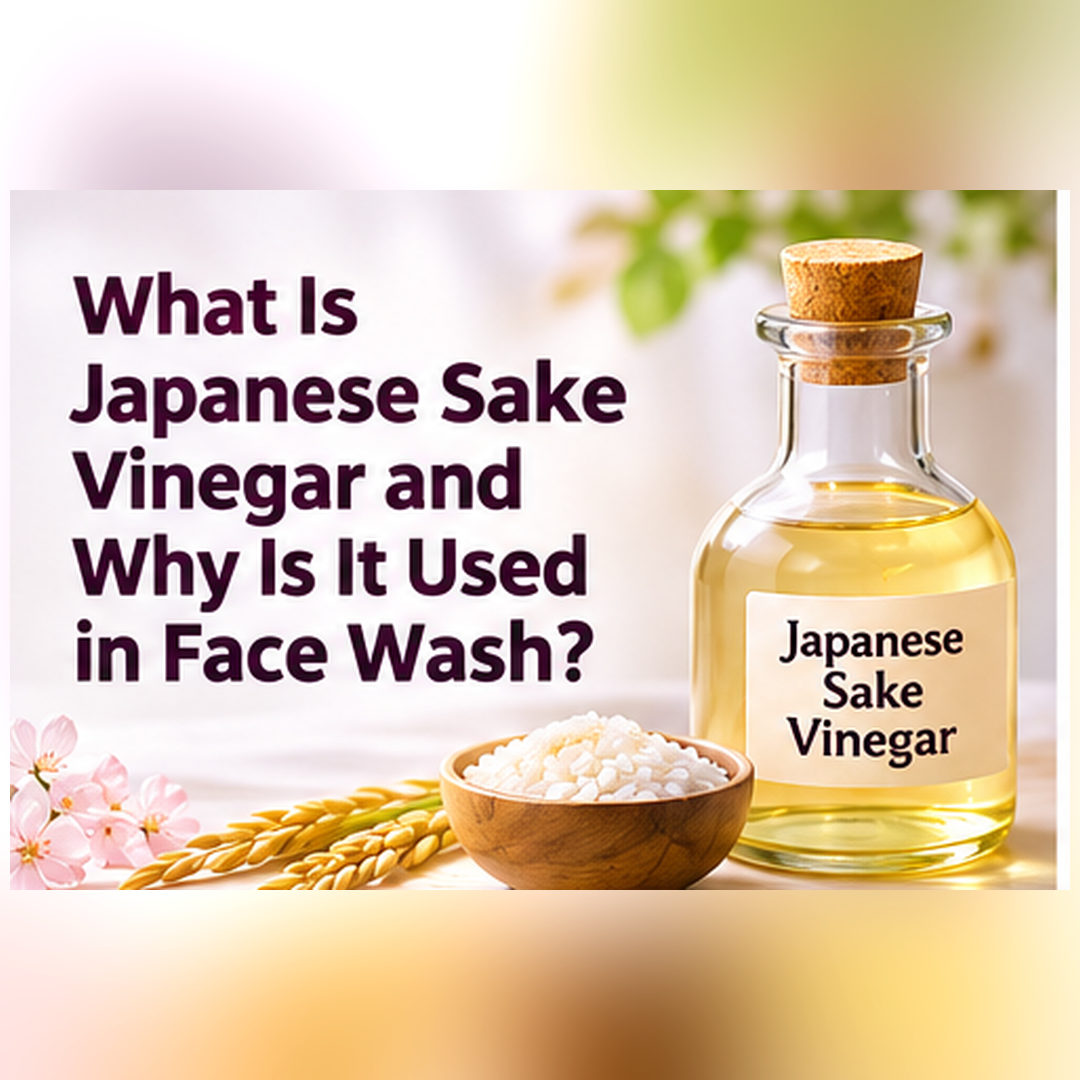
Japanese sake vinegar is a fermented rice-derived ingredient used in facial cleansers for its exfoliating and skin-brightening properties. It is different from Japanese sake wine, even though both are associated with fermented rice.
In Japanese Sake Face Wash, the ingredient I am referring to is sake vinegar, not the alcoholic beverage.
Understanding this distinction is important because the properties of sake vinegar are central to why it is selected for this particular skincare product.
Japanese Sake and Japanese Sake Vinegar Are Not the Same
Japanese sake is traditionally an alcoholic beverage prepared from fermented rice.
During the process described here, rice is fermented with the help of yeast and sugar, resulting in the formation of alcohol. The alcoholic liquid is then filtered and allowed to age.
Japanese sake vinegar involves further fermentation of rice-derived material associated with sake production.
As fermentation continues, the material becomes increasingly sour or tangy.
A useful comparison is idli or dosa batter.
When you leave the batter to ferment, it gradually develops a sour taste. If it is allowed to ferment for longer, that sourness becomes more noticeable.
This familiar example helps explain the sour character associated with fermented rice vinegar.
The vinegar is therefore different from the alcoholic sake beverage, even though both originate from rice fermentation.
Why Is Japanese Sake Vinegar Preferred in Face Wash?
The main reason I prefer Japanese sake vinegar for this cleanser is its low pH and the exfoliating characteristics associated with it.
The vinegar is discussed as helping remove dead surface skin cells.
These cells can accumulate and contribute to the appearance of dull skin.
When the accumulated surface layer is reduced, the skin can look cleaner, smoother and brighter.
This is one reason Japanese Sake Face Wash is associated with a fresh-looking glow after cleansing.
What Does Fermentation Contribute to the Skincare Concept?
Fermentation is an important part of what makes the ingredient interesting.
Japanese sake vinegar is discussed in connection with amino acids, kojic acid and ferulic acid.
These components are associated with different aspects of skincare.
Amino acids are discussed in relation to skin structure and firmness. Kojic acid and ferulic acid are associated with skin-brightening and pigmentation-related benefits.
This is why fermented rice is considered more than simply a botanical ingredient in the cleanser.
Its appeal is also connected with the changes that occur during fermentation.
Does Japanese Sake Face Wash Contain Sake Alcohol?
The distinction needs to be made carefully.
The Japanese sake ingredient selected for this face wash is the vinegar or rice ferment filtrate discussed in the formulation, rather than sake wine.
A skincare product named after sake should not automatically be assumed to contain the alcoholic beverage.
When evaluating such a product, it is useful to look beyond the word sake and understand which rice-derived ingredient is actually being used.
Is Japanese Sake Vinegar the Same as a Finished Face Wash?
No.
Japanese sake vinegar is an ingredient, while Japanese Sake Face Wash is a finished cleanser.
The finished product combines its rice-derived skincare concept with ingredients responsible for cleansing, lather, texture and skin comfort.
The vinegar’s properties therefore do not describe every characteristic of the completed face wash.
For example, the feeling of dryness or comfort after washing depends on the overall cleansing product, not simply on its headline botanical ingredient.
The important distinction is this: Japanese sake wine is a fermented rice beverage, whereas Japanese sake vinegar is the rice-derived ingredient selected here for its intended exfoliating and brightening characteristics.

