
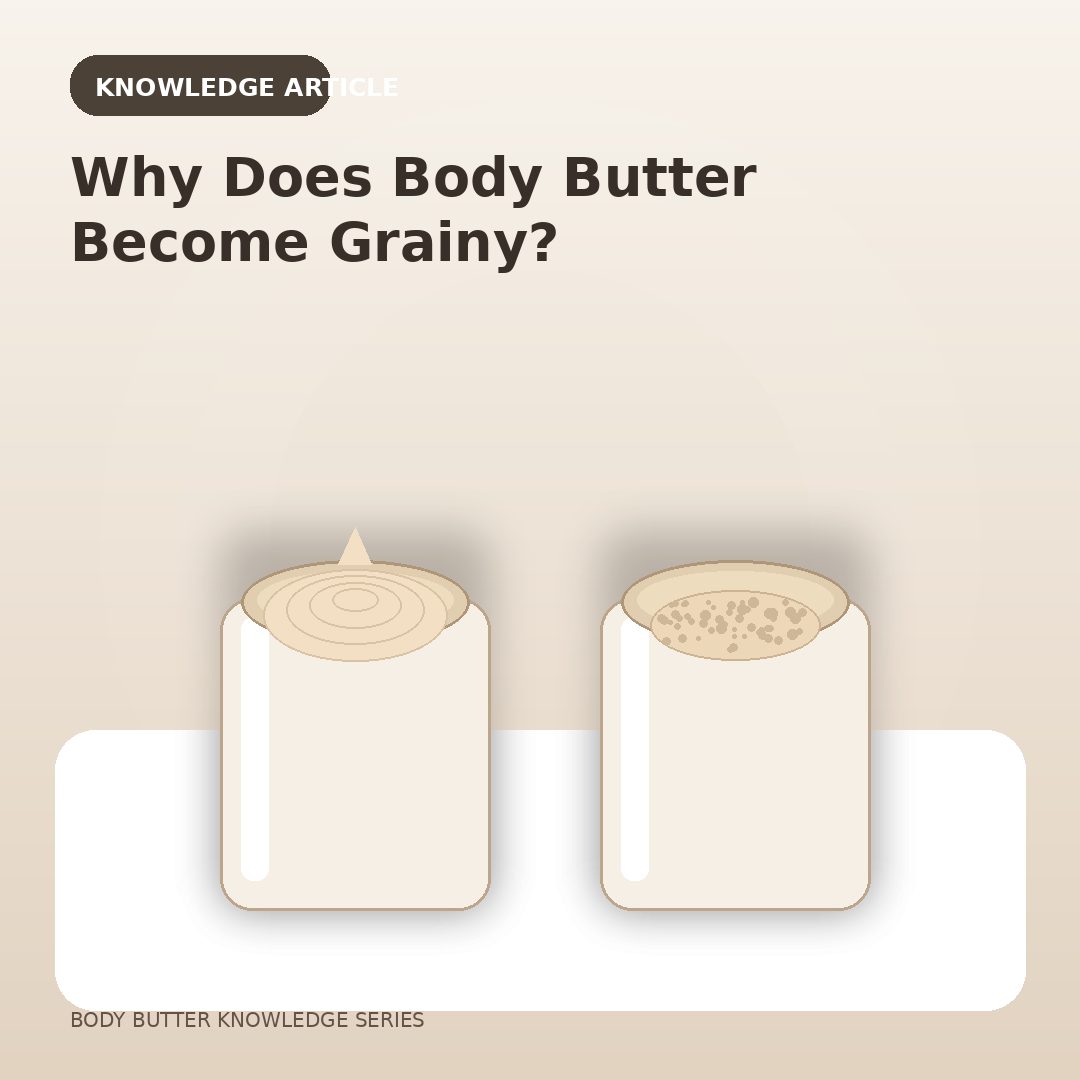
Body butter can become grainy when some of its natural butters, particularly shea butter, develop an uneven crystalline texture after being exposed to temperature changes.
The graininess is a physical texture problem. It does not automatically mean that the butter is contaminated or spoiled.
Why Is Shea Butter Particularly Important?
Shea butter is one of the ingredients I pay particular attention to when troubleshooting grainy butter.
A batch can develop small crystals or granules if it has experienced unsuitable temperature changes during:
- processing;
- storage;
- transportation;
- repeated heating and cooling.
You may therefore receive shea butter that already has a grainy character before you have made anything with it.
Does Graininess Mean the Ingredient Is Poor Quality?
Not necessarily.
Temperature history can influence the butter even when the ingredient itself is otherwise usable.
You often do not know exactly what happened before the material reached you.
A supplier may have stored or transported it through hot and cold conditions.
This is why I do not judge an entire ingredient only from one grainy batch.
Can Refrigerating Raw Shea Butter Create Problems?
In the workshop, I recommend storing raw shea butter at normal room temperature in an airtight container rather than refrigerating it simply because it is expensive.
Repeated or extreme temperature changes can encourage the kind of texture change we are trying to avoid.
The principle is to keep the raw material under reasonably consistent conditions.
Why Should You Test a New Batch of Shea Butter?
When buying a new lot of shea butter, I prefer making a small test batch before committing a large quantity of product.
Observe it for several days.
If the texture remains smooth, you can proceed with more confidence.
This is particularly useful in commercial production because a grainy batch discovered after filling many jars creates a much larger problem than a grainy test batch.
Is Every Grainy Body Butter Caused by Shea Butter?
The workshop focuses particularly on shea because it is prone to this issue, but cooling behaviour matters more generally when working with natural butters.
An emulsified body butter can also develop an undesirable texture if it is force-cooled simply to speed production.
During the class demonstration, rapid cooling was used only to save workshop time, and I specifically pointed out that this is not the preferred normal approach because rushed cooling can contribute to poor texture.
Is Graininess the Same as Spoilage?
No.
A grainy butter may still smell normal and otherwise appear normal.
Spoilage and rancidity have different signs and causes in the framework taught here.
Rancidity is associated with oil deterioration and an unpleasant smell.
Graininess is mainly about texture and crystallization.
That distinction prevents unnecessary confusion.
What Should a Good Whipped Butter Feel Like?
A properly finished whipped butter should feel smooth rather than sandy or gritty.
The butter should soften when rubbed between the fingers or palms and spread without obvious hard particles.
The fluffy appearance created through whipping should also be matched by a pleasant skin feel.
Why Does Temperature Control Matter Even After Production?
The product does not stop responding to temperature when it leaves your workspace.
A body butter being shipped can move through hot vehicles, warehouses and cooler environments.
That makes temperature behaviour important not only during manufacturing but also during storage and transport.
A product intended only for personal use in one home has a much more predictable environment than a product being shipped around the country.
What Is the Practical Lesson?
When a body butter becomes grainy, do not immediately assume that the formula is contaminated or that every ingredient is poor quality.
First consider the temperature history of the butter, particularly the shea butter.
Store raw materials appropriately, test new lots before making large batches, and avoid unnecessarily harsh or rushed temperature changes.
Smooth body butter begins with understanding how natural fats behave, not merely with whipping them harder after the problem appears.
Related Topics
Why Does Natural Body Butter Melt in Hot Weather?
Whipped Body Butter vs Emulsified Body Butter: What’s the Difference?

