Hair conditioners and hair masks perform many of the same basic functions, but they differ mainly in treatment intensity, richness and how they are used.
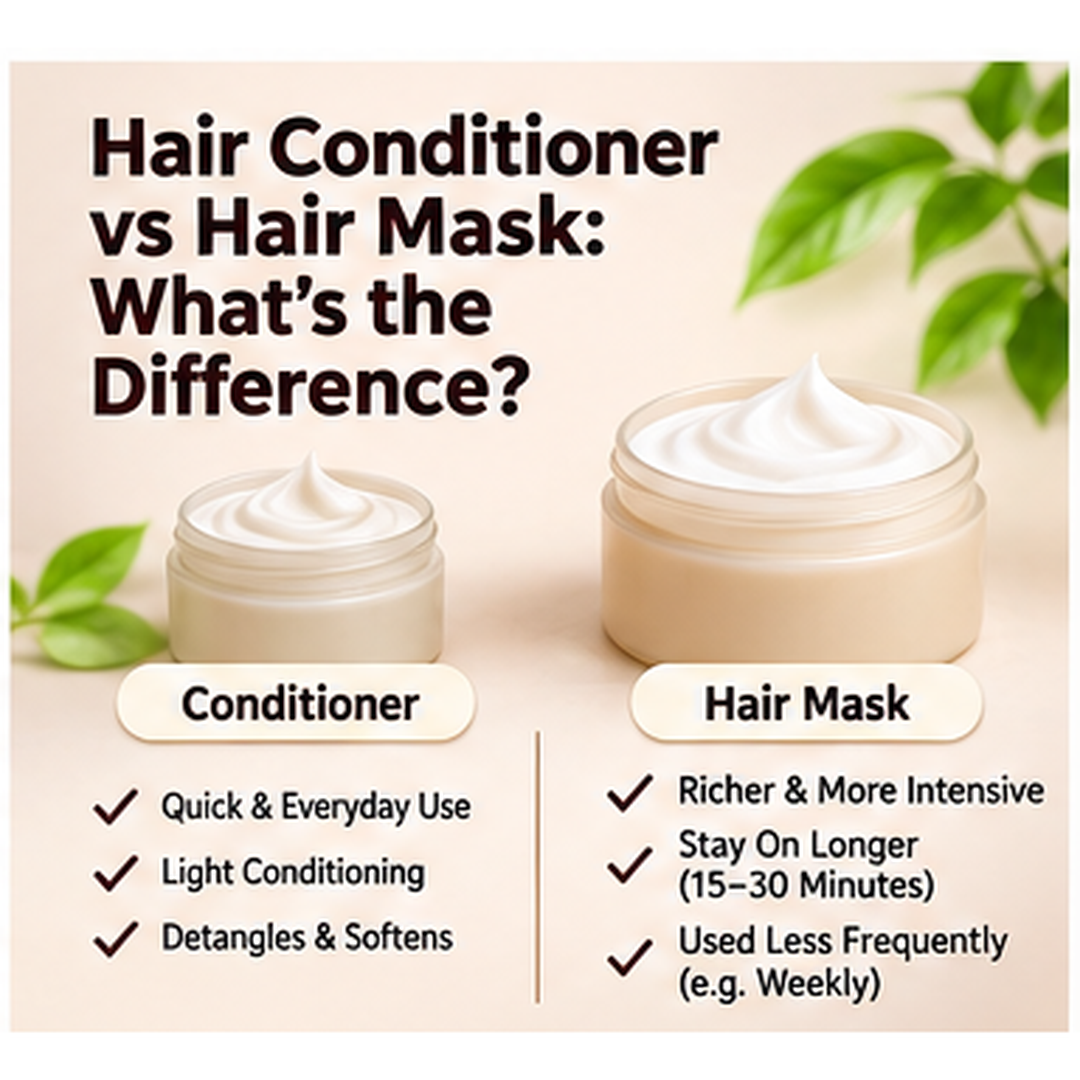
A regular conditioner is designed as a quick conditioning step after shampooing. A hair mask is a richer treatment that stays on the hair longer and is generally used less frequently.
Both can help soften, detangle, nourish and improve the appearance of hair.
What Is a Hair Conditioner?
A conditioner is the practical follow-up to shampoo.
After cleansing, apply the conditioner through the hair, leave it on briefly and rinse it with plain water.
Its purpose is to make the hair easier to manage after washing.
A regular conditioner can help improve:
- softness;
- detangling;
- shine;
- smoothness;
- combing;
- the overall feel of freshly washed hair.
Because it is a quick treatment, conditioner can be used regularly, including after almost every shampoo.
What Is a Hair Mask?
A hair mask can also be considered a conditioning product, but it is designed as a richer treatment.
It is closer to a home or salon hair-spa treatment than a quick everyday conditioning step.
A mask is generally thicker and is applied more generously. Depending on the type of mask, it may be used on both the scalp and the hair length.
It is then allowed to remain on the hair for approximately 15 to 30 minutes before being rinsed away.
Why Is a Hair Mask Considered More Intensive?
Hair masks are designed to provide additional nourishment.
A conditioner provides a relatively quick softening and detangling effect. A mask gives the hair more contact time with the treatment and can contain a richer selection of conditioning and nourishing ingredients.
A useful way to think about the difference is similar to hair oiling.
You may not perform a full hair-oiling treatment every day, but you might do it once a week when you have more time.
A hair mask can be treated in the same way: regular conditioner for routine maintenance and a richer mask when you want a more intensive treatment.
How Often Can You Use Each One?
Conditioner can generally be used whenever you shampoo your hair.
A mask can be used:
- once a week;
- once every 15 days;
- once a month;
- or more frequently when the hair requires more intensive care.
Someone with chemically treated or significantly damaged hair may choose to use a mask more often.
For personal use, I also like the idea of using a rich mask as the conditioning product when the hair needs additional care. But commercially, conditioner and hair mask are generally treated as two separate product categories because people expect a mask to be a more intensive treatment.
Do Hair Masks Always Go on the Scalp?
It depends on the mask.
Some masks are designed mainly for the hair length, while others are intended to nourish both the scalp and hair.
For example, a scalp-focused aromatherapy mask may be massaged more thoroughly into the roots, with the remaining product spread along the hair length.
A moisturizing or repair mask may concentrate more heavily on the hair itself, particularly dry or damaged areas.
The product’s intended use matters more than simply the words “conditioner” or “hair mask.”
Does a Hair Mask Replace Conditioner?
It can perform many of the same conditioning functions, but the products are normally used differently.
Conditioner is convenient when you want a quick treatment immediately after washing.
A mask is useful when you have time for a richer treatment and want the product to remain on the hair longer.
Neither product is automatically “better.” They serve different routines.
The Practical Takeaway
Use conditioner when you need convenient, regular softness and detangling after shampooing.
Use a hair mask when you want a richer treatment with more time for nourishment.
The most important difference is not simply product thickness. It is the intensity and purpose of the treatment.
Related Articles
Why Should You Use Conditioner After Shampooing?