
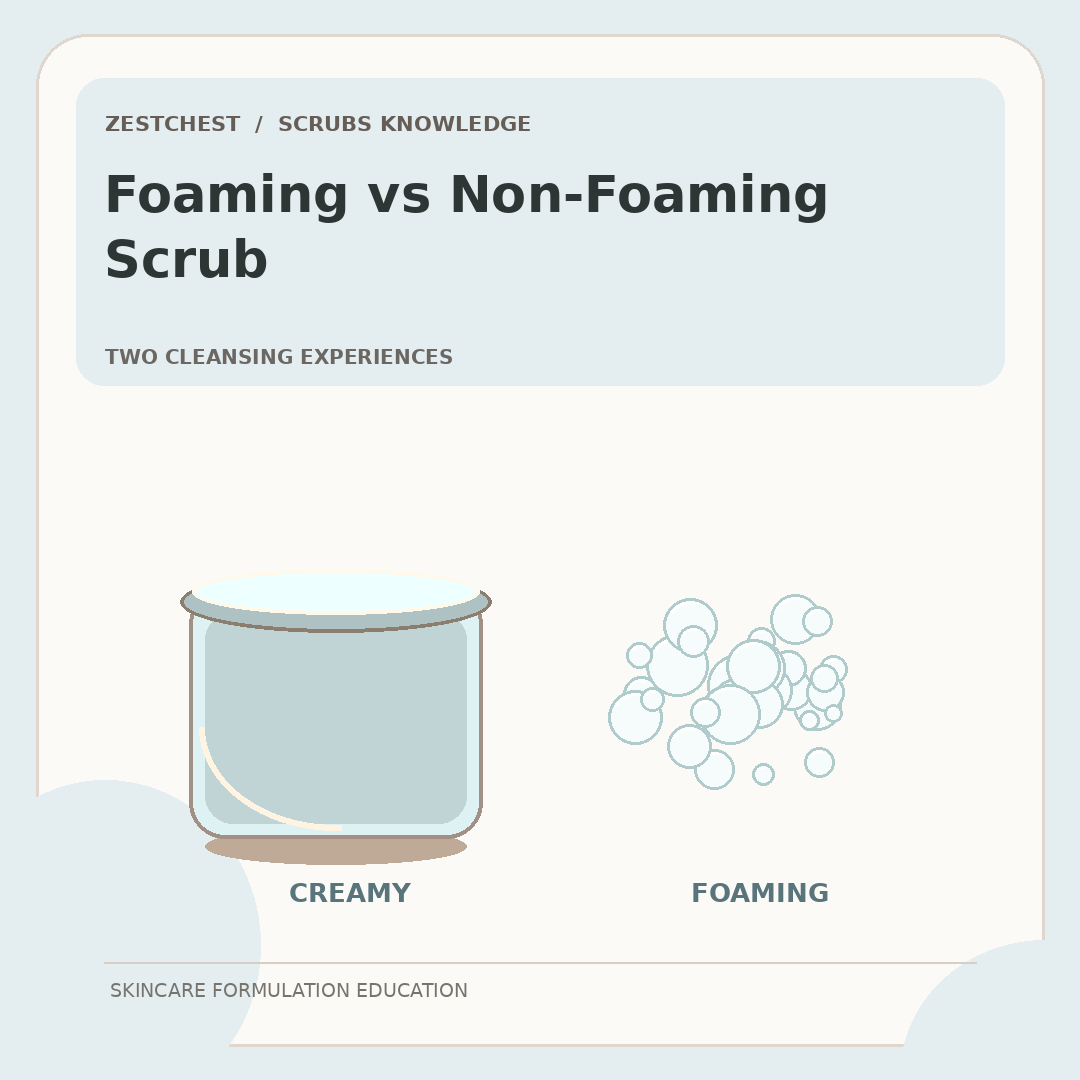
The main difference between a foaming scrub and a non-foaming scrub is how the product behaves when it comes into contact with water.
A foaming scrub produces lather during application, while a non-foaming scrub may remain oily, become creamy or develop a lotion-like feel.
Both can provide physical exfoliation.
Foam changes the cleansing experience, but it does not automatically mean that the scrub removes dead skin more effectively.
What Is a Foaming Scrub?
A foaming scrub combines exfoliating particles with ingredients that produce lather when the product is used with water.
During application, the user experiences both the grainy sensation of exfoliation and the bubbles associated with cleansing.
This makes the product feel different from a conventional oil-based body scrub.
The workshop demonstrates a foaming scrub that creates visible bubbles when used on wet skin.
The product also has a soft, creamy consistency.
This combination gives the scrub both a cleansing sensation and a noticeable exfoliating action.
Why Do Foaming Scrubs Produce Bubbles?
Foaming scrubs contain surfactants.
Surfactants contribute to the cleansing and lathering characteristics of a product.
One example discussed during the workshop is Sodium Cocoyl Isethionate, commonly known as SCI.
Its role is associated with the cleansing and foaming experience.
The bubbles become noticeable when the product is used with water.
However, the presence of foam is separate from the physical scrubbing action provided by the exfoliating particles.
How Does a Non-Foaming Scrub Work?
Non-foaming scrubs can have several different textures.
A traditional oil-rich scrub may feel buttery or oily during application.
An emulsified scrub behaves differently.
When water is introduced, its base develops a creamier texture and becomes easier to rinse away.
This transformation does not require the product to produce abundant bubbles.
A scrub can therefore feel moisturising and rinse comfortably without behaving like a foaming body wash.
Does More Foam Mean Better Exfoliation?
Not necessarily.
The scrubbing action comes from the exfoliating particles.
Foam contributes to the washing experience.
A foaming scrub may feel more cleansing because bubbles are produced during use, but the amount of foam does not directly describe the amount of physical exfoliation.
For example, a non-foaming sugar scrub may contain noticeable sugar crystals that gradually dissolve during application.
A foaming scrub may produce a generous amount of lather while still relying on its exfoliating particles for the scrubbing effect.
These are two separate characteristics.
Why Do Some People Prefer Foaming Scrubs?
Some users enjoy a product that creates bubbles during washing.
The lather makes the application feel closer to a body-cleansing routine.
In the workshop demonstration, the foaming scrub is described as giving a cleaner-feeling finish.
This can be appealing to someone who does not enjoy a heavy oily sensation after exfoliating.
Other users may prefer the rich, moisturised feeling of a non-foaming emulsified scrub.
Neither preference is automatically better.
Can Both Types Be Used for Body Exfoliation?
Yes.
The suitability of a scrub depends on its exfoliating particles and overall characteristics.
The foaming scrub demonstrated in the workshop is particularly recommended for body use because of its sugar or salt exfoliating particles.
Similarly, a coarse non-foaming scrub may be appropriate for the body but not the face.
Whether a product foams does not determine which skin area it should be used on.
Which Scrub Should You Choose?
If you enjoy lather and a cleaner-feeling rinse, a foaming scrub may suit your preferences.
If you prefer a rich, creamy and nourishing exfoliating experience, a non-foaming emulsified scrub may be more appealing.
The important consideration is how the product behaves on the skin and whether its exfoliating particles are appropriate for the intended area.
Foam describes the washing experience, while exfoliating particles provide the physical scrubbing action. A good scrub should be judged by both characteristics rather than its bubbles alone.

