
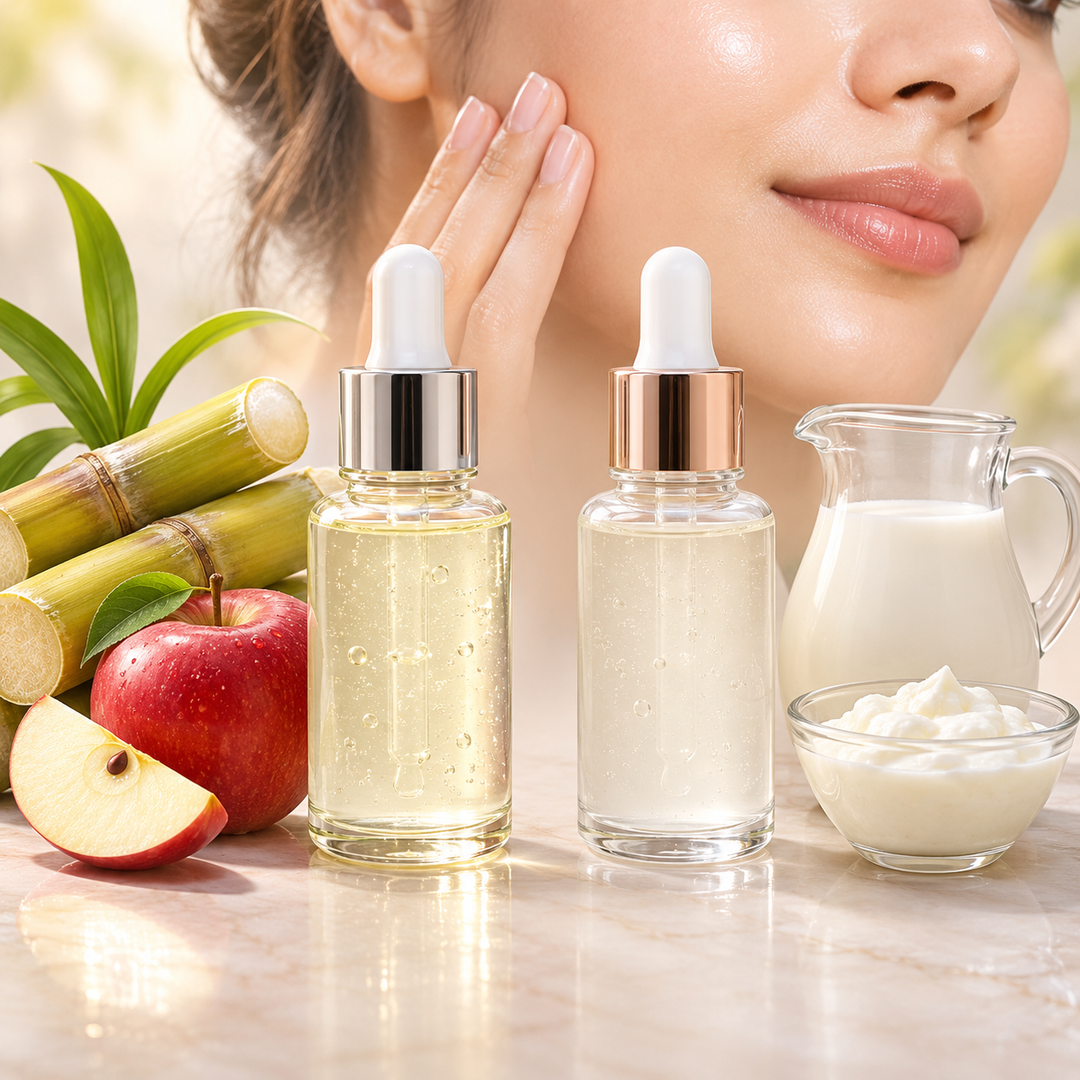
Glycolic acid and lactic acid are both exfoliating ingredients used in skincare products to help remove accumulated dead skin cells and improve the appearance of dull skin.
The main distinction discussed here is their source: glycolic acid is associated with sources such as sugarcane and apples, while lactic acid is associated with milk and curd.
Both are used for similar skin-brightening purposes.
Why Are Exfoliating Acids Used in Serums?
Skin can appear dull when dead skin cells accumulate on its surface.
A useful way to understand exfoliation is to think about how skin looks after a facial.
Following a facial that includes massage and scrubbing, the face often appears brighter.
One reason is that accumulated dead skin has been removed, making the skin beneath it more visible.
Exfoliating acids are used with a similar objective.
They help remove dead skin cells and improve the appearance of the skin’s surface.
What Does Glycolic Acid Do?
Glycolic acid is discussed as an ingredient derived from sources including sugarcane and certain fruits.
Its principal role in these serum discussions is exfoliation.
It is selected to address dull-looking skin associated with dead-skin accumulation.
When I describe an acid as removing or eating away dead skin, I am referring to its exfoliating action, not suggesting that a properly used everyday serum should visibly burn the skin.
What Does Lactic Acid Do?
Lactic acid is associated with milk or curd.
It is discussed as performing a function similar to glycolic acid.
Both are used to help remove dead skin cells and improve the appearance of dullness.
The workshop describes their purposes as closely related rather than establishing that one is universally better than the other.
Are Glycolic Acid and Lactic Acid Interchangeable?
They share a similar purpose, but that does not establish that every finished product containing one can be replaced with a product containing the other.
The intended application and overall product characteristics still matter.
For example, an everyday facial serum and a stronger skin-peeling preparation may both contain an exfoliating acid, but they are not intended to be used in the same way.
A daily-use serum is developed differently from a product designed for occasional exfoliating treatment.
Can These Acids Be Used for Ageing Concerns?
Yes. Exfoliating ingredients are also discussed in connection with ageing skin.
The explanation is that dead-skin accumulation can contribute to a dull appearance as skin ages.
Removing that accumulated layer can improve the appearance of the surface.
This is distinct from ingredients included primarily for hydration or collagen-related concerns.
Which One Should You Choose?
If the main concern is dead-skin accumulation and dullness, both ingredients are relevant to that purpose.
However, the source does not establish a reliable overall ranking between them for every skin type.
The important takeaway is that both glycolic acid and lactic acid are discussed for exfoliation and improved skin brightness, rather than being ingredients with completely different purposes.
Related Articles
- What Is Alpha Arbutin and How Is It Used for Pigmentation?
- Why Is Niacinamide Used in Anti-Acne and Brightening Serums?
- How Do You Choose the Right Serum for Your Skin Type?

