
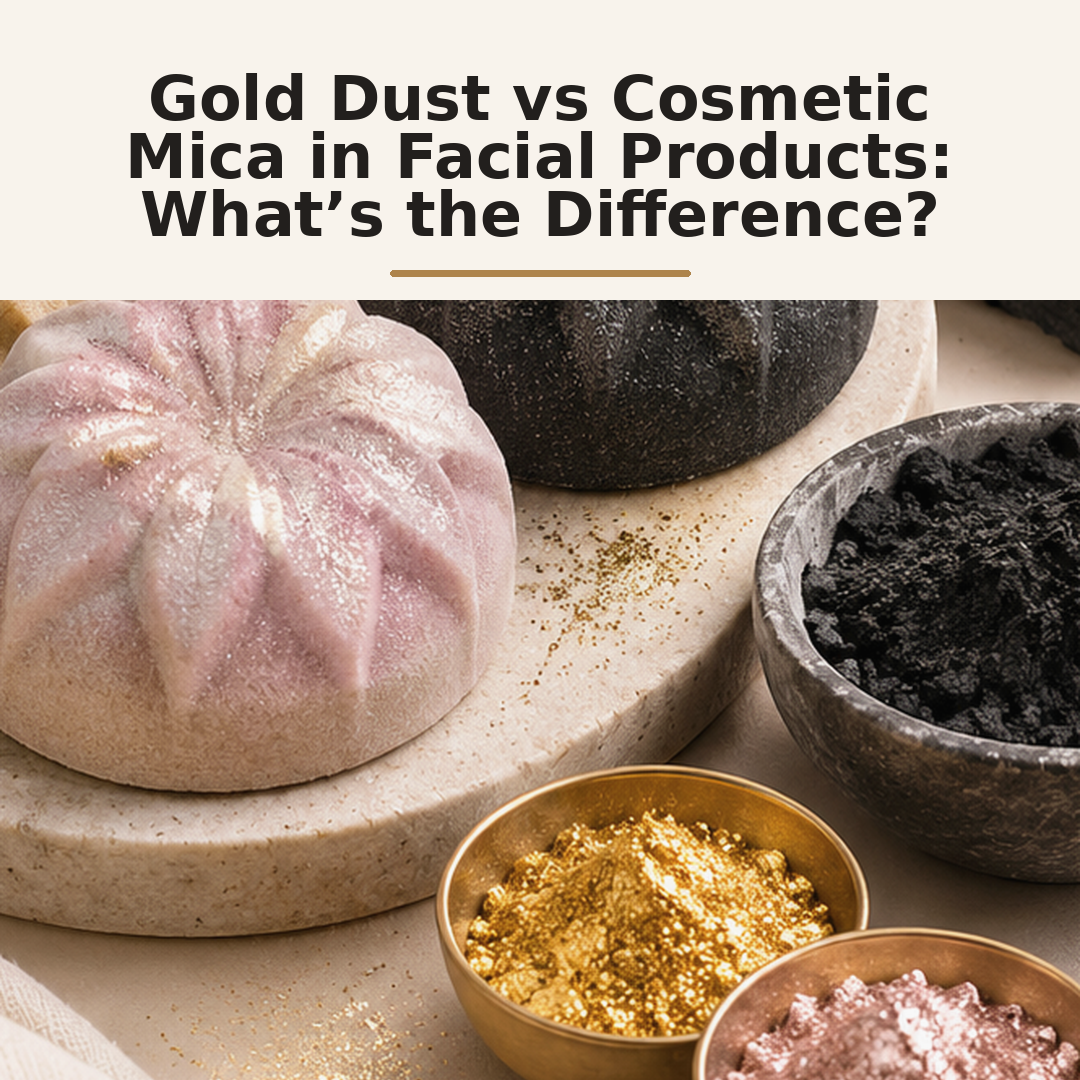
The inexpensive material commonly sold for cosmetic use as “24-karat gold dust” should not automatically be assumed to be pure gold. In the workshop, I explain that the visible golden effect in ordinary gold facial products generally comes from cosmetic mica or a similar fine gold-coloured powder.
Real gold and cosmetic gold-coloured mica are therefore very different things.
Why Do Gold Facial Products Look Glowy?
The gold-coloured particles are very fine.
When a gold facial product is used and then rinsed away, some of those fine particles may remain lightly on the surface of the skin.
That creates the visible golden glow or subtle sparkling effect people associate with a gold facial.
So when you look in the mirror immediately afterward, part of what you are seeing may simply be the way those fine reflective particles sit on the skin.
Does Gold-Coloured Mica Actually Do the Brightening Work?
I make a distinction between the visual gold effect and the longer-term brightening intention of the facial-bomb concept.
The mica or cosmetic “gold dust” provides the visible golden effect.
Other ingredients in the gold facial-bomb concept are selected for the brightening, tanning and pigmentation-focused role.
This distinction is important.
A product looking golden does not automatically mean the gold-coloured powder is responsible for every benefit associated with the finished facial.
Why Don’t I Assume Cheap “Gold Dust” Is Pure Gold?
Real gold is extremely expensive.
If a cosmetic material is being sold in comparatively large quantities for a very low price, I do not consider it realistic to assume that the powder is pure gold.
That is why I describe the commonly used material more honestly as cosmetic gold-coloured mica or similar cosmetic powder.
The name on a raw-material listing should not replace common sense about what the material is likely to be.
What About Using Actual Gold?
A student asked whether real gold could be used instead.
The practical problem is cost.
Even using a very small quantity of genuine gold would make the raw material dramatically more expensive.
I also question whether placing a very expensive amount of real gold into a short-rinse facial product gives a proportionate practical advantage.
The product remains on the skin for only a short treatment before being rinsed.
That makes genuine gold a very different commercial decision from using cosmetic mica to create a premium golden appearance.
Is There a Psychological Value to Real Gold?
There can also be a luxury and perception aspect.
If a customer knows that genuine gold has actually been used and is paying a premium for that, the ingredient becomes part of the perceived luxury experience.
But that does not remove the need to be honest.
If the product contains cosmetic mica, describe and position it honestly rather than suggesting that an inexpensive gold-coloured powder is a large amount of genuine precious metal.
Should the Mica Be Cosmetic Grade?
Yes.
For facial use, I specifically refer to cosmetic-grade mica.
The material used on skin should be appropriate for cosmetic application.
In the workshop, I also describe the mica as mainly remaining on the surface rather than deeply penetrating the skin.
Practical Takeaway
The easiest way to understand the difference is this:
Cosmetic mica creates the visible gold-like appearance. Genuine gold is an expensive precious metal and should not be confused with inexpensive cosmetic “gold dust.”
When evaluating a gold facial product, separate the immediate visual sparkle from the other ingredients responsible for the product’s wider skin-care positioning.
Related Topics
What Is a Facial Bomb and How Does It Work?
How Can One Facial Bomb Replace Several Facial Steps?
Which Facial Bomb Is Best for Dry, Oily, Sensitive or Acne-Prone Skin?

