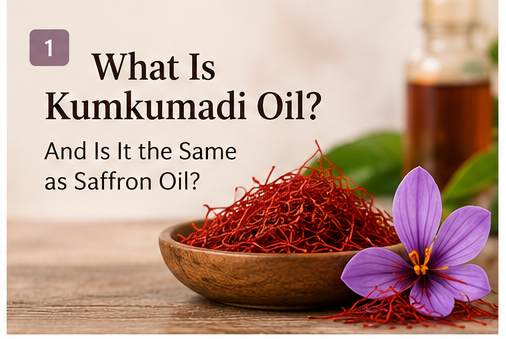
Kumkumadi oil is not simply saffron soaked in oil. Saffron gives the product its name and is one of its most important ingredients, but the traditional preparation discussed here is a multi-ingredient Ayurvedic oil containing a much broader group of herbs together with an oil base and milk. A simple saffron-infused carrier oil can still provide the properties associated with saffron, but it does not provide the full range of roles attributed to traditional Kumkumadi oil.
Why the distinction matters
The name comes from kumkum, a traditional name associated with saffron. That can easily create the impression that saffron is the whole product. It is better to think of saffron as the hero ingredient inside a larger system. Different ingredients are selected for different jobs: pigmentation and brightness, removal of dead surface cells, moisturization, soothing, acne care and support for aging skin.
What a saffron-only oil leaves out
Saffron itself is discussed for antifungal, soothing and skin-healing properties, and particularly for skin brightening and the appearance of freckles, tanning and pigmentation. But the wider preparation includes ingredients with other functions. Red sandalwood is discussed for dead-skin removal and balancing excess sebum; manjishtha and licorice for pigmentation; Neel Kamal for hydration and elasticity; and other herbs for inflammation, healing and aging-skin support. A saffron infusion therefore represents only part of the idea.
A practical clue when comparing products
A simple saffron infusion may look crystal clear after filtration. The more elaborate traditional oil can remain slightly turbid because herbal and milk components can leave traces even after filtration. Slight turbidity is therefore not automatically a defect in the type of Kumkumadi oil discussed here.
The useful takeaway
When evaluating a product called Kumkumadi oil, the important question is not merely whether it contains saffron. Ask what kind of Kumkumadi oil it is. Saffron provides the identity, but the traditional concept depends on a wider set of ingredients contributing complementary functions.
Related Kumkumadi Oil guides
→ How can you tell traditional Kumkumadi oil from a simple saffron-infused oil?
→ Why doesn’t traditional Kumkumadi oil have to be crystal clear?
For a broader look at its ingredients, benefits, skin uses and how to choose an authentic oil, read our complete guide to Kumkumadi oil.