

Facial Peels
Explore our complete Facial Peels learning hub covering different peel types, skin concerns, treatment strength, frequency, visible peeling and post-peel skincare.
Explore our complete Facial Peels learning hub covering different peel types, skin concerns, treatment strength, frequency, visible peeling and post-peel skincare.
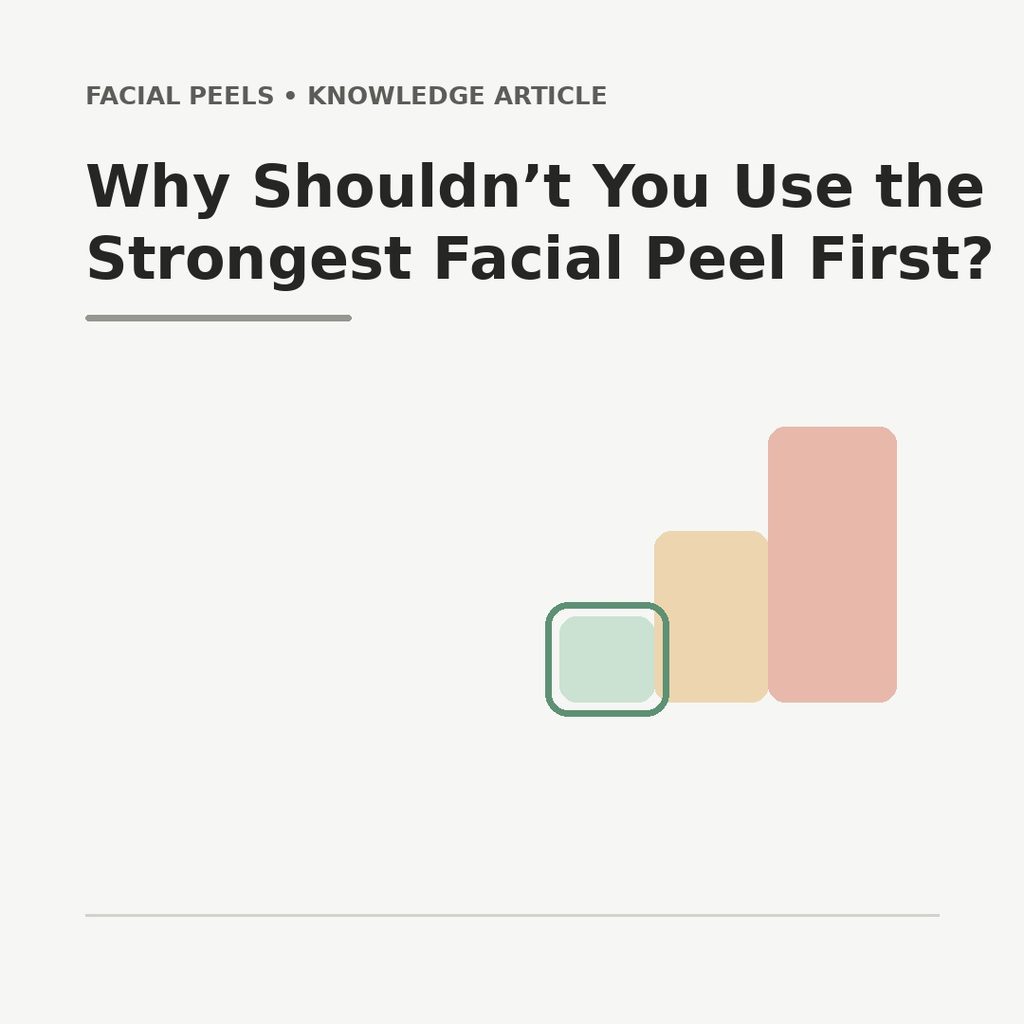
Stronger facial peels are not automatically better. Learn why starting with a mild peel and observing how the skin responds is the safer and more practical approach.
There is no single schedule for every facial peel. Learn how peel strength, skin response and treatment type affect how often a facial peel should be used.
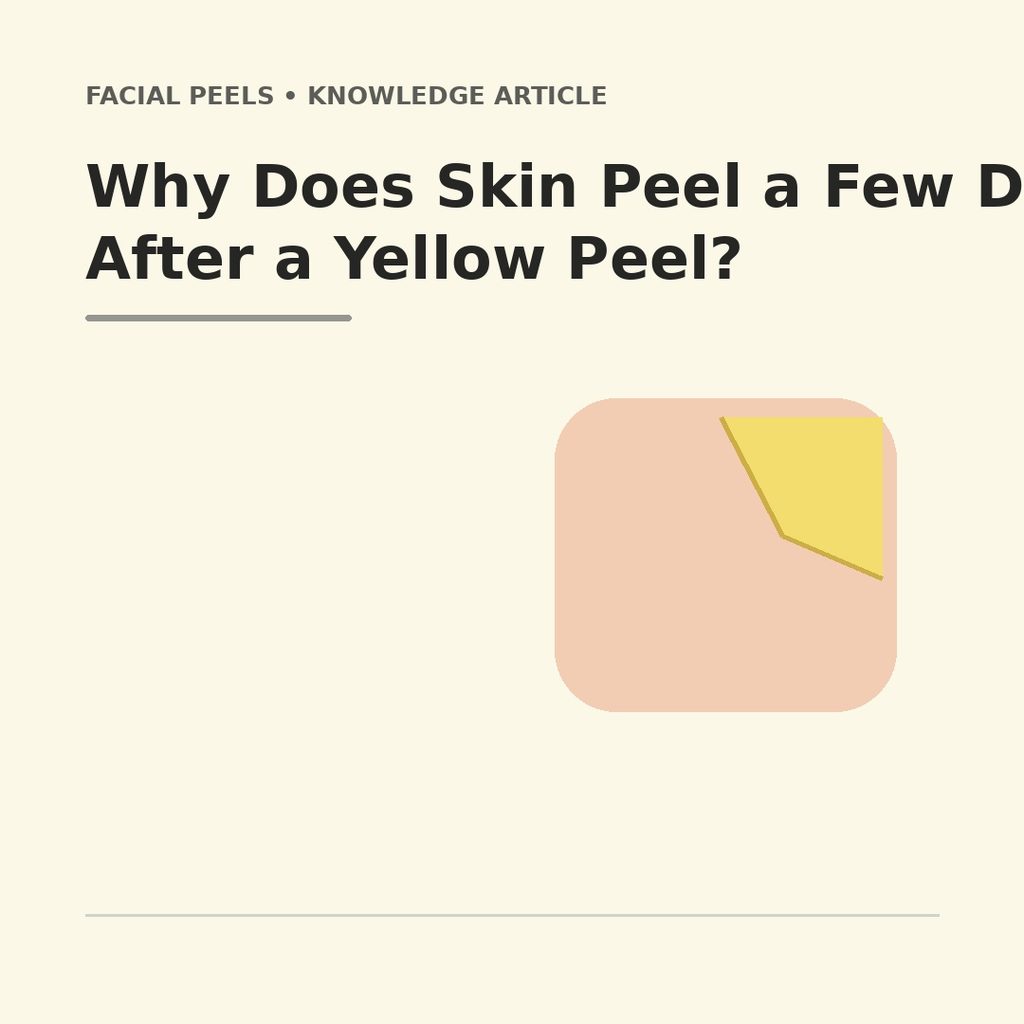
Yellow peel does not always show its visible effect immediately. Learn why the skin may first feel soft, then rough, and begin peeling a few days later.
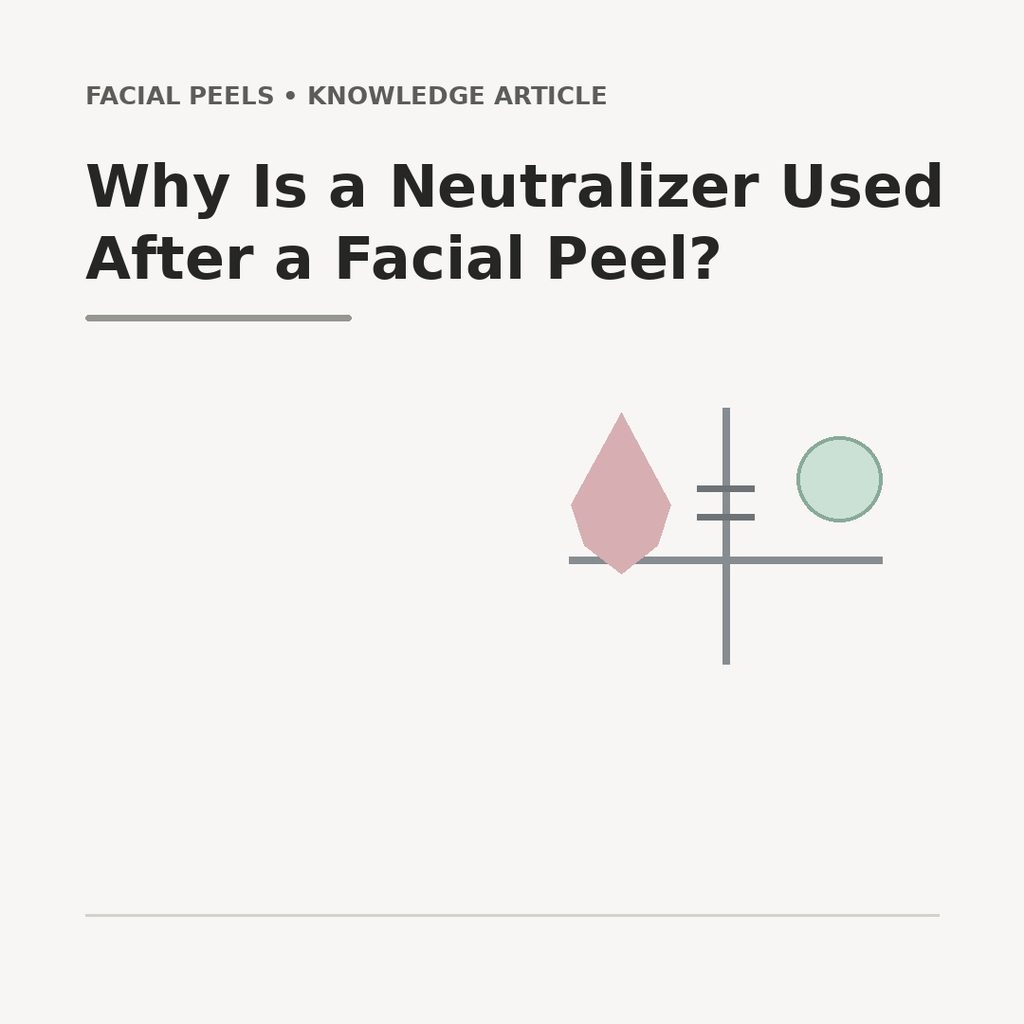
A facial peel neutralizer helps bring the skin away from the acidic condition created by the peel. Learn why this step matters and why the neutralizer itself should not be left on indefinitely.
Serum is usually paused for a few days after a facial peel because freshly exfoliated skin can be more sensitive. Learn when to restart it and what to use meanwhile.
Glycolic and lactic peels are both used for surface concerns such as tan, mild pigmentation and fresh acne marks. Learn how they differ in strength and treatment character.