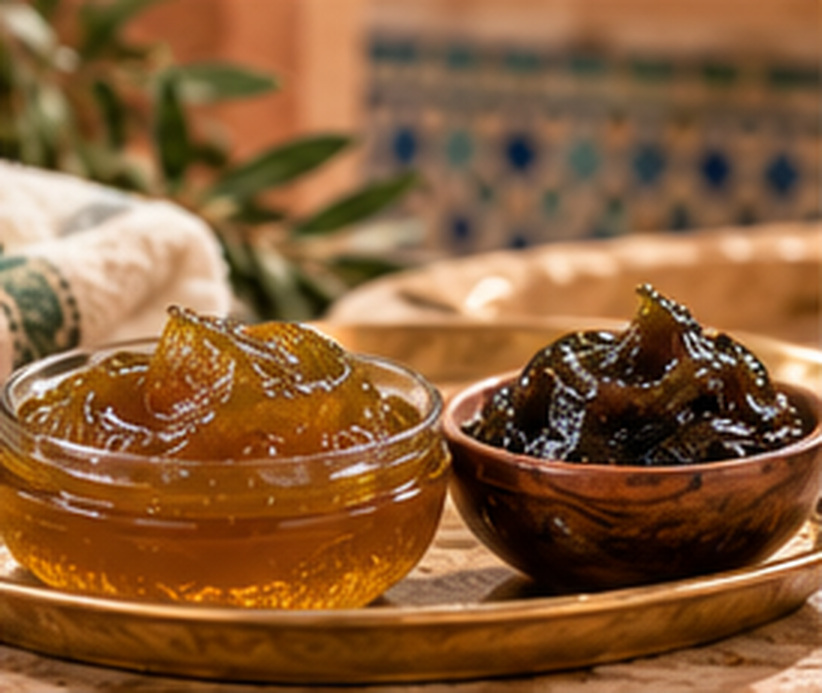
Beldi soap can be translucent and jelly-like, opaque, or creamy-looking. The workshop linked these differences mainly to the ingredients present and to the product’s final texture. A clear-looking soap is not automatically a different category of cleanser.
The plain jelly-like appearance
A relatively plain Beldi soap was shown with the familiar transparent or translucent gel appearance. When the demonstration used a version without fruit or herbal purée, its clearer look was especially noticeable.
What changes the appearance?
Fresh purées, powdered herbs, clays and other additions may alter how the soap looks. Some materials contribute visible particles or colour; others make the result less translucent. In the demonstrations, the three soaps did not all look alike even though they belonged to the same Beldi soap family.
Why a creamy version may look lighter
The workshop also showed the difference between leaving the paste jelly-like and giving it a whipped, creamier appearance. The whipped sample looked fluffier and lighter in colour, while the unwhipped sample retained more of the translucent gel character. These are different presentation choices, not evidence that the product is necessarily better or worse.
What should consumers pay attention to?
A buyer may prefer a clear jelly because it looks familiar to a traditional paste, or a creamy-looking soap because of its texture. Neither appearance alone tells you how much the product will lather. The demonstrated soaps varied in foam as well as appearance, so these characteristics should be considered separately.
When evaluating Beldi soap, look beyond colour and transparency. Texture, added materials and the type of lather are separate aspects of the product experience.