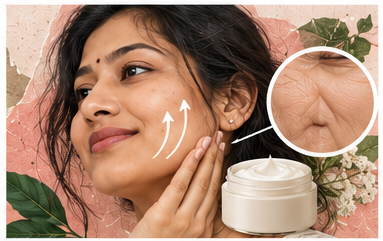
An anti-ageing cream should not be thought of as a product built around one fashionable ingredient. Ageing skin is discussed in terms of reduced plumpness, fine lines and loss of firmness, so a treatment cream can address hydration, nourishment and firmness together.
Why hydration matters in anti-ageing care
Hyaluronic acid is used as a moisture-holding ingredient associated with the plump appearance of younger skin. As skin ages, this moisture-retention capacity is described as declining, making hydration an important part of an anti-ageing product.
D-panthenol, or provitamin B5, is also discussed for moisturisation and softness, as well as fine-line care and helping other useful ingredients penetrate effectively.
Collagen-related ingredients are only one part of the picture
Vitamin C is associated with collagen production, while collagen and hydrolysed proteins are discussed in relation to maintaining a firmer feel as facial tissues age. Vitamin E contributes nourishment and antioxidant support.
The useful point is that these roles are complementary. Plumpness, dryness, fine lines and firmness are not the same concern, even though they may appear together.
Avoid reducing anti-ageing to a single hero ingredient
A well-conceived anti-ageing cream can combine ingredients selected for moisture retention, nourishment, fine lines and firmness. The more useful question is not “Which one anti-ageing ingredient should I look for?” but “Which visible changes is this cream actually designed to address?”