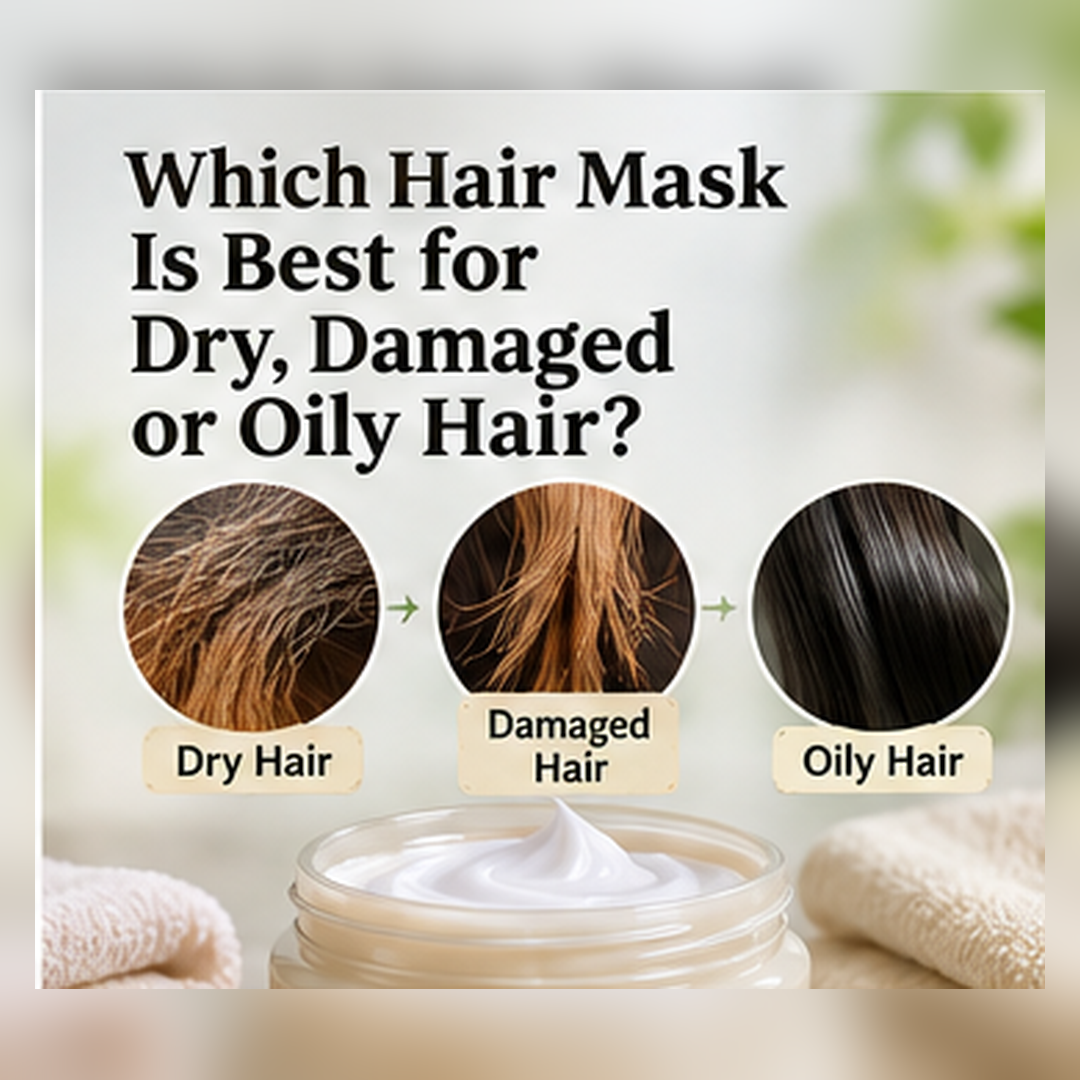
The best hair mask depends on the actual condition of the hair.
Very dry and rough hair needs a different type of treatment from chemically damaged hair, while oily or naturally flat hair usually needs something lighter.
There is no reason to force every hair type into the same mask.
For Very Dry, Rough and Frizzy Hair
When the main problem is dryness, roughness and frizz, a richer moisturizing mask is the more logical choice.
These masks are designed around stronger moisturising and nourishing care and may include richer oils and butters.
This type of richness is useful when the hair genuinely needs it.
The same richness may be unnecessary for someone whose hair is already soft or oily.
For Chemically Treated or Damaged Hair
Hair that has undergone treatments such as:
- colouring;
- bleaching;
- straightening;
- perming;
- smoothening;
may be better suited to a repair-focused mask.
The workshop positions the keratin repair mask specifically for this kind of damaged hair and uses protein-focused ingredients such as hydrolyzed keratin and hydrolyzed silk protein in that product concept.
What About Coloured Hair?
Do not choose only according to the fact that the hair is coloured.
Look at what the colouring has actually done to the hair.
If the coloured hair has become extremely dry and rough, a moisturizing mask may be appropriate.
If it is more clearly treatment-damaged, a repair-focused mask may make more sense.
The condition of the hair should guide the decision.
Which Mask Is Better for Oily Scalp?
Among the masks discussed in the workshop, I prefer the less-oily repair-focused keratin mask for an oily scalp rather than the richer intense moisturizing mask.
This is not because oily hair cannot use a mask.
It is because a very rich combination of oils and butters may be more than that hair type needs.
What About Normal Hair?
Someone with already manageable hair does not necessarily need an intensive repair mask.
A lighter aromatherapy-style treatment or lighter conditioning approach may be sufficient when the person mainly wants maintenance and a pleasant scalp-care experience.
Can One Mask Be Sold as Suitable for Everyone?
I would be careful with that idea.
One customer has dryness.
Another has oiliness.
Another has hair fall.
Someone else has dandruff.
Another has chemically damaged hair.
Calling one rich mask automatically ideal for every hair type ignores these differences.
How Should You Choose?
Start by identifying the main concern:
Very dry and rough: choose stronger moisturizing care.
Treatment-damaged: choose repair-focused care.
Oily or easily weighed down: choose a lighter mask.
Normal and manageable: avoid unnecessary heaviness.
This approach is much more useful than asking which mask is simply “the best.”
The Practical Takeaway
Hair masks should be selected according to what the hair actually needs.
The richest formula is not automatically the most suitable one.
The right mask is the one whose level of moisture, conditioning and treatment matches the condition of the hair.
Related Topics
Why Can Conditioner Make Fine or Oily Hair Look Flat?
Conditioner vs Hair Mask: What’s the Difference?
Herbal Extract vs Herbal Powder in Hair Masks: What’s the Difference?