
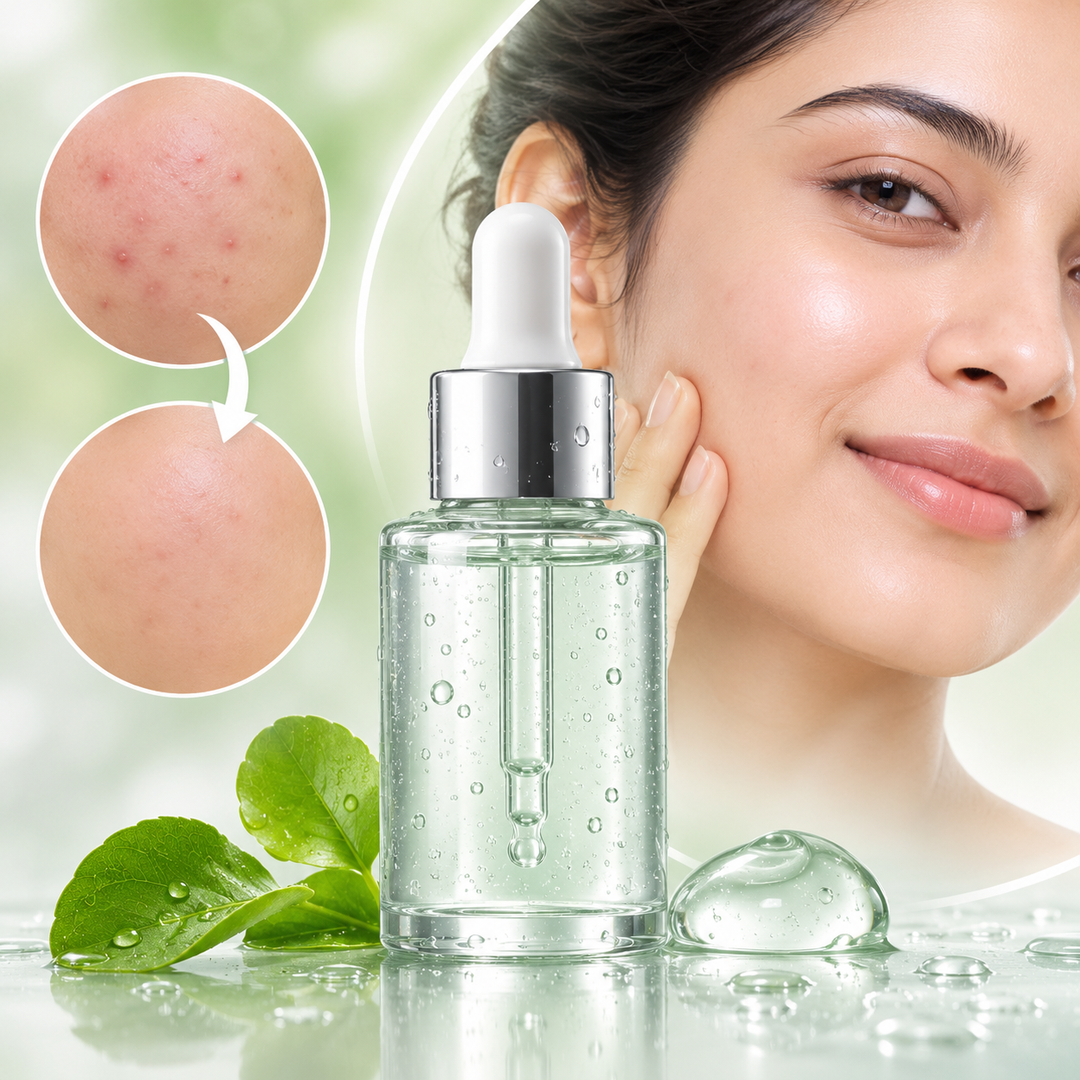
Niacinamide, also known as vitamin B3, is used in facial serums because it is associated with reducing the occurrence of acne and improving the appearance of pigmentation, acne marks and tanning.
This makes it relevant to two common concerns: acne-prone skin and uneven skin tone.
How Does Niacinamide Help Acne-Prone Skin?
Niacinamide is discussed as an ingredient that helps reduce the formation of acne.
The important distinction is between reducing breakouts and completely eliminating acne.
An anti-acne ingredient may help reduce how frequently new pimples develop without necessarily removing every existing breakout.
For someone who experiences oily skin with occasional acne, this can be a useful consideration when choosing a serum.
More extensive acne may require a product designed specifically for that concern rather than relying on a general serum for oily skin.
Why Is Niacinamide Used for Pigmentation?
Niacinamide is also used in products intended to improve uneven skin tone.
Melanin is the pigment associated with skin colour.
In this skincare approach, niacinamide is described as helping reduce the appearance of pigmentation associated with melanin.
This makes it relevant to acne marks and tanning as well as general brightening.
For example, someone may no longer experience frequent pimples but still have visible marks from previous acne.
In that situation, reducing new breakouts and improving the appearance of existing marks are two related but different objectives.
Niacinamide is discussed for both.
Is an Anti-Acne Serum the Same as a Brightening Serum?
Not necessarily.
An anti-acne serum is primarily developed to address breakouts, excess sebum and acne-related concerns.
A brightening serum focuses on dullness, tanning and uneven skin tone.
Niacinamide may be relevant to both categories because it is associated with multiple skin benefits.
However, the presence of niacinamide does not make every serum suitable for exactly the same purpose.
Can Niacinamide Completely Remove Acne?
I would not describe it as an ingredient that necessarily removes every pimple.
Its role is primarily discussed in terms of reducing acne formation.
That distinction matters when choosing skincare for someone who has only occasional breakouts compared with someone experiencing more extensive acne.
What Is the Main Benefit of Niacinamide?
Niacinamide is a versatile ingredient because it is used in products targeting both breakouts and pigmentation.
The best way to understand its role is to distinguish between preventing new acne and improving the appearance of marks left behind by earlier breakouts.
These are related concerns, but they are not identical.
Related Articles
- What Is Alpha Arbutin and How Is It Used for Pigmentation?
- How Do You Choose the Right Serum for Your Skin Type?
- Glycolic Acid vs. Lactic Acid: What’s the Difference?

