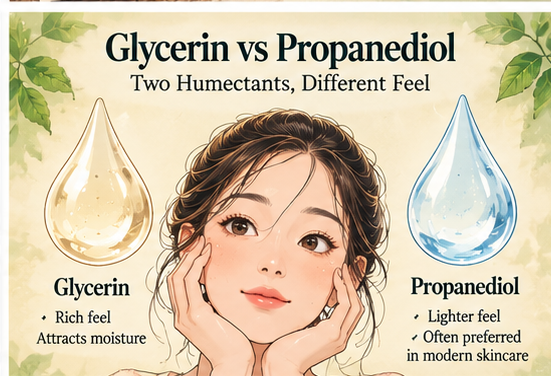
Glycerin is highly moisturizing, but some people experience a sticky or ‘sweaty’ feeling when using it. I describe that sensation as moisture being drawn from the environment onto the skin rather than necessarily being perspiration. If that skin feel is unpleasant, propanediol is presented as an alternative that can provide similar hydration with a lighter, less sticky feel.
Why glycerin can feel different on different people
The fact that glycerin feels moist or sticky does not mean it has failed as a moisturizer. In the workshop discussion, that sensation is connected to its strong moisturizing character and the way moisture is experienced on the skin.
When propanediol becomes useful
Propanediol is useful when the objective is still hydration but the user dislikes glycerin’s sensory feel. It is described as less sticky while providing similar hydration. The trade-off is practical: propanediol is more expensive and less commonly available than glycerin.
Dry skin changes the decision
Skin feel is personal. For somebody with very dry skin, the moist sensation associated with glycerin may not be a problem at all. For somebody who dislikes the sticky or sweaty feeling, a lighter-feeling alternative may be preferable.
Why this distinction matters
This is a good example of why an ingredient list cannot tell you everything about whether you will enjoy a product. Two ingredients may serve the same broad moisturizing purpose while producing noticeably different sensory experiences.
The practical takeaway
The choice between glycerin and propanediol is not simply a question of which one ‘moisturizes’. Comfort matters. A moisturizer that performs its function but feels unpleasant on your skin may be less suitable for you than one that gives comparable hydration with a texture you prefer.
Related Guides
- What Does Hyaluronic Acid Do in Skincare, and Why Does Molecular Weight Matter?
- Toner vs Serum in Korean Skincare: What’s the Difference?
- Why Are Some Korean Skincare Products Better Suited to Nighttime Use?