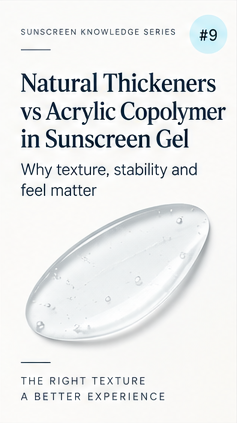
A natural thickener can replace the acrylic gel system discussed in the workshop, but the finished texture will not necessarily feel the same. Xanthan gum is presented as a natural alternative, yet it creates a slimier, more jelly-like feel. The choice is therefore not simply ‘natural versus synthetic’; it is also a question of product aesthetics and user experience.
Why thickener choice changes the product
A thickener does more than make a liquid less runny. It helps determine whether the sunscreen feels like a clean gel, a thick liquid or a slippery jelly. That sensory difference can strongly influence whether someone enjoys using the product.
The workshop compares several families of thickeners. Xanthan gum, guar gum and acacia gum are discussed as natural gums that can create a jelly-like but slimy feel. Hydroxyethyl cellulose and carboxymethyl cellulose are described as producing more of a thick-liquid or lotion-like consistency rather than the same gel texture.
Why the acrylic system is preferred in this gel
The acrylic copolymer used in the workshop is preferred for the quality of the gel texture it produces. The teaching also describes its structure as too large to penetrate the skin, which is part of the reasoning given for being comfortable using it in the product.
The larger lesson is that replacing one raw material with another can change the entire sensory character of the sunscreen even when both materials broadly perform a thickening role.
Storage can also affect how the thickener behaves
Acrylic copolymer can become lumpy when it is exposed to humidity, stored poorly or kept after air has entered the container. A free-flowing material behaves very differently from one that has already formed hard chunks.
If a thickener suddenly becomes difficult to work with, the formulation is not necessarily the first thing to blame. The age and physical condition of the raw material, exposure to humidity and storage quality can all matter.
The practical takeaway
Ingredient substitution is rarely just a label change. If you replace a thickener because you prefer a natural option, expect the feel and appearance of the sunscreen to change as well. A product has to be pleasant enough that people actually want to use it.
Related Sunscreen Guides
Explore more about sunscreen gels, ingredient compatibility and texture:
- Sunscreen Explained: How It Works, SPF, Types, Ingredients and How to Choose
- Gel vs Cream vs Lotion Sunscreen: What’s the Difference?
- Why Can’t Zinc Oxide and Titanium Dioxide Simply Be Added to a Gel Sunscreen?
- Why Does Sunscreen Leave a White Cast?
Browse all articles in the Sunscreen Learning Hub.