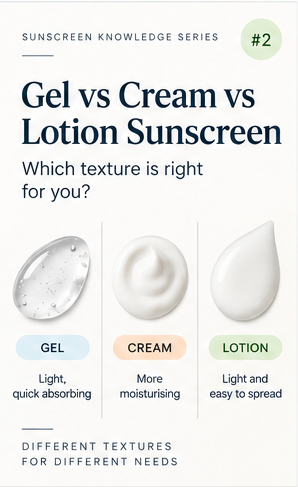
Gel, cream and lotion sunscreens can all be designed for sun protection, but they give very different experiences on the skin. The main distinction is texture and product structure: a gel can be very light and fast absorbing, a cream can feel richer and more moisturizing, and a lotion offers an easily spreadable emulsion with a lighter feel than many creams.
Why a gel can work well in hot weather
The gel sunscreen discussed in the workshop is especially suited to summer because it absorbs quickly, does not feel greasy and can create a smooth base before makeup. It is a useful format for someone who dislikes the heavier feel associated with richer creams.
The important formulation distinction is that this gel is a water-based system. That affects what kinds of materials can be incorporated into it. An ingredient cannot be added simply because it sounds beneficial; it also has to be compatible with the structure of the product.
Why a cream may suit dry skin
A cream sunscreen is the more moisturizing option discussed in the workshop and can be preferable when the skin feels dry. Because a cream contains both water and oil components, it can accommodate ingredient types that do not belong naturally in the purely water-based gel.
Where a lotion fits
A lotion is also an emulsion, but it gives a more fluid, easily spreadable texture. It can offer a balance between the lightness people often want from sunscreen and the richer feel of a cream.
Does a thicker sunscreen mean stronger protection?
No such relationship is taught in the workshop. Texture and protection are separate formulation decisions. A thick product is not automatically stronger, and a light gel is not automatically weaker. The sunscreen format should be chosen for skin feel, climate, intended use and compatibility with the ingredients needed in that particular product.
How to choose
If you want a light, quick-absorbing sunscreen for hot weather or under makeup, a gel may be attractive. If your skin is dry and you prefer a richer moisturizing feel, a cream may be more comfortable. If you want easy spreading with a lighter emulsion texture, a lotion may be a good fit. The best format is the one whose feel and use match your needs.
Related Sunscreen Guides
Explore how different sunscreen formats, textures and ingredients behave:
- Sunscreen Explained: How It Works, SPF, Types, Ingredients and How to Choose
- What Is Tinted Sunscreen, and How Is It Different From Regular Sunscreen?
- Why Are Water-Resistant Sunscreen Balms Greasier and More Visible?
- Why Can’t Zinc Oxide and Titanium Dioxide Simply Be Added to a Gel Sunscreen?
- Natural Thickeners vs Acrylic Copolymer in Sunscreen Gel: Why Texture Matters
Browse all articles in the Sunscreen Learning Hub.