
Sunscreen
Sunscreen is not just about choosing the highest SPF number. The type of sunscreen, the ingredients used, its texture, whether it leaves a white cast, how it behaves around water and how it feels on the skin can all affect how the product is used.
This learning collection brings together our main sunscreen guide and focused articles covering SPF, sunscreen textures, mineral ingredients, white cast, tinted sunscreen, sunscreen powders, water-resistant products and some of the formulation principles behind different sunscreen formats.
If you are new to the subject, begin with the main guide. It brings together the key concepts behind sunscreen, including how sun-protection ingredients work, what SPF means, the differences between gels, creams and lotions, why some sunscreens leave a white cast, and how different sunscreen formats are designed for different uses.
Understand SPF, Choose the Right Sunscreen Format
Sunscreens can be designed as gels, creams, lotions, tinted products, powders or richer water-resistant balms. Each format solves a different problem and creates a different experience on the skin.
The ingredients used in sunscreen affect more than sun protection. They can influence white cast, texture, consistency, skin feel and which product formats are possible.
What Does SPF Mean, and Why Doesn't a Higher Number Mean Endless Protection?
SPF is important, but a higher number does not mean one application protects you indefinitely. Understand what SPF means and why time outdoors, sweating, water exposure and reapplication matter in real-world sunscreen use.
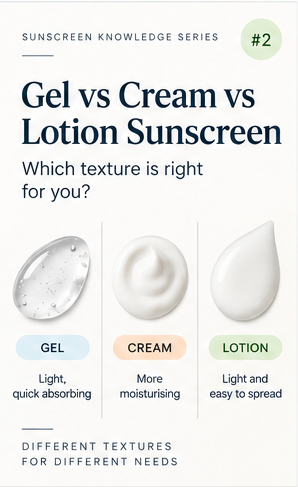
Gel vs Cream vs Lotion Sunscreen: What's the Difference?
A gel can feel light and fast absorbing, a cream can provide a richer moisturizing feel, and a lotion offers an easily spreadable emulsion texture. Learn how these formats differ and why texture and protection are separate formulation decisions.
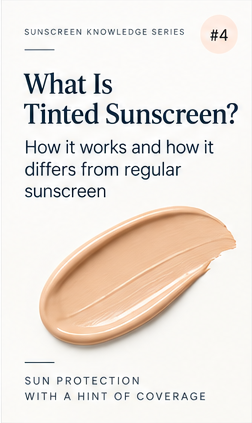
What Is Tinted Sunscreen, and How Is It Different From Regular Sunscreen?
Tinted sunscreen combines sun protection with visible colour coverage. Learn how pigments create the tint, why the amount of coverage can vary, and when a tinted sunscreen begins to look more like foundation.
Can Sunscreen Powder Replace Regular Sunscreen?
Sunscreen powder can provide a matte finish and additional surface coverage, but it should not be confused with the main protective sunscreen layer. Understand where powder fits into sunscreen use and what it is best used for.
Why Are Water-Resistant Sunscreen Balms Greasier and More Visible?
A sunscreen designed to stay on the skin around water has different priorities from a lightweight everyday facial sunscreen. Learn why water-resistant balms can feel richer, greasier and more visible, and why that can be an intentional trade-off.
Why Does Sunscreen Leave a White Cast?
Mineral sun-protection ingredients such as zinc oxide and titanium dioxide can create visible whiteness on the skin. Learn why this happens and why white cast is not always simply a sign of a poor sunscreen.
Why Can't Zinc Oxide and Titanium Dioxide Simply Be Added to a Gel Sunscreen?
A useful ingredient does not automatically work in every product format. Understand why zinc oxide and titanium dioxide cannot simply be mixed into the water-based sunscreen gel discussed here, and why ingredient compatibility matters.
Natural Thickeners vs Acrylic Copolymer in Sunscreen Gel: Why Texture Matters
A thickener does more than make a sunscreen gel thicker. Learn why natural gums and acrylic copolymer can create very different textures, consistencies and skin feel, and why substituting one thickener for another changes the finished product.
Can Kumkumadi Oil Replace Sunscreen?
An oil may have some SPF when present as a layer, but that is not necessarily the same as applying a few drops and massaging them into the skin. Understand why Kumkumadi oil should not simply be treated as a drop-for-drop replacement for sunscreen.
Want to Learn How to Make Sunscreen Products?
The articles in this learning hub are designed to help you understand the principles behind sunscreen — how different sunscreen formats behave, why ingredient compatibility matters, what affects texture and appearance, and how products designed for different uses can differ.
They intentionally do not publish the complete formulations, percentages, detailed making processes or supplier information taught in the course.
If you want to move from understanding these principles to learning the practical formulation and making of the sunscreen products, the Sunscreen Products Course provides the detailed instruction.