
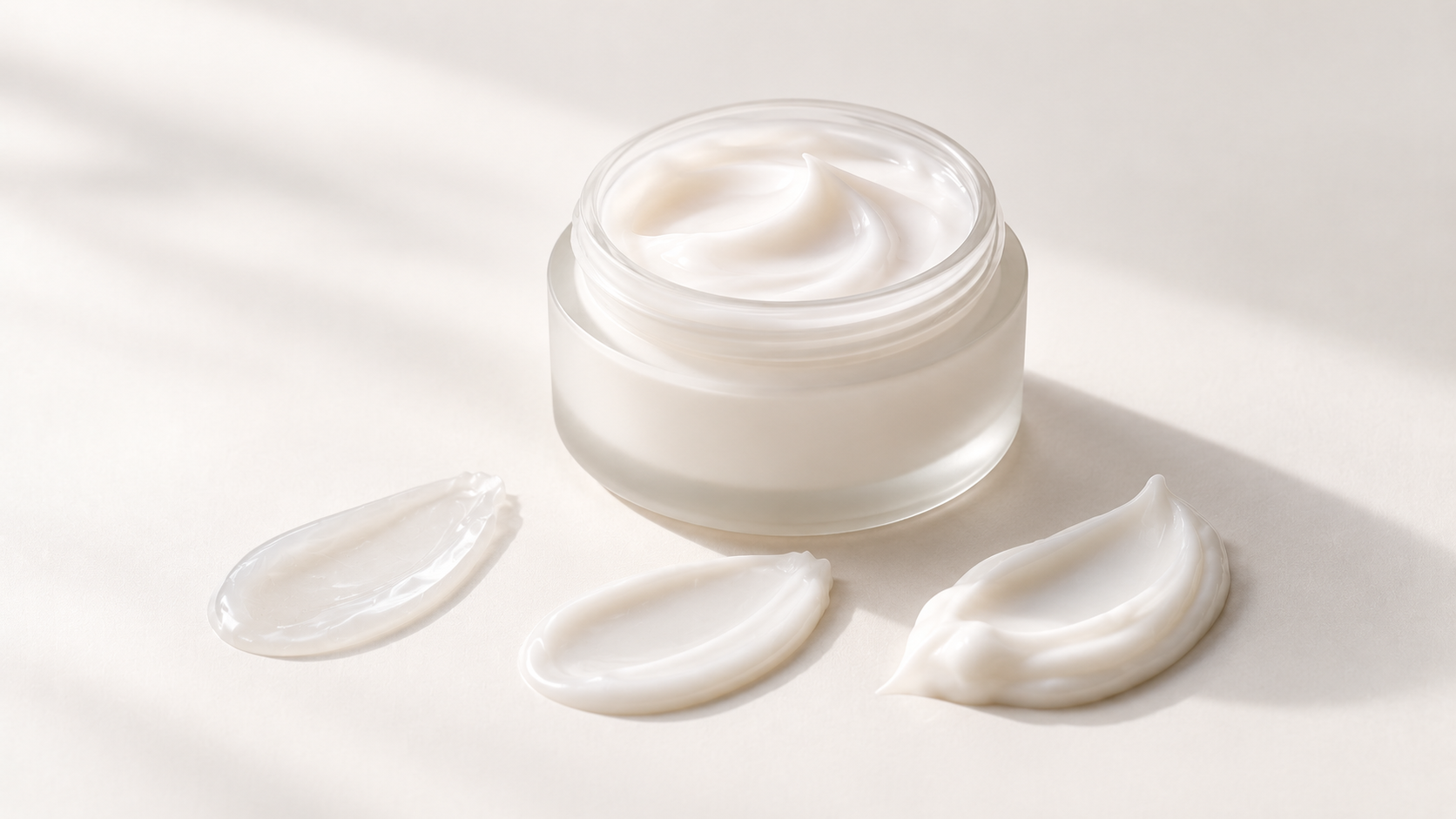
Body yogurt feels less greasy because it is designed to create moisturization through a different balance of ingredients and texture.
Instead of relying mainly on a rich, persistent oily layer, body yogurt can combine lighter-feeling emollients, non-oily moisturizing ingredients and a gel-like structure to create a product that feels nourishing during application but becomes much lighter after absorption.
Oil Selection Changes the Entire Skin Feel
One of the easiest ways to understand oils is simply to observe how they behave on the skin.
Some oils continue to feel oily long after they have been massaged in. Others seem to disappear more quickly and leave much less greasy residue.
That difference has a major effect on the final personality of a body yogurt.
A formula built around heavier-feeling materials naturally moves toward a richer experience.
A product designed around lighter-feeling emollients can retain softness and slip while leaving less persistent oiliness.
This does not make heavier oils inferior. They may actually be desirable when creating a richer product for very dry skin.
Moisturization Does Not Have to Come Only From Oil
This is one of the most important principles behind lightweight moisturizers.
If every attempt to increase moisturization also makes the product significantly oilier, creating a comfortable summer product becomes difficult.
Humectants provide another way of contributing moisturization without necessarily creating an oily finish.
Different humectants can still produce different sensory experiences.
For example, glycerin provides moisturization, but some people describe glycerin-rich products as sticky, heavy or damp in hot and humid conditions. Other humectant choices can create a lighter sensory profile.
The question therefore is not simply, “Does this ingredient moisturize?”
It is also:
How does it feel?
Does it leave stickiness?
Does it fit the experience the product is meant to create?
The Gel Structure Also Changes How the Product Feels
Body yogurt is not simply a thinner cream.
Its characteristic texture depends heavily on a structuring system that provides a gel-like component.
Different gelling systems can create noticeably different textures. Some feel smoother and more polished, while others can appear more stringy or slimy.
These may seem like minor differences when reading an ingredient list, but they can be very noticeable during use.
A cosmetic can moisturize effectively and still feel unpleasant if the texture is not elegant.
Why Richer Body Yogurts Feel Different
As more rich oils or butter-like materials are introduced, the product does not simply become “more moisturizing.”
Its structure and texture change as well.
A richer body yogurt will naturally feel creamier and may remain noticeable on the skin for longer than a very light gel-cream-style version.
This is why the word “body yogurt” alone cannot tell you exactly how light the product will feel.
The central idea is the balance: enough richness to feel nourishing, but less persistent heaviness than a traditional body butter.
Related Guides
To understand body yogurt texture and skin feel more deeply, continue with:
- Body Yogurt vs Body Butter: What’s the Difference?
- Why Do Some Body Yogurts Look Like Gel While Others Look Like Cream?
- Body Yogurt vs Lotion: Which Is Better in Summer?
- How Do You Choose a Body Yogurt for Your Skin Type?
For the full explanation of body yogurt, visit the Body Yogurt Guide.