
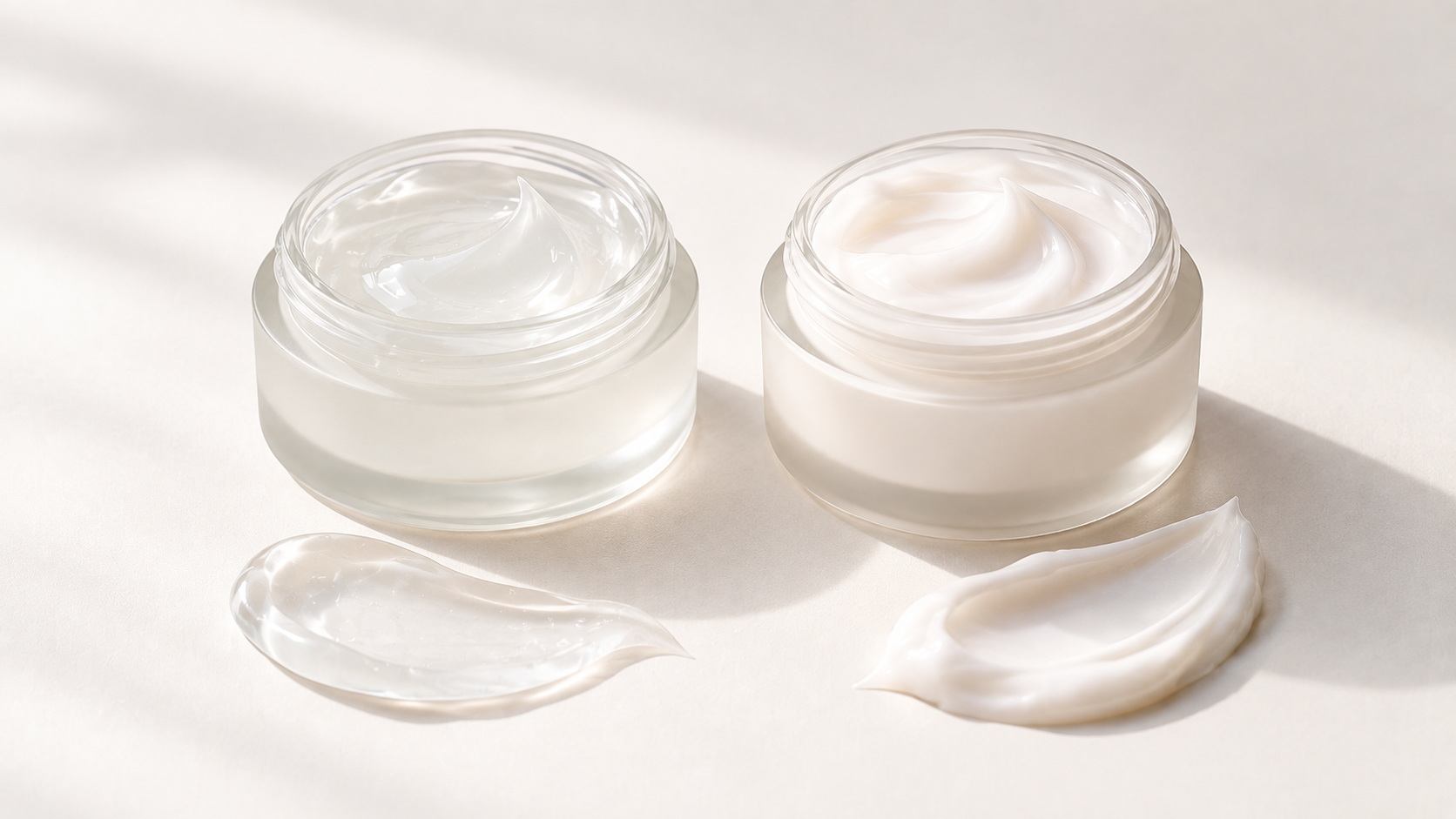
Body yogurts can look very different because the balance of their structuring system, oils, butters and other ingredients changes both their appearance and skin feel.
An extra-light body yogurt may look almost like a gel and leave a very matte finish. A richer version may look creamier, provide more massage time and leave more emollient character on the skin.
Both can still belong to the body-yogurt category.
Body Yogurt Is Not One Fixed Texture
It is useful to think of cosmetic textures as a spectrum rather than rigid boxes.
At one end, body butter is dense, rich and oily.
Cream sits somewhat lighter.
Body yogurt occupies the space between a very light gel cream and a conventional cream.
Gel cream sits closer to the gel end of the spectrum and can disappear into the skin extremely quickly.
Because body yogurt sits between these categories, there is room for considerable variation.
The Structuring System Creates the Gel Character
The characteristic yogurt-like texture depends heavily on the way the product is structured.
Gelling ingredients create the gel component that separates this type of product from a conventional cream.
Different gelling systems can also produce different visual and sensory results.
Some create a smooth, polished texture. Others may look more stringy or slimy.
This matters because consumers do not judge moisturizers only by what they do.
They also judge how the product looks when they open the container, how it moves when they touch it and how smoothly it spreads.
A moisturizing product can still feel disappointing if its texture appears inelegant.
More Richness Usually Means a Creamier Character
When a product contains more rich oils or butter-like materials, the result moves away from the extremely light gel end of the spectrum.
Adding richer components changes more than moisturization.
It can also change the structure required to keep the product stable and can make the finished product look and feel creamier.
This is why a rich body yogurt should not be expected to behave exactly like an ultra-light gel cream.
Skin Type Can Influence Which Texture Makes Sense
The difference is not purely visual.
A very light, matte version can suit oily skin or people who dislike shine.
A richer, creamier body yogurt may feel more comfortable for dry skin.
For very dry skin, the lightest possible version may simply not provide enough comfort.
So when two body yogurts look very different, one is not necessarily “correct” and the other “wrong.”
They may simply have been designed to create different sensory experiences.
The category is defined less by one exact appearance and more by the overall goal: a smooth, nourishing moisturizer that feels lighter after absorption than a traditional rich body butter.
Related Guides
For more on how body-yogurt texture affects the way the product feels and is used, read:
- Why Does Body Yogurt Feel Less Greasy Than Body Butter?
- Body Yogurt vs Body Butter: What’s the Difference?
- How Do You Choose a Body Yogurt for Your Skin Type?
- What Is Body Yogurt and Why Is It Called Yogurt?
For the complete topic, visit the Body Yogurt Guide.