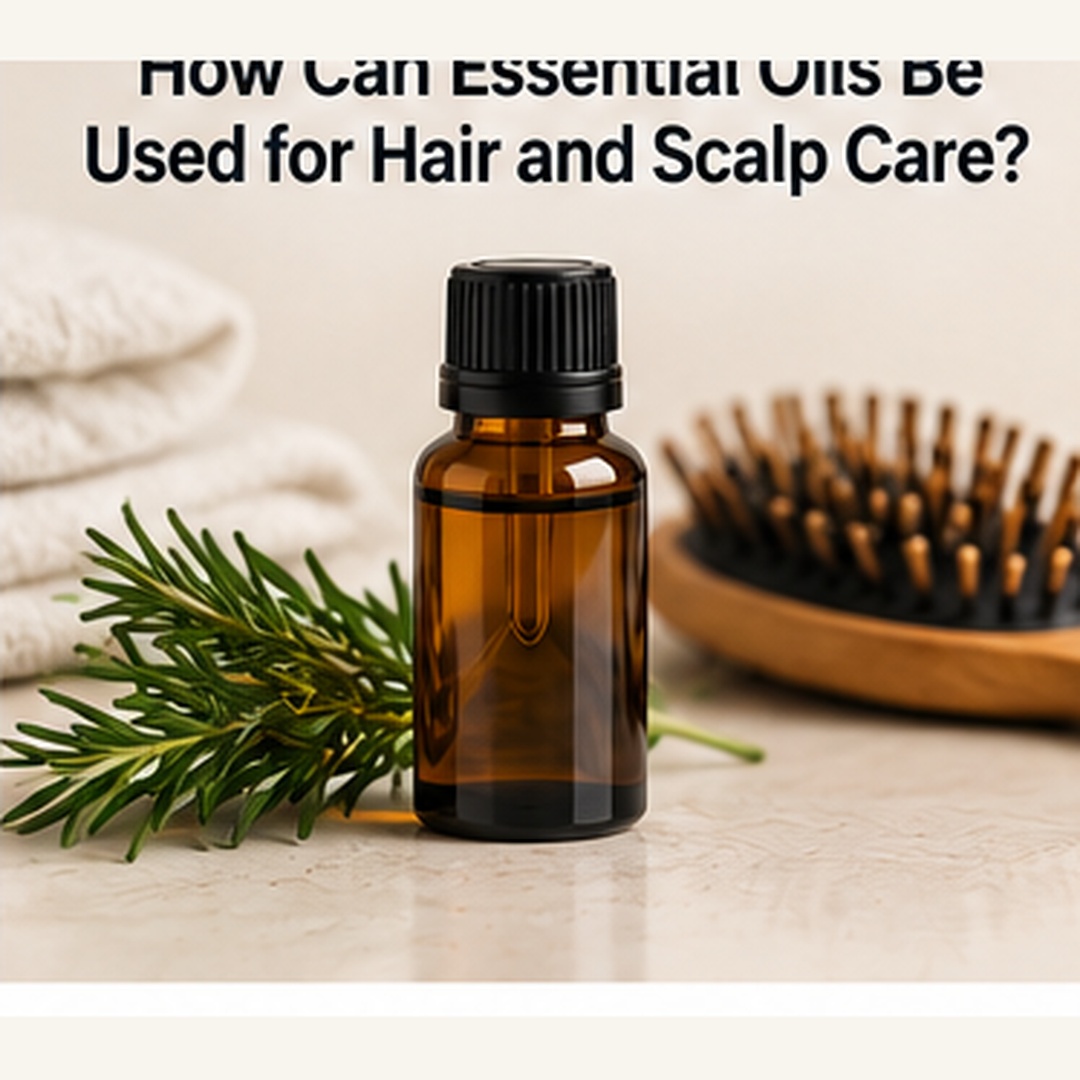
Aromatherapy for hair is mainly approached through the scalp and the specific concern you are trying to address.
The workshop discusses aromatherapy in relation to:
- greasy scalp;
- dandruff;
- hair fall;
- hair-growth support;
- dry or damaged-looking hair.
These concerns are not identical, so they should not automatically receive the same product.
Aromatherapy for a Greasy Scalp
Some people notice that their scalp becomes oily again very soon after shampooing.
For this type of concern, I prefer a lighter approach rather than saturating the scalp with a heavy oil.
Jojoba and argan are discussed as lightweight carrier choices.
The goal is to choose a product that feels appropriate for a scalp that already tends to become oily quickly.
Aromatherapy for Dandruff
Dandruff is treated as a different concern.
Essential oils discussed in this area include:
- rosemary;
- tea tree;
- eucalyptus;
- cedarwood;
- patchouli.
These oils are associated with different supporting roles in scalp-focused aromatherapy.
The complete course blends are more detailed, but the important principle is that a dandruff-focused product is designed differently from a product for simple scalp oiliness.
Hair Fall and Hair-Growth Support
Rosemary receives particular attention when discussing hair and scalp products.
The explanation I use focuses on circulation around the scalp and supporting the environment around the hair follicles.
Cedarwood and curry leaf oil are also discussed in relation to hair fall and hair-growth support.
Again, the purpose is not simply to add every ingredient associated with hair growth into one bottle.
The product should be built around the main concern.
Does Aromatherapy Have to Be Used in Hair Oil?
No.
Essential-oil concepts can be incorporated into different haircare bases.
The workshop discusses applications such as:
- hair oils;
- shampoos;
- conditioners;
- other suitable scalp and hair products.
This matters because not everyone enjoys applying oil to the scalp.
A person with a very greasy scalp, for example, may prefer a different product format from somebody with a dry scalp.
Why the Base Still Matters
Just as with facial aromatherapy, the essential oils are only one part of the product.
The base affects:
- how heavy the product feels;
- how easily it spreads;
- how suitable it feels for an oily or dry scalp;
- how the consumer actually uses it.
A beautifully selected essential-oil combination inside a base the customer dislikes may still become a product they do not use consistently.
Start With the Scalp Concern
A useful way to choose an aromatherapy hair product is to ask:
Is the scalp oily?
Is dandruff the main problem?
Is hair fall the main concern?
Is the aim to support hair growth?
Once the main concern is clear, both the aromatic ingredients and the base can be chosen more logically.
That is more useful than looking for one “best essential oil for hair” and expecting it to solve every scalp and hair problem.