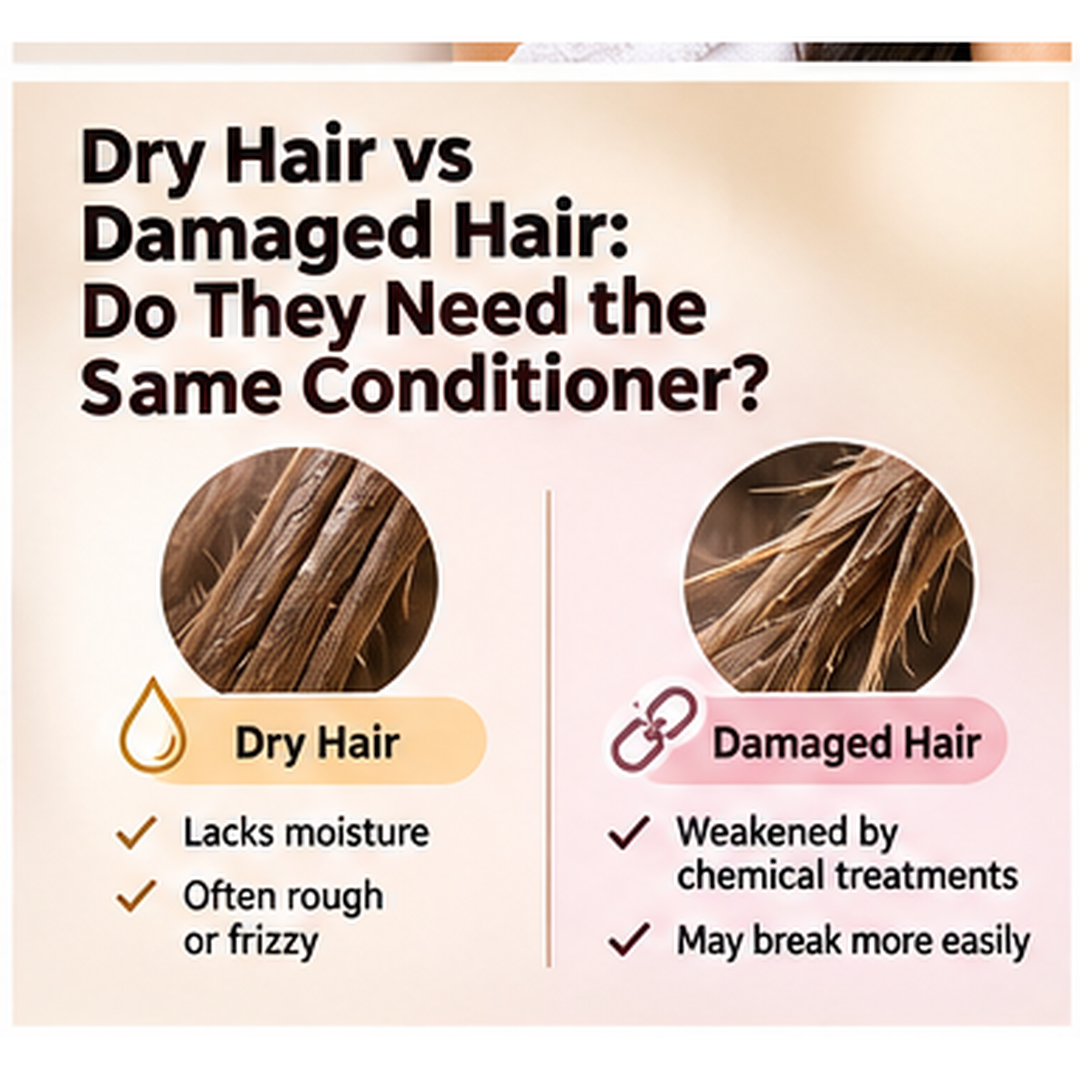
Dry hair and damaged hair can both look rough, dull and frizzy, but they do not necessarily have the same conditioning needs.
Dry hair mainly needs additional moisture and nourishment. Damaged hair may require a more repair-focused approach, particularly when the damage is associated with chemical treatments or visible breakage.
Understanding why the hair feels rough is more useful than choosing a product simply because the label says “for dry hair.”
What Is the Main Concern With Dry Hair?
Some people naturally have hair that feels dry, rough or frizzy.
Curly hair may also show more frizz than straight hair.
In this situation, the main objective of conditioning is usually to improve:
- moisture;
- softness;
- nourishment;
- smoothness;
- manageability.
A richer moisturizing conditioner or hair mask can be useful when the hair simply needs more conditioning and softness.
How Is Damaged Hair Different?
Damaged hair may have been affected by repeated chemical treatments such as colouring or straightening.
It may look dull and lifeless, feel rough and begin breaking along the length.
This is different from hair that is simply naturally dry.
When the hair has experienced this kind of damage, the conditioning approach can include protein-focused ingredients in addition to moisture and softness.
Why Does the Difference Matter?
Imagine two people whose hair both feels rough.
The first has naturally dry, frizzy hair but no significant chemical damage.
The second has hair that became weak and brittle after repeated treatments.
If both people choose a product only because the label says “moisturizing,” they are treating the visible symptom rather than considering the underlying condition.
The first person may mainly need richer moisture and conditioning.
The second may benefit more from a repair-focused conditioner or mask containing proteins alongside conditioning ingredients.
Can Damaged Hair Also Be Dry?
Yes.
These categories can overlap.
Chemically damaged hair may also feel extremely dry. A repair product therefore does not ignore moisture; it simply gives greater attention to strengthening and protein-focused conditioning as well.
The distinction helps you decide what should receive greater emphasis.
What About Frizz?
Frizz by itself does not automatically mean severe damage.
Some people naturally have more frizzy or curly hair.
This is why it is useful to look at the overall history of the hair:
Has the hair always been this texture?
Did the roughness start after chemical treatment?
Is the hair actually breaking?
Does it mainly feel dry, or does it feel structurally weak as well?
These questions help you distinguish between a moisture-focused problem and a repair-focused problem.
Conditioner or Hair Mask?
A regular conditioner can be useful for everyday maintenance in both cases.
When the hair is extremely dry or significantly damaged, a richer hair mask can provide more intensive care.
A moisturizing mask focuses more strongly on softness and nourishment.
An intense repair mask is more appropriate when the concern includes chemical damage and breakage.
The Practical Takeaway
Do not treat every rough-looking head of hair as the same problem.
If the hair is mainly dry, focus on moisture and nourishment.
If it has been weakened by chemical treatments or is breaking along the strand, a more repair-focused, protein-supporting conditioning approach may be appropriate.
Related Articles
Why Are Proteins Used in Hair Conditioners?
Can You Use Conditioner After Keratin or Straightening Treatments?