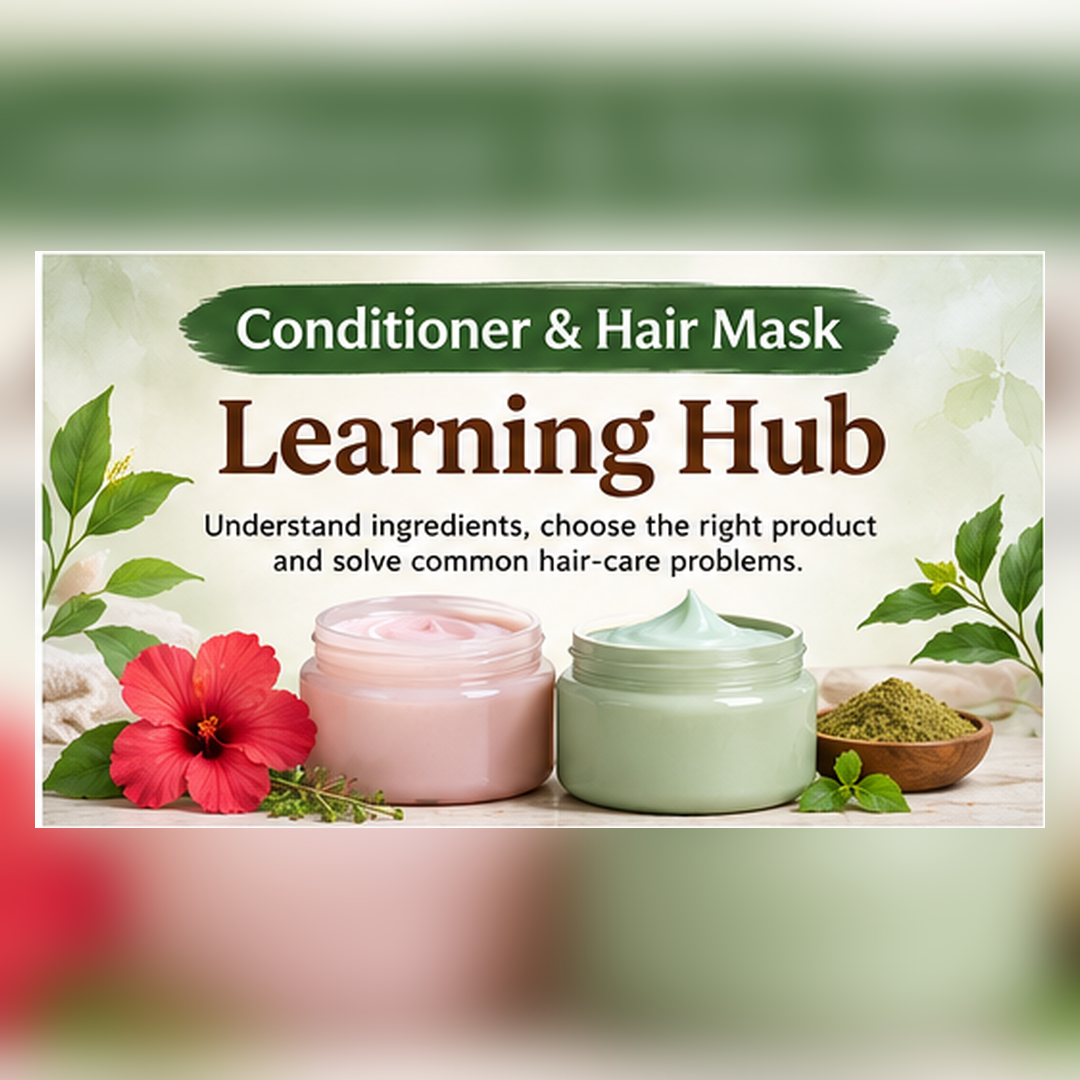
Hair Masks & Conditioners Learning Hub
Learn how hair conditioners and hair masks work, why they are used after shampooing, how important conditioning ingredients function, and how to choose products for different hair types and concerns.
This learning hub brings together practical educational articles on conditioners, hair masks, ingredient functions, hair-type selection, herbal ingredients and common formulation problems.
Why Is Conditioner Important After Shampooing?
Understand why conditioner is used after shampooing, how it helps improve softness and manageability, and why it is particularly useful for wavy, curly and frizzy hair.
Conditioner vs Hair Mask: What’s the Difference?
Learn how conditioner and hair masks differ in purpose, intensity and frequency of use, and why a hair mask is generally considered a more intensive conditioning treatment.
Why Can Conditioner Make Fine or Oily Hair Look Flat?
Discover why strong smoothing and conditioning can reduce volume in fine or oily hair and why lighter conditioning may be more suitable for these hair types.
What Is BTMS and Why Is It Used in Hair Conditioner?
Learn what BTMS is and how this conditioning emulsifier contributes to softness, frizz control, manageability and the creamy structure of conditioners and hair masks.
What Is Cetrimonium Chloride and Why Is It Used in Conditioner?
Understand the role of cetrimonium chloride in hair conditioners and how it supports detangling, softness, static reduction and frizz control.
Why Is Cetyl Alcohol Used in Hair Conditioner?
Learn why cetyl alcohol is used to improve the glide, slipperiness, texture and creamy consistency of conditioners and hair masks.
Herbal Extract vs Herbal Powder in Hair Masks: What’s the Difference?
Explore the practical differences between using herbal extracts and herbal powders in hair masks, including texture, appearance, ease of rinsing and user experience.
Which Hair Mask Is Best for Dry, Damaged or Oily Hair?
Learn how to choose a hair mask according to the condition of the hair, including very dry and frizzy hair, chemically treated or damaged hair, and oily or easily weighed-down hair.
Why Can a Hair Mask Become Watery Over Time?
Understand why a hair mask may lose its creamy texture during storage and how formulation stability, emulsification and processing can affect the finished product.
Learn Hair Masks & Conditioners Formulation
If you want to go beyond the educational concepts and learn the complete formulation and practical making process, explore the Hair Masks & Conditioners Course.