
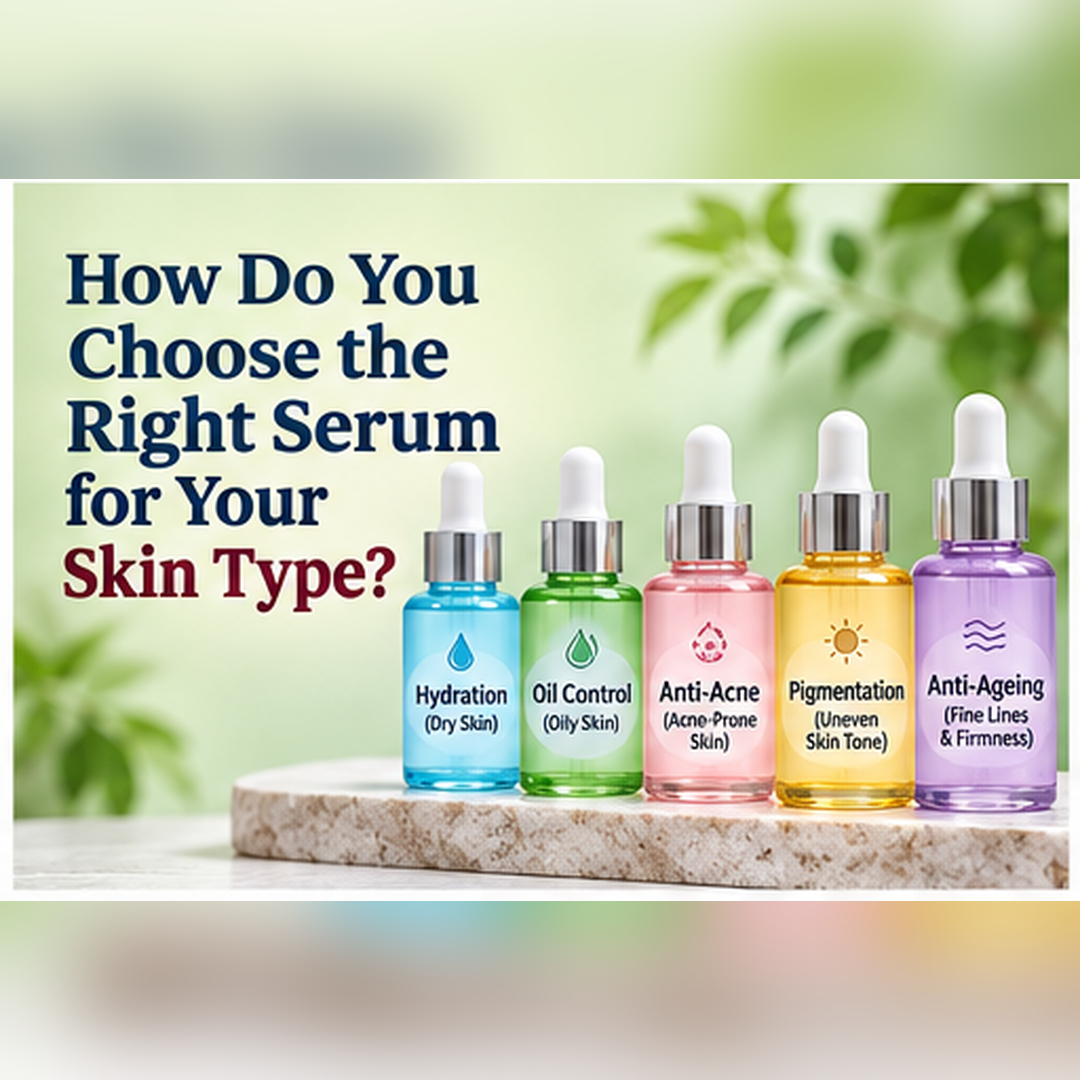
The best way to choose a face serum is to identify your main skin concern rather than selecting a product only because it is popular or contains a familiar ingredient.
Different serums are designed for dryness, excess oiliness, acne, pigmentation, dullness and ageing-related concerns.
The important distinction is between your general skin type and the particular problem you want to address.
Start by Identifying Your Main Skin Concern
Before choosing a serum, ask yourself what you actually want the product to do.
For example, someone with dry skin may primarily want better hydration.
Someone with oily skin may be concerned about excess sebum and a greasy appearance.
Another person may have relatively normal skin but want to improve the appearance of pigmentation or fine lines.
These are different objectives.
A serum that suits one concern may not necessarily be the most relevant choice for another.
Which Serum Is Suitable for Dry Skin?
Dry skin benefits from ingredients selected for hydration and moisture retention.
Hyaluronic acid is an important example.
It is included to help the skin retain moisture and appear plumper.
Other moisturising ingredients discussed include allantoin and D-panthenol.
The main objective of a dry-skin serum is to improve hydration rather than focus primarily on acne or pigmentation.
Which Serum Is Suitable for Oily Skin?
Oily skin is often associated with excessive sebum, particularly around the T-zone.
For example, someone may wash their face and notice that it becomes greasy again within a relatively short period.
An oily-skin serum is developed to help address that appearance.
The workshop also emphasises that moisturising ingredients do not necessarily have to make the skin greasy.
A lightweight serum can provide a comfortable feel while being developed for oily-skin concerns.
What If You Have Acne-Prone Skin?
Acne-prone skin needs to be considered according to the extent of the problem.
Someone who experiences occasional pimples may have different needs from someone dealing with many active breakouts.
Niacinamide is discussed for reducing acne formation.
Salicylic acid is another ingredient associated with products specifically developed for acne and excess sebum.
The important thing is to distinguish a serum for ordinary oily skin from one intended for more extensive acne.
Which Serum Should You Choose for Pigmentation?
Pigmentation-focused serums are developed for concerns such as acne marks, tanning and uneven skin tone.
Niacinamide and alpha arbutin are among the ingredients discussed for these purposes.
A useful distinction is between active acne and the marks left behind after acne.
Once the active breakouts have reduced, pigmentation may become the main concern.
The serum should be selected accordingly.
What If Your Skin Looks Dull?
Dull skin is discussed in connection with accumulated dead skin cells.
Glycolic acid and lactic acid are examples of ingredients used for exfoliation and improving the appearance of dullness.
This differs from choosing a product primarily for moisture retention or reducing excess sebum.
When Should You Consider an Anti-Ageing Serum?
Ageing-related concerns may include fine lines, wrinkles and loss of firmness.
The workshop also discusses changes in moisture retention as skin ages.
Hydrating ingredients are therefore relevant, while more specialised ageing-focused products may contain ingredients selected for other age-related concerns.
The choice should reflect the actual condition of the skin.
For someone beginning to notice mild fine lines, the objective may be different from that of someone experiencing more pronounced signs of ageing.
Can the Same Serum Address More Than One Concern?
Some ingredients are associated with several benefits.
For example, niacinamide is discussed for both acne and pigmentation.
Hyaluronic acid is primarily associated with hydration, which may be relevant across different skin types.
However, the fact that an ingredient has several uses does not mean every finished serum is suitable for every concern.
The complete purpose of the product remains important.
Does Age Matter When Choosing a Serum?
Yes, but age alone should not determine the product.
Very young children are not considered to need specialised facial serums in this skincare approach.
For teenagers experiencing acne, an acne-focused product may be more relevant than an anti-ageing serum.
For adults experiencing dryness, pigmentation or early ageing concerns, the choice depends on which problem is most noticeable.
A person does not need to wait until a severe problem develops before considering a product intended for maintaining skin condition.
At the same time, there is no reason to choose specialised products that do not address an actual need.
The Important Takeaway
The right serum is the one developed for the concern you want to address.
Choose according to your skin’s requirements, not simply your age, skin type or the popularity of an ingredient.
A clear understanding of the problem makes it easier to select a serum with the appropriate purpose.
Related Articles
- What Is the Difference Between a Face Serum and a Moisturiser?
- Why Is Niacinamide Used in Anti-Acne and Brightening Serums?
- What Is Alpha Arbutin and How Is It Used for Pigmentation?
- High vs. Low Molecular Weight Hyaluronic Acid: What’s the Difference?

