
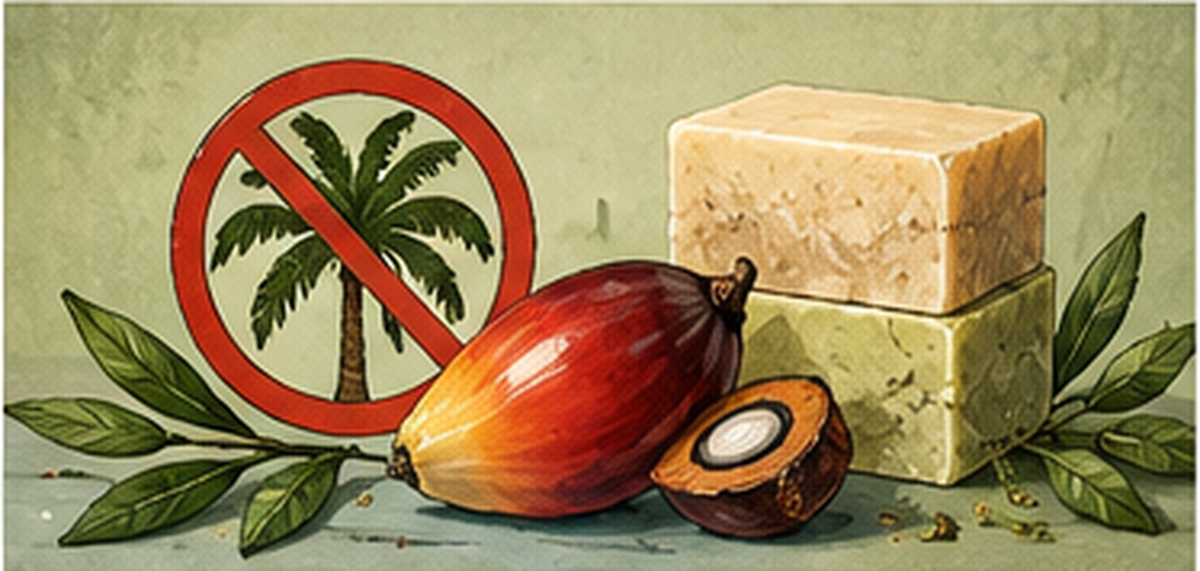
Palm-free cold process soap can be made, but removing palm oil changes the practical balance of the bar. The main trade-off discussed is hardness and how long the soap lasts in use.
Palm oil contributes to a firm, longer-lasting bar. If it is removed, the replacement ingredients do not necessarily produce the same result.
Why replacement is not straightforward
Beeswax can contribute hardness, but it creates its own difficulties. In larger amounts it can make the soap thicken extremely quickly and can reduce lather. Other alternatives discussed include animal fats, but those may not suit the kind of product a maker wants to offer.
So “palm-free” is not simply a matter of deleting one ingredient while expecting every other characteristic to remain unchanged.
Personal-use soap and commercial soap are different decisions
If I am making soap for myself, I may be perfectly happy with a palm-free bar that gets used up more quickly. The economics are different because I made it for my own use.
A customer, however, may judge a purchased soap partly by how many uses it provides. A shorter-lasting bar can therefore affect how the customer perceives value.
That does not make the palm-free bar a failed soap. It means the trade-off needs to be understood and, where relevant, explained.
Why this distinction matters
Ingredient decisions often involve competing priorities. A maker may want a particular ingredient philosophy, a certain hardness, abundant lather and a long-lasting bar, but one formulation choice can affect several of those goals. The useful way to think about palm-free soap is therefore not “Can it be done?” It can. The better question is, “Which characteristics am I willing to change when I remove palm oil?”.