
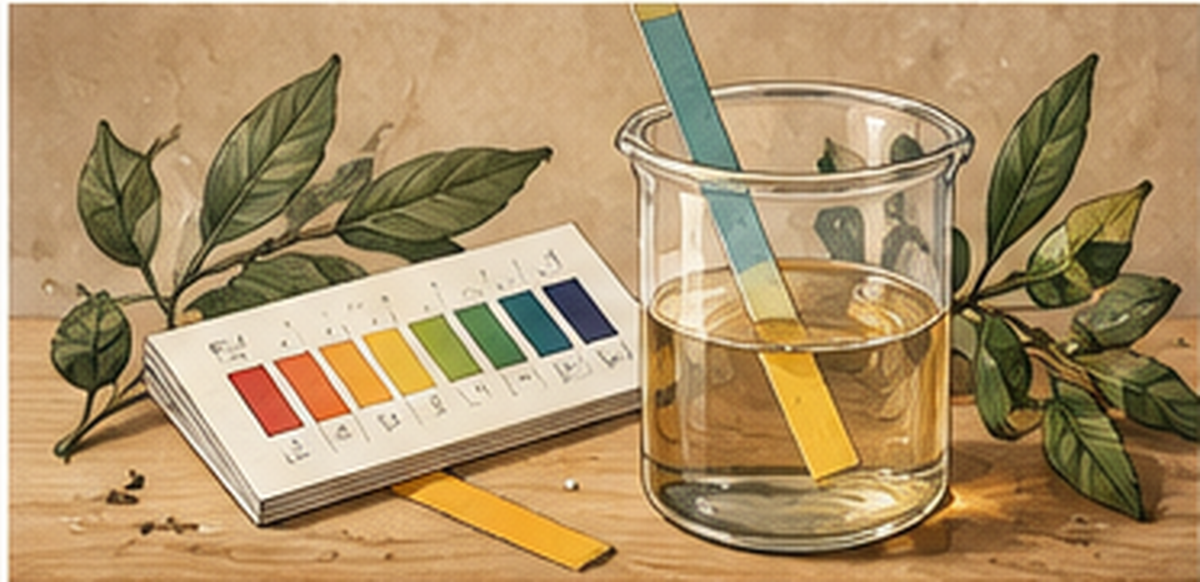
The appearance of a cold process soap cannot tell you by itself whether the batch has been made correctly. A beautiful bar can still have a formulation problem, while an unattractive bar may be chemically sound.
That is why pH is used as an important quality check.
What an unexpected pH can tell you
If the pH remains higher than expected rather than moving into the desired range, a measurement error should be considered. An oil may have been forgotten, or a number may have been read incorrectly.
I use a very simple analogy: if you put sugar in tea, the tea should taste sweet. If it does not, you have to question whether the sugar actually went in.
The same reasoning applies here. If a correctly calculated and measured soap does not behave as expected, go back and question the measurements rather than inventing an explanation for the result.
Ugly soap and incorrect soap are different problems
This distinction is particularly important for troubleshooting.
A soap can have holes, an unattractive design or some other visual problem and still be usable if the underlying formulation is correct. Such soap may even be repurposed visually in another design.
A batch with an unsafe pH problem is different. That is not an aesthetic defect that should be disguised.
Why this matters for beginners
Beginners often judge success by whether a soap looks like the example they were trying to reproduce. But appearance is only one dimension of success.
A good troubleshooting habit is to separate three questions: Does the bar look the way I intended? Does it have the physical qualities I expected? And is the underlying soap correct? The most useful takeaway is that pH helps you distinguish a cosmetic disappointment from a more fundamental formulation or measurement problem.