
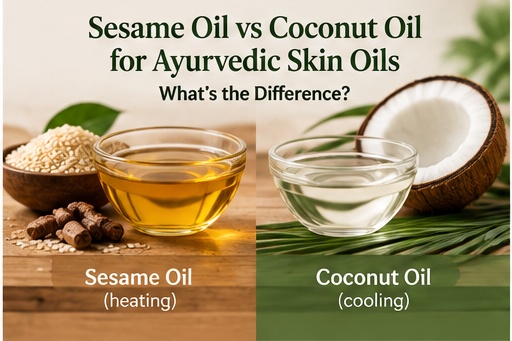
Both sesame oil and coconut oil are discussed as traditional bases for Ayurvedic skin oils, but they do not create the same practical experience. In the Ayurvedic framing used in the workshop, coconut is described as cooling and sesame as heating. There are also differences in smell, behaviour in cold weather and suitability for some oily or acne-prone facial skin.
The traditional seasonal distinction
Coconut oil is associated with cooling and therefore with summer, while sesame is described as heating and associated more with winter. This is the traditional framing used in the workshop when comparing the two bases.
Practical differences matter too
Beyond that traditional distinction, coconut oil has some everyday characteristics that affect how a finished body oil behaves. It can solidify in colder weather, which can make a bottled product inconvenient to dispense. It also brings its own characteristic smell to the finished oil.
What about oily or acne-prone facial skin?
For people whose facial skin is oily or acne-prone, I prefer sesame over coconut. The workshop describes coconut as more likely to cause acne in such users. This does not mean that the carrier oil is the only thing that matters, but it does mean that the base should not be treated as an invisible part of the product.
Other carrier oils
The workshop also discusses almond, olive and sunflower oils, and distinguishes them from lighter premium oils such as argan and jojoba when considering how a traditional Ayurvedic oil might be given a more modern-feeling sensory profile. The important consumer lesson is that the herbal identity of the product is only part of what determines how it feels.
Why two bottles can feel very different
Two products can both be sold as Nalpamaradi or both as Eladi and still have noticeably different sensory characteristics. The carrier oil influences the way the finished product spreads, smells and feels on the skin. This is one reason not to judge an entire category from the experience of a single bottle.
The useful takeaway
Sesame and coconut can both serve as traditional carrier oils, but the base is not a neutral detail. Seasonal framing, solidification, smell and skin feel all affect the finished product, so the carrier oil is worth considering when choosing an Ayurvedic skin oil.
Related Nalpamaradi & Eladi Oil guides
→ How Much Ayurvedic Body Oil Should You Apply?
→ Does Darker Ayurvedic Oil Mean Better Quality?
For a broader look at carrier oils, herbal ingredients, uses and the differences between Nalpamaradi and Eladi, read our complete guide to Nalpamaradi and Eladi oils.