
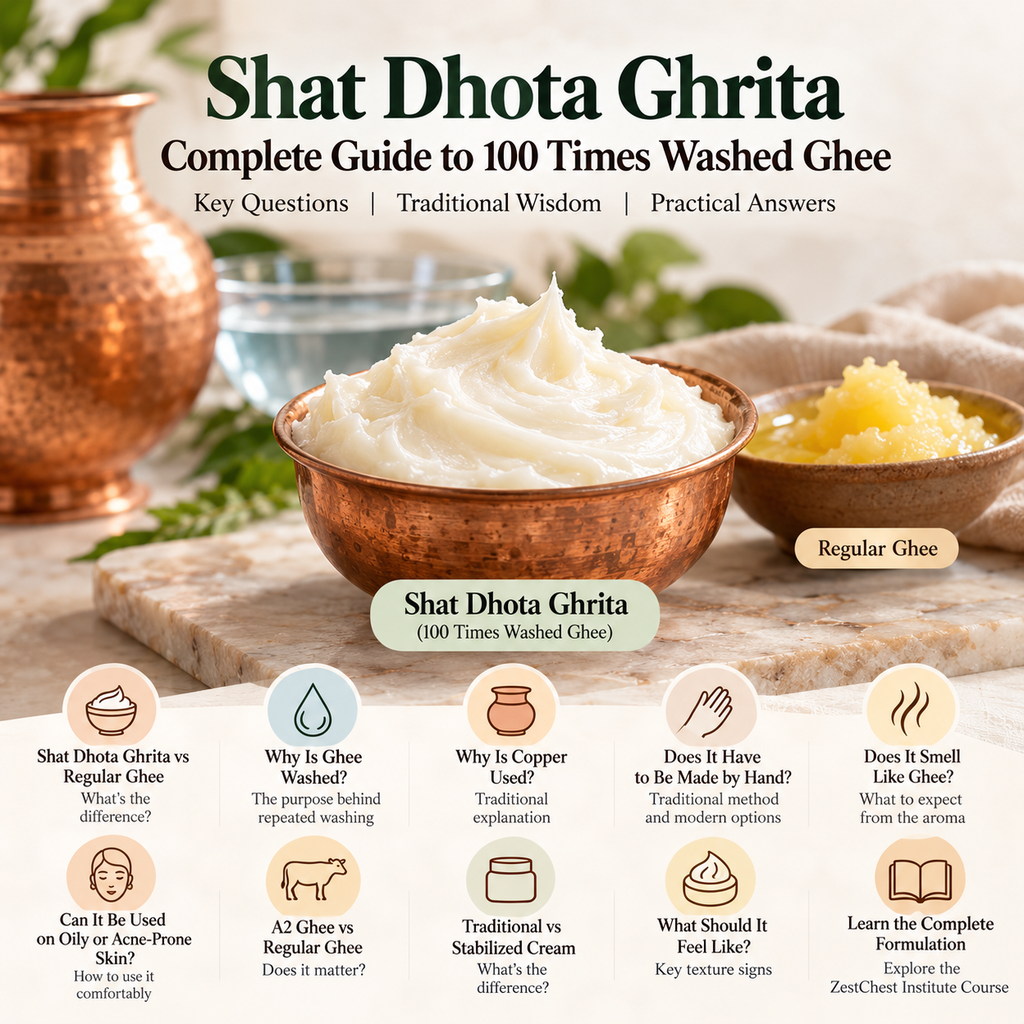
Shat Dhota Ghrita: Complete Guide to 100 Times Washed Ghee
A complete guide to Shat Dhota Ghrita, or 100 times washed ghee. Explore its texture, traditional copper use, washing process, ghee selection, skin use and modern cream variations.
A complete guide to Shat Dhota Ghrita, or 100 times washed ghee. Explore its texture, traditional copper use, washing process, ghee selection, skin use and modern cream variations.
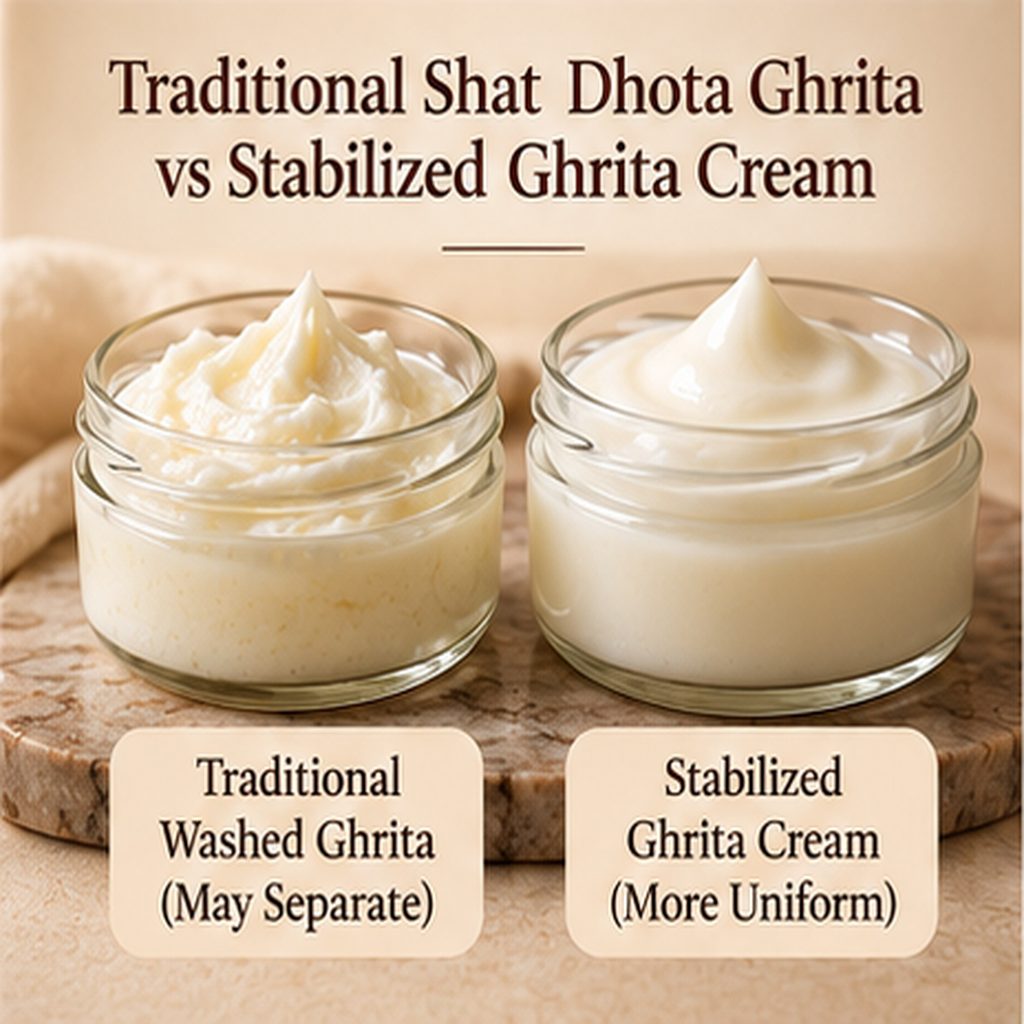
Traditional Shat Dhota Ghrita stays closer to the original washed-ghee concept, while a stabilized ghrita cream is designed for a smoother, more uniform and stable texture.
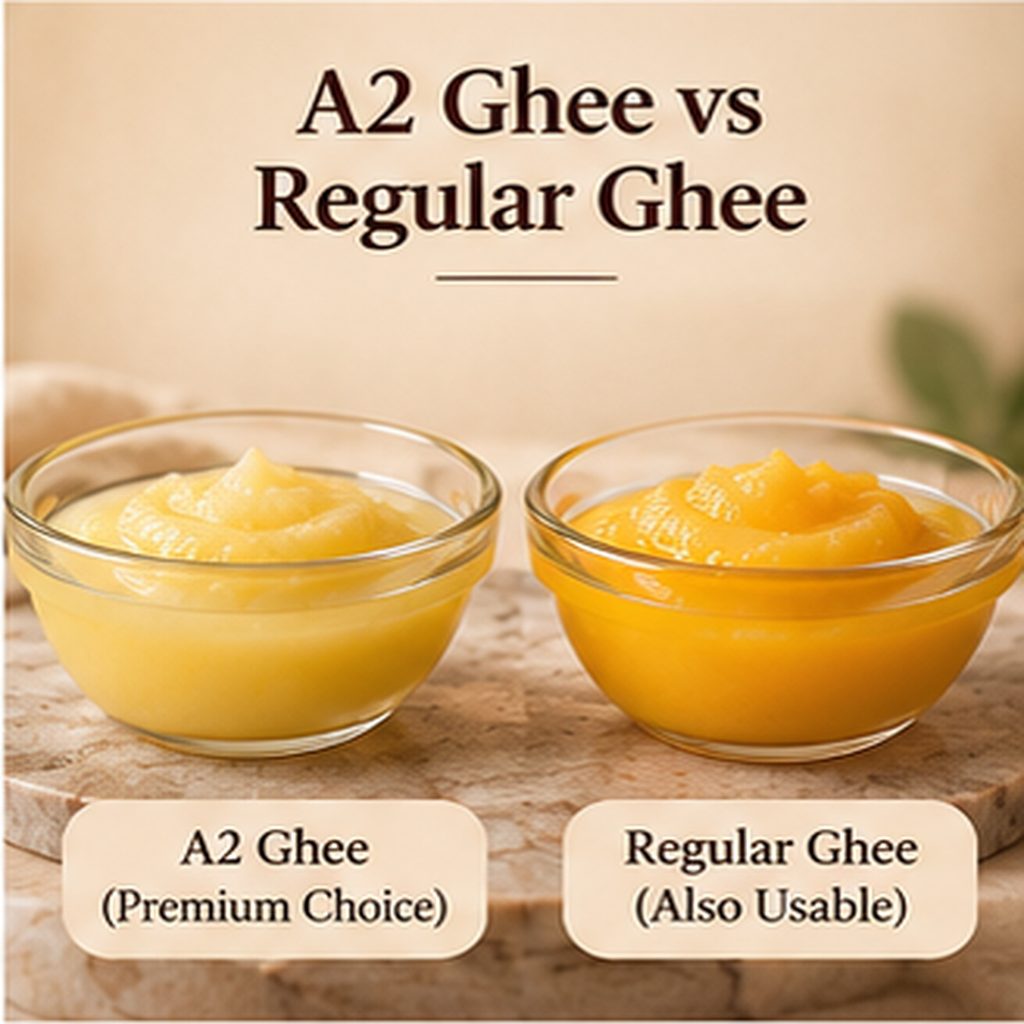
A2 ghee is not compulsory for Shat Dhota Ghrita. Good regular ghee can also work, while A2 is better suited to premium product positioning.
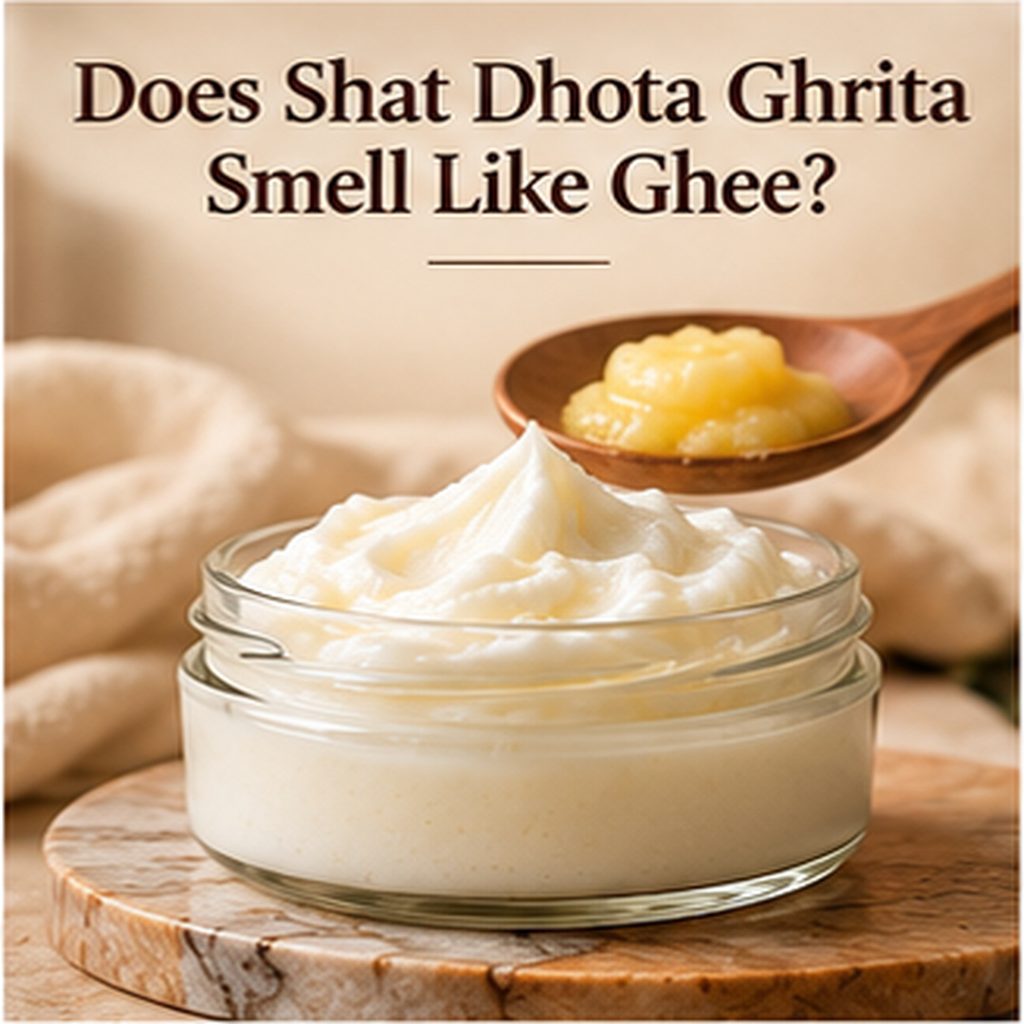
Shat Dhota Ghrita may retain a mild natural ghee aroma, but repeated washing makes the smell much softer than regular ghee.
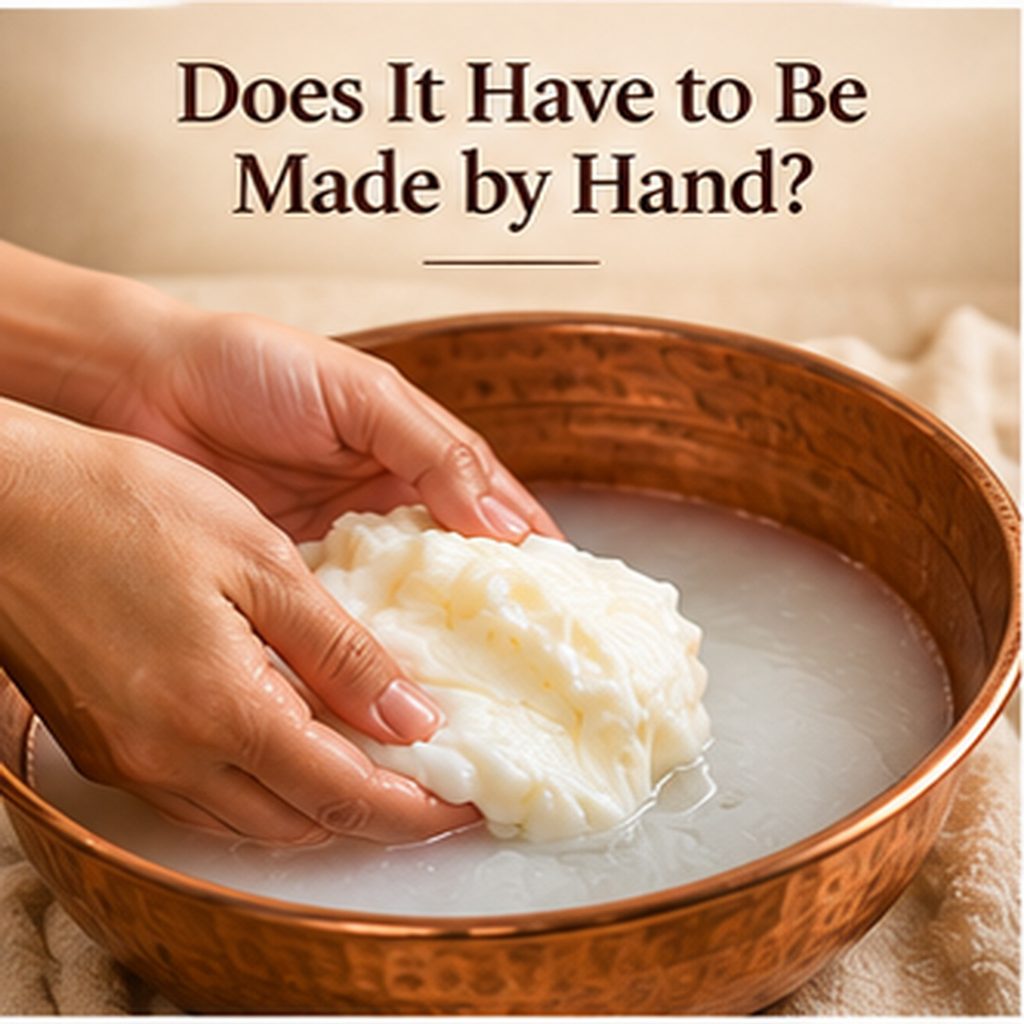
Shat Dhota Ghrita is traditionally made by hand, but modern equipment can also create the smooth, creamy texture expected from properly washed ghee.
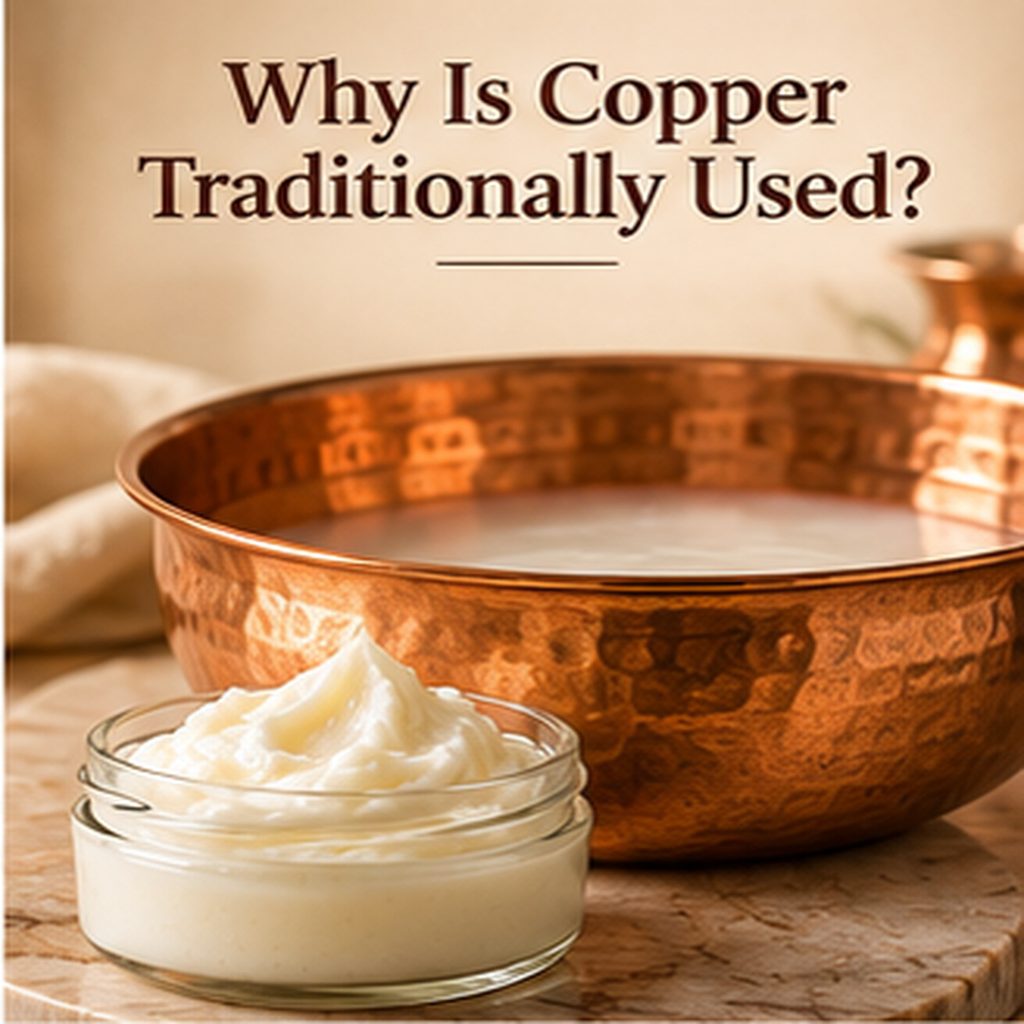
Copper is traditionally used while preparing Shat Dhota Ghrita as part of its cleansing, preservation and copper-ion concept. Learn why the vessel matters.
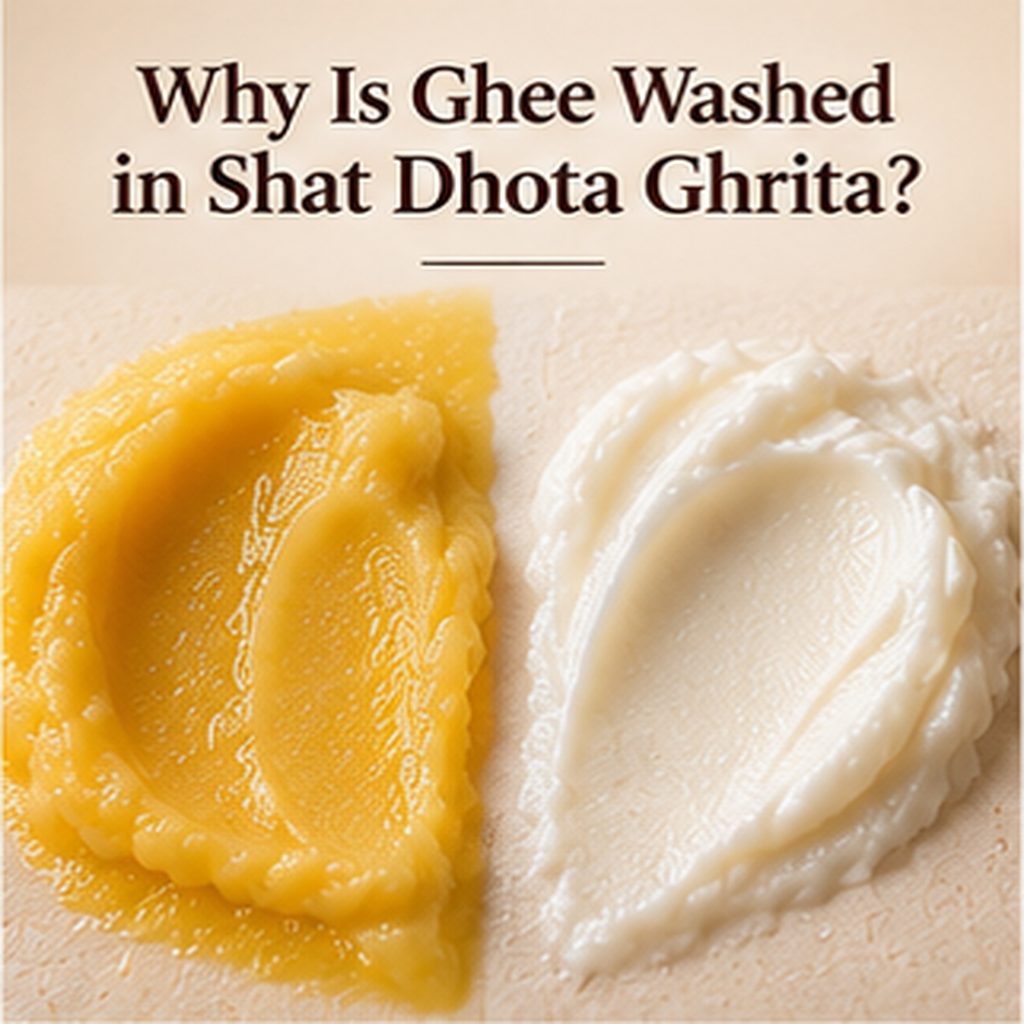
Repeated washing transforms ordinary grainy ghee into softer, smoother and more cream-like Shat Dhota Ghrita. Learn why the washing process matters.
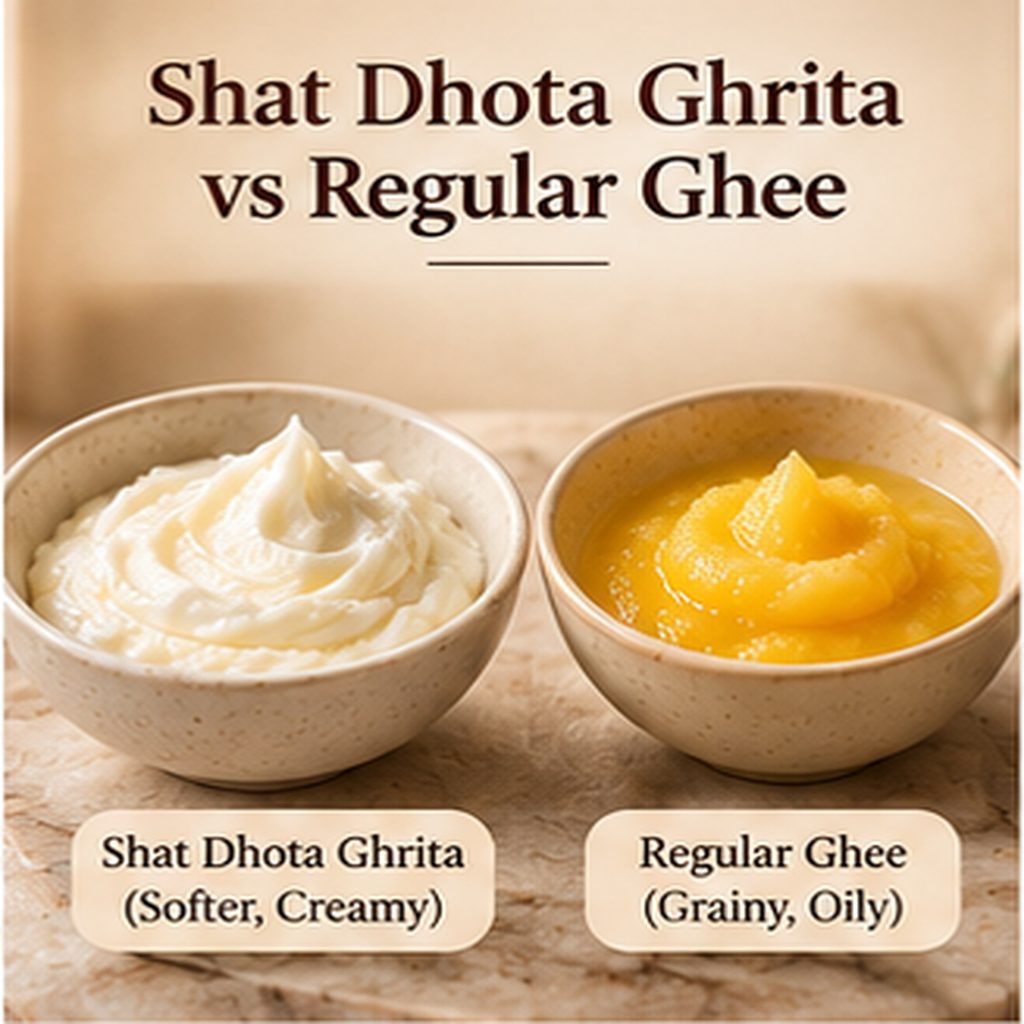
Regular ghee can feel oily, heavy and grainy, while Shat Dhota Ghrita becomes softer, smoother and more cream-like through repeated washing and physical working.