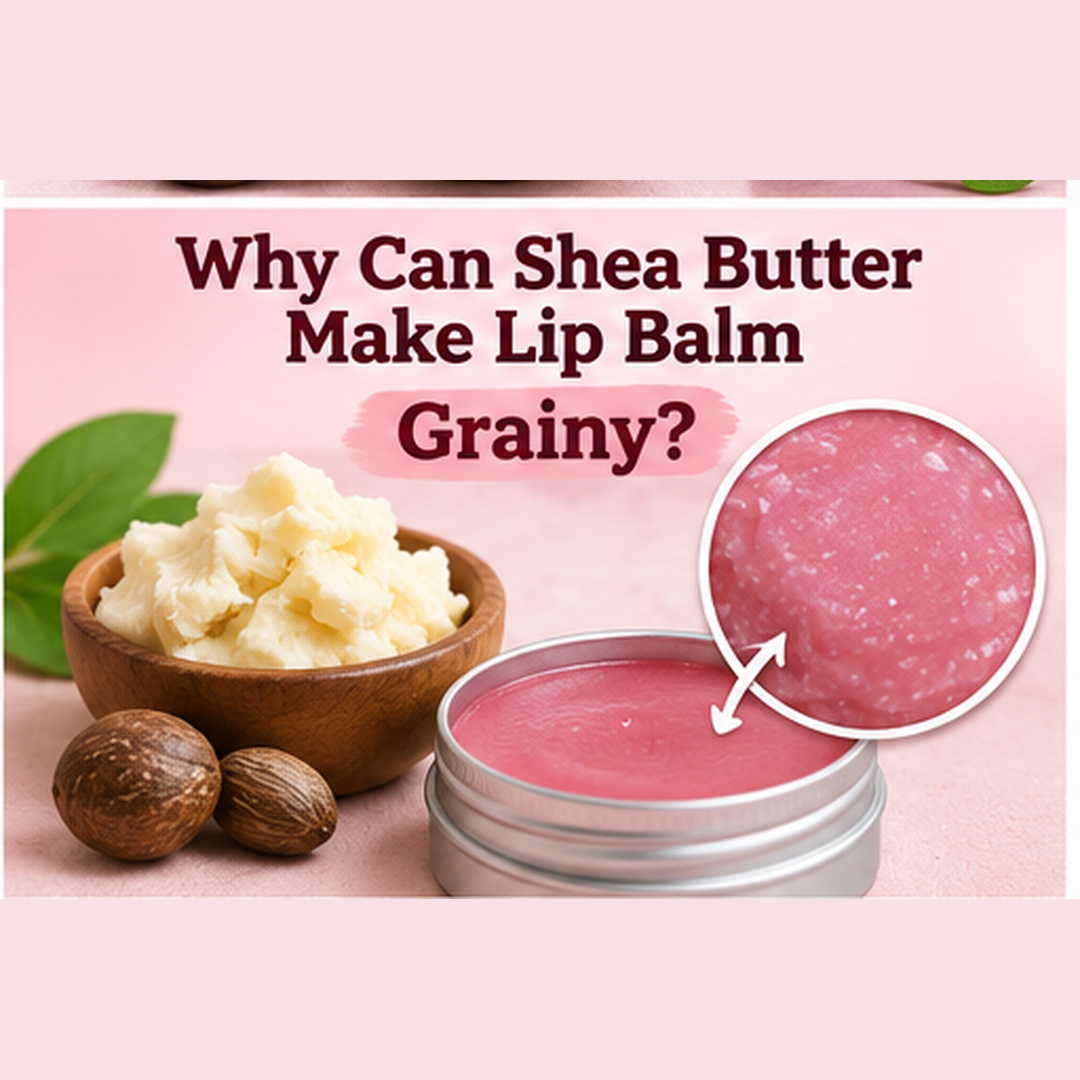
Shea butter can sometimes develop small grain-like or dot-like structures in a lip balm over time.
I associate this with recrystallization of the shea butter.
The important point is that these grains can look alarming even when they are not fungal growth.
What Does the Graininess Look Like?
A balm may look smooth when first made.
After some time, however, small dots or grains may begin appearing through the product.
To someone opening the balm months later, these spots may look like contamination or fungus.
That can immediately create concern about the product.
In the situation discussed here, the dots can instead be coming from the shea butter itself.
Why Does This Matter for a Commercial Product?
Consumers judge cosmetics visually before they understand the formulation.
Even if you know that the small dots are caused by shea butter recrystallizing, the customer may simply think:
“Something has grown inside my lip balm.”
That damages confidence in the product.
This is why long-term appearance matters just as much as how moisturizing an ingredient is on the day the balm is made.
Is Shea Butter Bad for Lip Balm?
No.
Shea butter is discussed as highly moisturizing.
The problem is not that it cannot be used.
The problem is its tendency, in this application, to develop a grainy appearance over time.
That is why I prefer other butters when I want a very smooth-looking balm.
What Do I Prefer Instead?
I prefer cocoa butter for this type of formulation.
Mango butter is another option.
Kokum butter can also be considered.
These alternatives allow the balm to retain the rich feel we want from a butter while avoiding the particular graininess issue I associate with shea butter.
Can Shea Butter Still Be Included?
Yes.
It does not have to be eliminated completely.
I prefer using it more cautiously rather than allowing it to dominate the butter portion of the product.
The concept is balance.
You can still obtain the moisturizing contribution of shea while reducing the chance that the entire balm develops an unattractive grainy appearance.
Graininess Is Not Always the Same as Spoilage
This distinction is very important.
A visible change in a cosmetic does not automatically tell you what caused it.
In the case discussed here, shea butter can form small structures that look worrying without those structures necessarily being fungus.
That does not mean every unusual-looking balm should automatically be assumed safe. It means that formulators need to understand the physical behaviour of their chosen ingredients.
The Practical Takeaway
When selecting a butter for lip balm, do not ask only:
“Is this ingredient moisturizing?”
Also ask:
“How will this ingredient make the product look and feel months later?”
That is why I generally prefer cocoa or mango butter when I want a smoother long-term appearance.