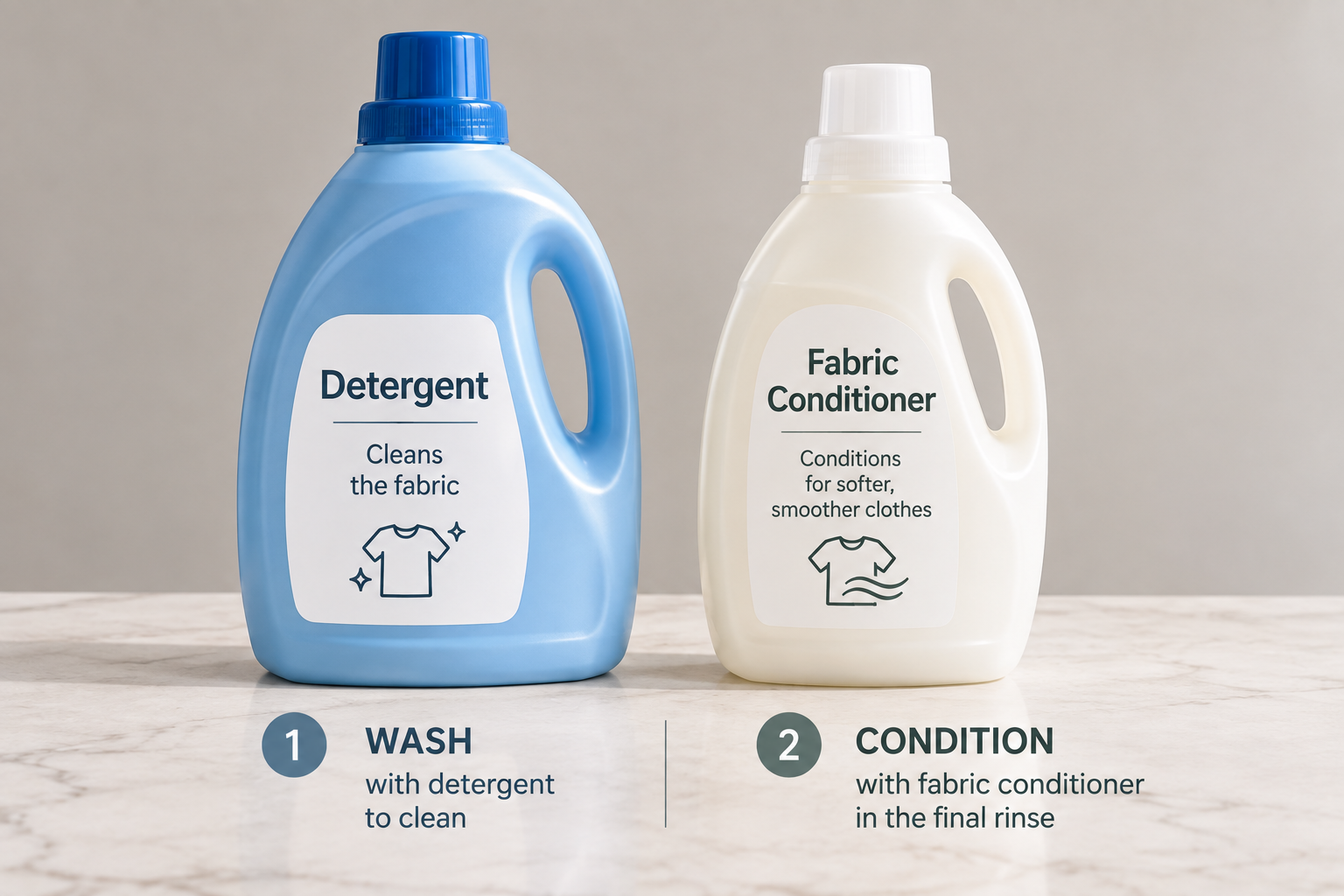
Fabric conditioner should not be mixed directly with detergent because the two products perform different jobs and are intended to act at different stages of the wash.
Detergent cleans the fabric. Fabric conditioner is intended to deposit conditioning material on the fabric after the detergent has been removed.
Cleaning Comes First
Complete the normal detergent wash first.
The clothes should be properly cleaned and the detergent rinsed away before the conditioning stage begins.
Once the cleaning stage is finished, fabric conditioner can be introduced as part of the final rinse.
Why Does the Sequence Matter?
The principal conditioning materials discussed in this course are cationic conditioning ingredients.
These ingredients deposit onto the fabric surface and help create the smoother, softer feel associated with conditioned fabric.
Putting detergent and conditioner together interferes with what each product is supposed to do. The conditioner is not there to help the detergent clean. Its job begins after cleaning.
Think of Shampoo and Conditioner
A useful comparison is washing your hair.
You use shampoo to clean your hair. Once the cleaning is complete, you use conditioner to improve how the cleaned hair feels.
Fabric care follows the same broad principle: cleaning and conditioning are separate jobs.
The Practical Rule
The simplest way to remember it is:
Wash first. Rinse out the detergent. Then condition the fabric.
Don’t ask fabric conditioner to clean your clothes, and don’t ask detergent to condition them. Keeping these two stages separate is one of the most important principles for using fabric conditioner correctly.
Related Fabric Conditioner guides
→ What Does Fabric Conditioner Actually Do?
→ Why Does Fabric Conditioner Need to Be Added During the Rinse Cycle?
For a broader introduction to Fabric Conditioners, its ingredients, structure, variations and formulation principles, read our complete guide: Fabric Conditioner: What It Does, How to Use It and Why Your Clothes Feel Softer.