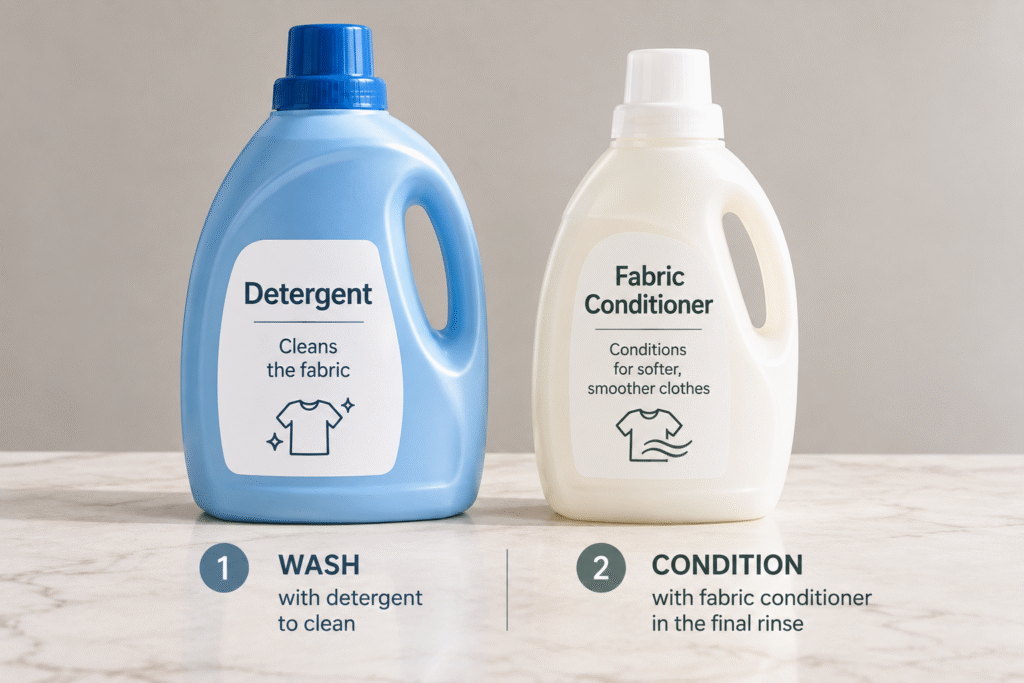
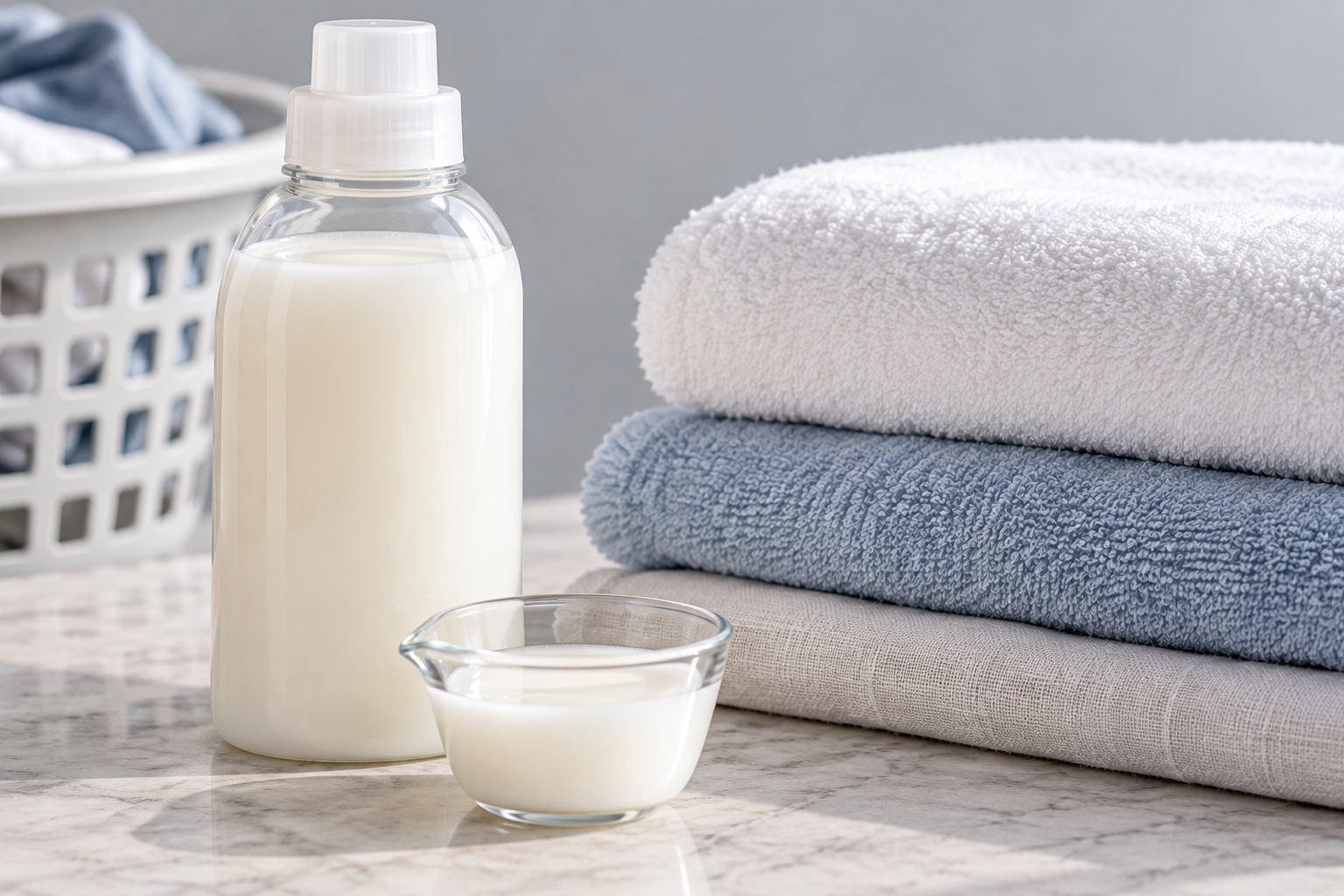
Fabric conditioner is designed to condition fabric after it has been cleaned. Its primary role is different from detergent: detergent cleans, while conditioner helps clean fabric feel softer and smoother afterwards.
Fragrance can be part of the experience, but making laundry smell good is not the fundamental purpose of fabric conditioner.
Why Does Fabric Need Conditioning?
Repeated washing exposes clothes to detergent, water, movement and friction. With hand washing, fabrics may also be scrubbed vigorously.
Over time, certain fabrics can begin to feel increasingly dry and rough. This is particularly noticeable with cotton clothing and towels.
Think of Hair Conditioner
A simple analogy is hair.
Hair can become rough or frizzy after washing and friction, which is why we use conditioner after shampooing.
Fabric conditioner performs a broadly similar role for clothes. Conditioning material deposits onto the fibres and helps the surface feel smoother.
What Changes Can You Notice?
The most obvious change is softness, particularly in things such as towels, cotton T-shirts and bedsheets.
Conditioning also reduces the friction you feel between fibres, giving fabric a smoother sensory character.
It can help repeatedly washed textiles retain a more pleasant feel, although it cannot make a genuinely worn-out garment new again.
Fabric Conditioner Is Not Detergent
The distinction is simple but important.
Detergent removes what you do not want from the fabric. Conditioner improves how the clean fabric feels afterwards.
Understanding that difference also explains why the two products belong at different stages of the wash.
Related Fabric Conditioner guides
→ Why Shouldn’t You Mix Fabric Conditioner with Detergent?
→ Can Using Too Much Fabric Conditioner Make Clothes Feel Worse?
For a broader introduction to Fabric Conditioners, its ingredients, structure, variations and formulation principles, read our complete guide: Fabric Conditioner: What It Does, How to Use It and Why Your Clothes Feel Softer.