
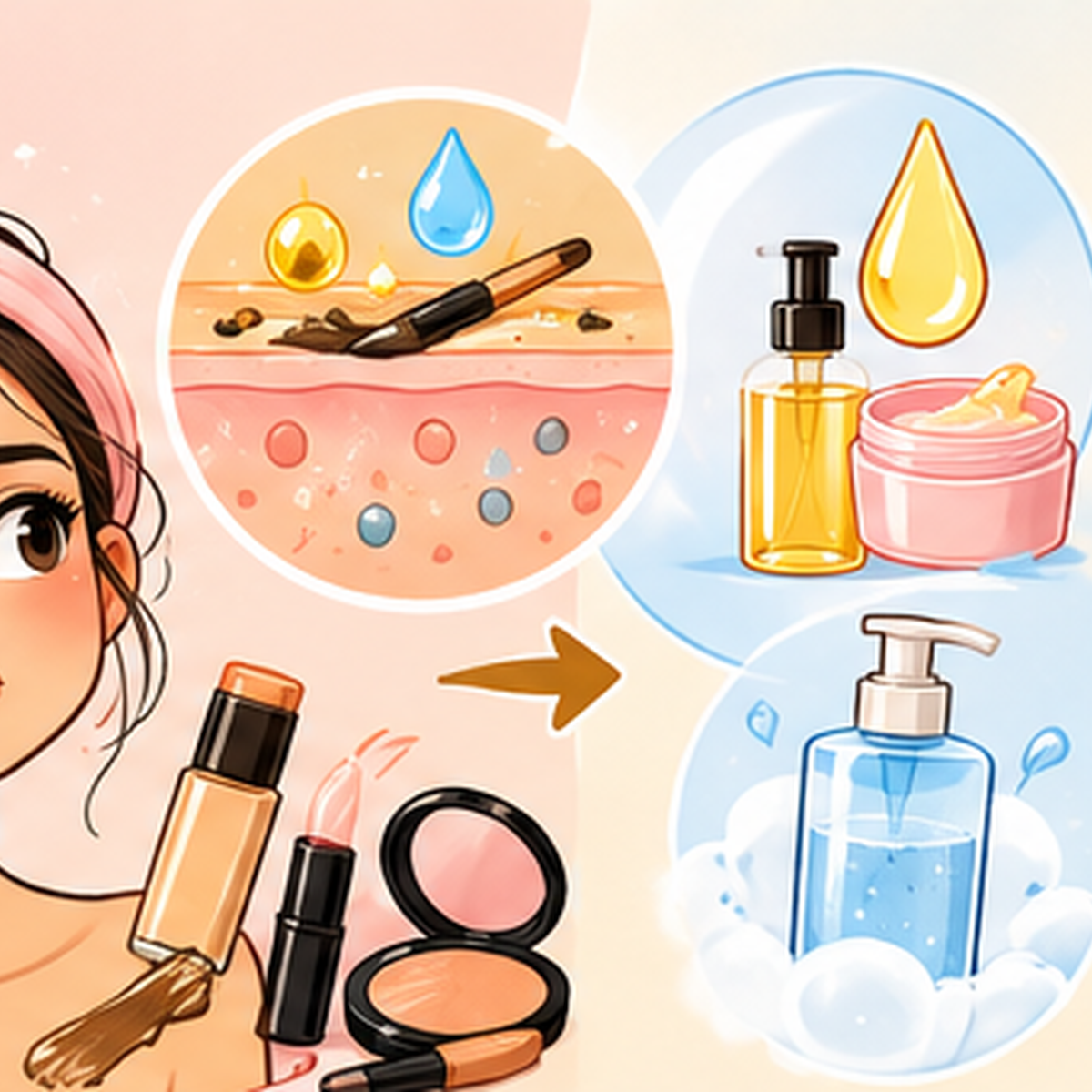
Micellar water is a very mild wipe-off cleanser for excess sebum, dust, light makeup and quick refreshing when you do not want to wash your face with water.
Micellar water is useful when the skin needs a light cleanse rather than a thorough makeup removal. It can remove excess sebum, ordinary dirt and dust, and some light makeup. It is particularly convenient when you are at home or in the office and do not want to go to the washroom, wash the face and dry it again.
What micellar water is good at
Think of it as a quick, mild cleansing option. If the face begins to look greasy or dull by lunchtime, micellar water can be used on cotton and wiped over the skin. It can also be useful before bed when the face is not heavily dirty.
The workshop described it as a handy product to keep in a handbag because it can be used without a full wash. It was also described as giving the skin a refreshed, non-sticky feel after excess oil and surface dirt have been wiped away.
What micellar water is not designed to do
It is not the first choice for several layers of makeup. A little compact, dusting powder, very light BB cream, eyeliner or eyeshadow may be within its useful range, but layered foundation and heavier makeup call for a cleanser with a stronger ability to dissolve those deposits.
That is why micellar water and cleansing oil can both be called cleansers without being interchangeable. They solve different cleansing problems.
Why the bottle may have two layers
The micellar water demonstrated in the workshop was biphasic: it had an oil phase and a water phase. When it rests, the two phases can be visible. Before use, it is shaken so the phases disperse temporarily, then the product is applied to cotton and wiped over the skin.
The oil component helps with greasy deposits, while the water phase gives the product its light, refreshing character. A small amount of surfactant supports cleansing without turning the product into a foaming face wash.
Why light oils matter in a micellar cleanser
CCTG, or caprylic/capric triglyceride, was discussed because it is very light on the skin while still helping to dissolve grease, dirt and stains. Olive squalene was also discussed for a light, matte-feeling oil character.
This matters because a quick daytime cleanser should not defeat its own purpose by leaving the face feeling heavily oily afterwards.
Should you spray micellar water and leave it on?
No. It can be put in a spray bottle if you enjoy the refreshing application, but it should still be wiped off. The purpose is to loosen and collect dirt, sebum and other deposits; once that material has been picked up, you want to remove it from the skin.
Can you use it more than once a day?
The workshop presented micellar water as mild enough for repeated refreshing during the day when needed. The practical use case was not repeated heavy cleansing, but quick removal of excess oil and light surface deposits.
The practical takeaway
Micellar water is most useful when convenience and mild cleansing matter more than maximum makeup-removing power. Shake a biphasic product, apply it to cotton, wipe the skin, and treat it as a quick cleanser rather than as a substitute for every other cleanser.
Related Guides
Facial Cleansers Explained: Types, Ingredients, Usage and Common Questions
See where micellar water fits alongside face wash, cleansing oils, balms, milks and powder cleansers.
Read the guide
Can Face Wash Remove Makeup? When to Use a Cleansing Oil or Balm Instead
Understand why a mild cleanser may not be enough for several layers of makeup and when an oil-based cleanser makes more sense.
Read the guide
Do You Need to Wash Your Face After Using Cleansing Oil, Balm, Milk or Micellar Water?
Learn why micellar water should be wiped off and whether you need to follow it with face wash.
Read the guide
Explore Facial Cleansers
Browse all our educational guides and articles on facial cleansing.
Visit the Facial Cleansers Learning Hub