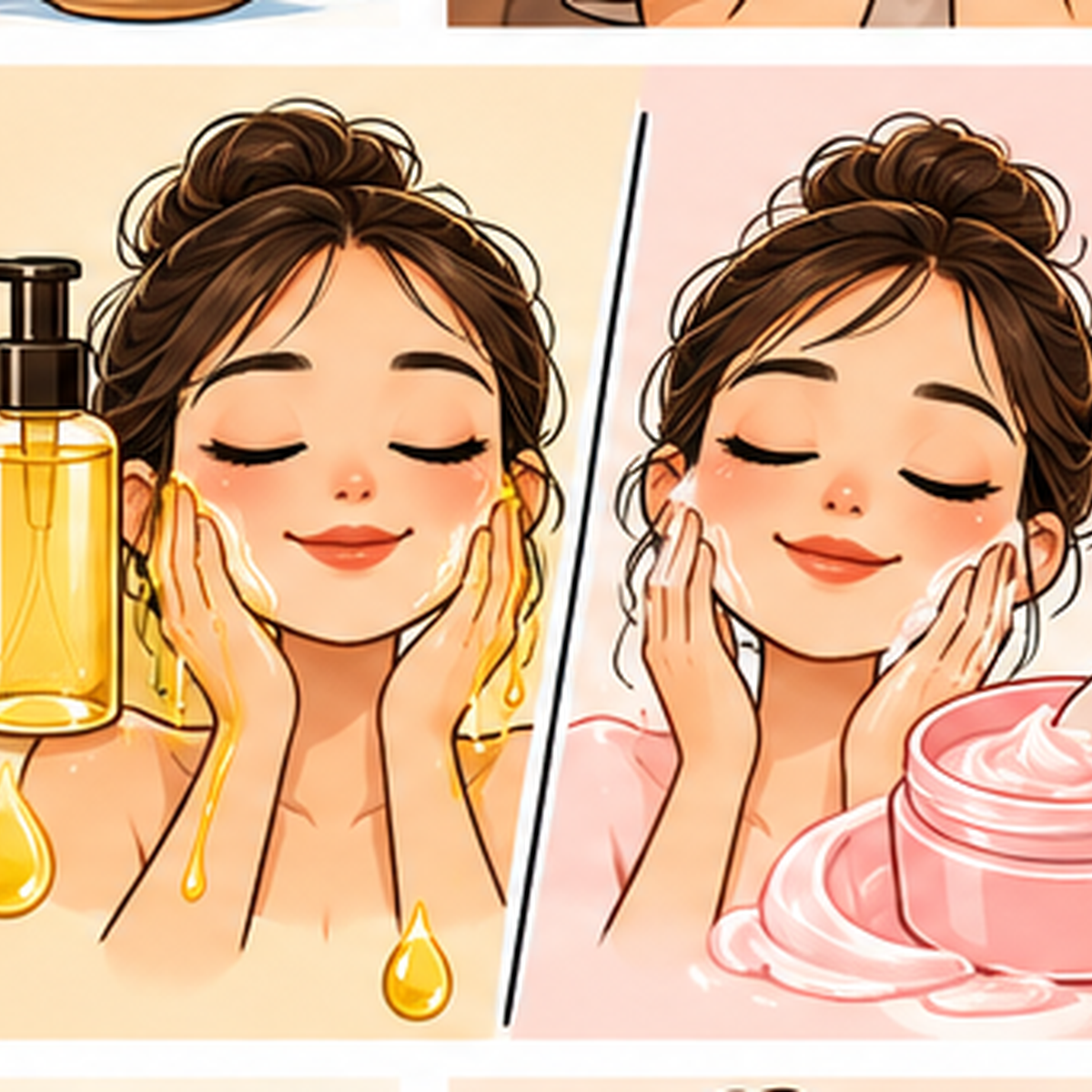
Both cleansing oil and cleansing balm are oil-based makeup-removing cleansers. The main difference is format and after-feel: one is fluid, while the other is a soft balm built from oils, waxes and structuring ingredients.
Cleansing oil and cleansing balm work on the same broad idea: oily cleansing materials help dissolve makeup, sebum and other deposits that a mild face wash may not remove easily. The difference is mainly how the product is presented and how it feels during and after use.
Cleansing oil: fluid and easy to spread
A cleansing oil is a liquid oil-based cleanser. It spreads quickly over a small area, which makes it especially convenient for kajal, eyeliner, eyeshadow, mascara and other makeup that you do not want to scrub repeatedly.
The workshop emphasized lighter-feeling oils because the goal is to dissolve makeup without leaving an unnecessarily heavy coating. CCTG was used for its very light feel, and argan and grapeseed oils were discussed as lighter natural-oil options.
Hydrogenated castor oil was discussed for helping reduce the remaining greasy feel when the cleanser is wiped away. In practical terms, the cleansing oil is meant to lift oily material and then leave the skin comfortable rather than coated.
Cleansing balm: the same cleansing idea in a soft solid format
A cleansing balm is soft enough to pick up with the fingers but structured enough to remain a balm in the container. Once it is massaged over the skin, it spreads through the makeup and helps dissolve strongly adhering colour products.
The workshop used light oils together with waxes and structuring ingredients to create this texture. Candelilla wax was discussed as a vegan wax option. The important public distinction is not the recipe; it is that the waxes and thickeners change the physical form while the oils continue to do the cleansing work.
Which one removes heavy makeup better?
Both were taught as strong options for makeup removal. The balm was demonstrated on intense colour and transfer-resistant makeup and dissolved it very quickly. The oil was also presented as particularly easy for eye makeup and daily makeup removal.
So the choice does not have to be framed as one being universally better. If you prefer a fluid product, cleansing oil is the obvious format. If you enjoy a richer balm that melts over the skin, cleansing balm may be more appealing.
What about oily or dry skin?
The balm was discussed as suitable for dry skin and also usable on oily skin if the person is comfortable with the after-feel. The oil format can feel lighter, especially when lighter oils are chosen.
The practical test is how the skin feels after wiping. A balm may leave a little more shine. If that does not bother you, you can stop there. If you want a completely matte, washed feeling, you can follow with face wash.
Do you need both?
No. The workshop repeatedly emphasized that an individual does not need every cleanser format. Cleansing oil and cleansing balm overlap strongly in purpose. Choose the format you enjoy using and pair it with another cleanser only if your routine actually needs it.
The useful distinction
Cleansing oil is the fluid version of oil-based cleansing; cleansing balm is the structured, balm-like version. Both are most valuable when you need to dissolve makeup or oily deposits with less rubbing than a mild face wash would require.
Related Guides
Facial Cleansers Explained: Types, Ingredients, Usage and Common Questions
Understand where cleansing oils and balms fit among the different types of facial cleansers.
Read the guide
Can Face Wash Remove Makeup? When to Use a Cleansing Oil or Balm Instead
Learn why oil-based cleansers can make layered and strongly adhering makeup easier to remove.
Read the guide
Do You Need to Wash Your Face After Using Cleansing Oil, Balm, Milk or Micellar Water?
Find out whether cleansing oil or balm needs to be followed by face wash and how after-feel influences the choice.
Read the guide
Explore Facial Cleansers
Browse all our educational guides and articles on facial cleansing.
Visit the Facial Cleansers Learning Hub