
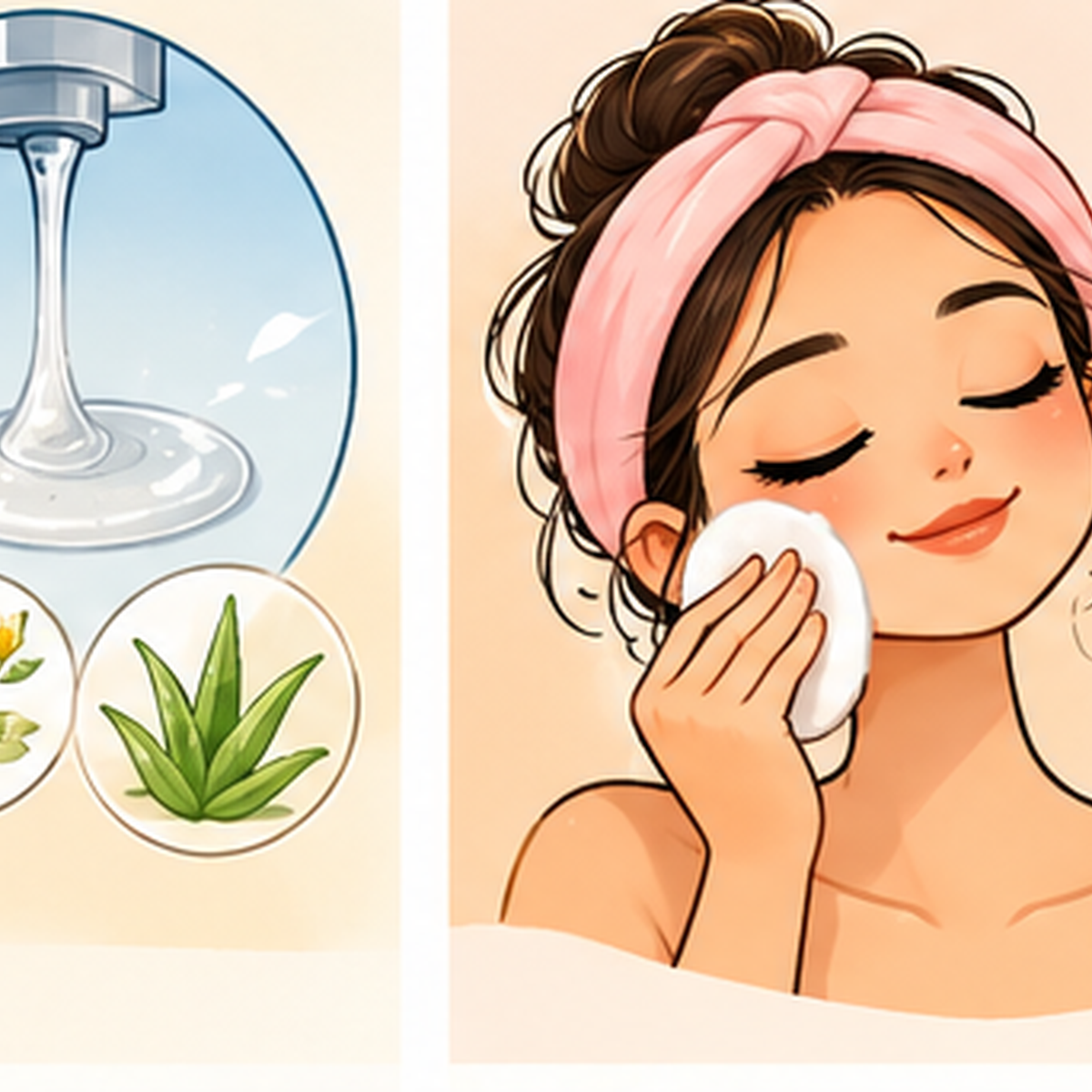
Usually, no second wash is required after a wipe-off cleanser in the workshop approach. But the cleanser must still be wiped away; ‘wipe-off’ does not mean applying it over dirt and leaving everything on the skin.
Cleansing oil, cleansing balm, cleansing milk and micellar water were all taught as wipe-off cleansers. After they have loosened sebum, dirt or makeup, that material is removed with cotton, tissue or a suitable wet cloth depending on the product.
Once the cleanser and loosened deposits have been wiped away, you do not automatically need to follow with face wash. Whether you do so can depend on the finish you prefer.
The key distinction: leave after wiping, not leave without wiping
This was clarified directly in the student questions. A wipe-off cleanser should not simply be applied and left sitting together with the dirt it has loosened. The wiping step is part of the cleansing.
Micellar water makes the distinction especially clear. It can be sprayed for a refreshing feel, but it should then be wiped off because its job is to pick up oil and dirt. Spraying it like a toner and leaving the loosened deposits on the face misses the point of the product.
After cleansing oil
Cleansing oil can be used for makeup removal or ordinary night cleansing and then wiped away. The workshop explicitly stated that a face wash is not necessary afterwards if the skin feels comfortable.
The formulation discussed was designed to reduce the greasy after-feel, so the goal was not to leave the face heavily oily.
After cleansing balm
A balm can leave a little more shine after wiping because of its rich oil-and-wax character. If you like that moisturized feel, you can leave the skin as it is and continue with your night routine. If the remaining shine bothers you, you can follow with face wash.
After cleansing milk
Cleansing milk is massaged over the face and wiped away. It contains both oil and water and was demonstrated as leaving a much more matte finish than a rich balm. After wiping, the workshop approach was that you could apply night cream or simply leave the skin bare without another wash.
After micellar water
Micellar water is also a wipe-off cleanser. Apply it to cotton, or spray if you prefer, then wipe. A separate rinse with face wash is not required simply because the product contains a cleansing agent.
Which cleansers do need water?
Face wash and herbal powder cleanser were the two formats specifically treated as wash-with-water cleansers. They are used as part of a rinse-off cleansing routine rather than as wipe-off products.
The practical takeaway
Do not confuse ‘no second wash needed’ with ‘no removal needed.’ Oil, balm, milk and micellar water still need the wiping step that takes the loosened dirt away. After that, a face wash is optional for the wipe-off formats and is mainly a matter of the finish you prefer.
Related Guides
Facial Cleansers Explained: Types, Ingredients, Usage and Common Questions
Compare rinse-off and wipe-off facial cleansers and understand when each format makes sense.
Read the guide
Cleansing Oil vs Cleansing Balm: What’s the Difference?
Understand how cleansing oils and balms differ in physical format, skin feel and the finish they can leave after wiping.
Read the guide
What Is Micellar Water and When Should You Use It?
Learn how micellar water is used as a mild wipe-off cleanser for excess sebum, dust and light makeup.
Read the guide
Can Face Wash Remove Makeup? When to Use a Cleansing Oil or Balm Instead
Understand when a mild face wash is enough and when an oil-based cleanser can make makeup removal easier.
Read the guide
Explore Facial Cleansers
Browse all our educational guides and articles on facial cleansing.
Visit the Facial Cleansers Learning Hub