
Lipstick Making: Learn About Types, Ingredients, Texture and Common Problems
Lipstick may look like a simple colour cosmetic, but its texture, glide, strength, colour payoff and final finish depend on how different components work together.
This is the main Lipstick Learning Hub from ZestChest Institute, created as a central resource for understanding lipstick making. From here, you can explore detailed guides covering lipstick types, pigments, mica, texture, bullet strength, vegan lipstick, natural colour options and common lipstick problems. Each guide focuses on one specific topic so you can understand lipstick formulation concepts step by step.
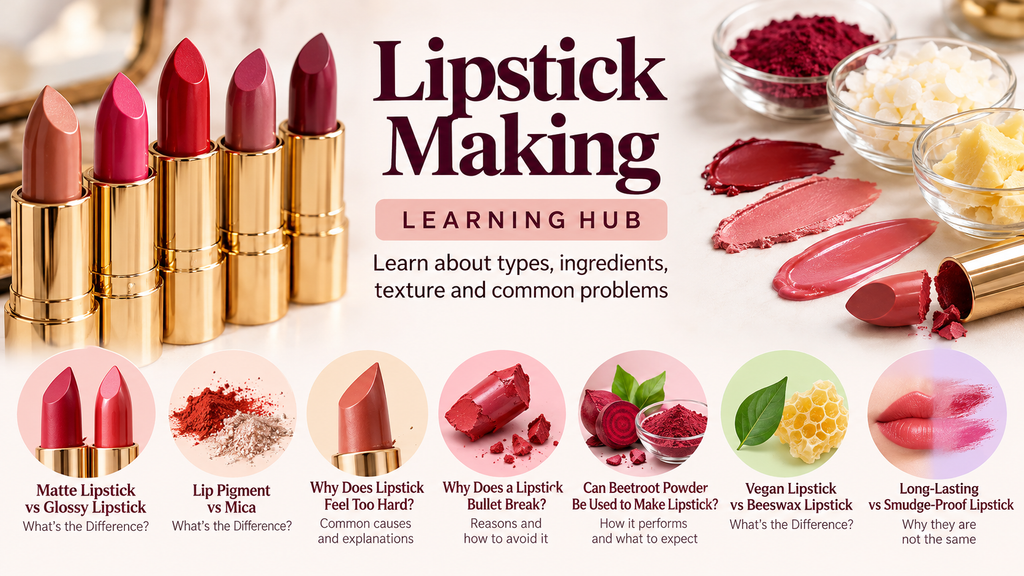
This is the main Lipstick Learning Hub from ZestChest Institute, created as a central resource for understanding lipstick making. From here, you can explore detailed guides covering lipstick types, pigments, mica, texture, bullet strength, vegan lipstick, natural colour options and common lipstick problems. Each guide focuses on one specific topic so you can understand lipstick formulation concepts step by step.
A good lipstick needs enough structure to hold its shape while still applying smoothly on the lips. The colour should spread evenly, the bullet should have suitable strength, and the finished product should have the texture and finish expected from that particular type of lipstick.
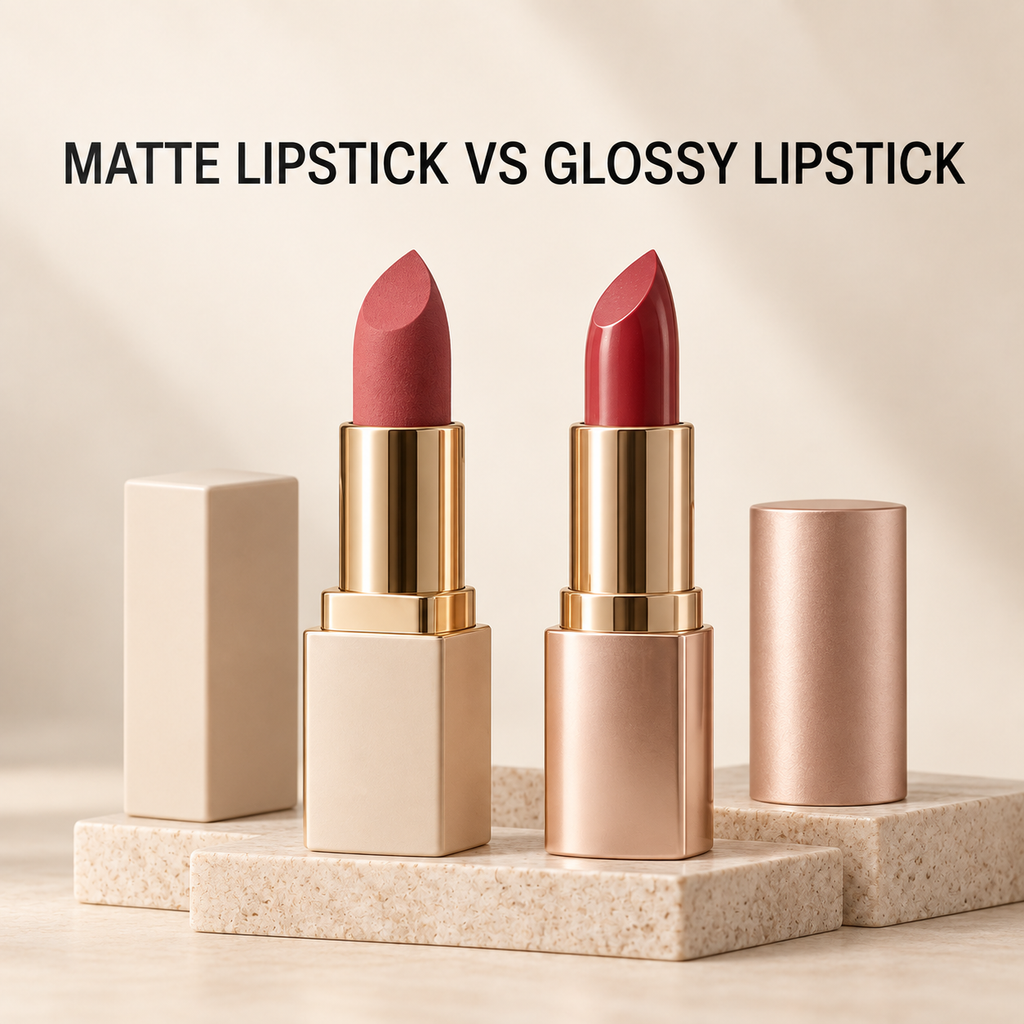
Matte Lipstick vs Glossy Lipstick
Matte and glossy lipsticks may use similar groups of ingredients, but their texture and finish can be very different.
Matte lipstick is generally firmer, less oily and has less shine. Glossy lipstick is usually softer, more emollient and creates a shinier finish.
The difference is therefore not simply about colour. Texture, softness, glide and wear also change depending on the type of lipstick.
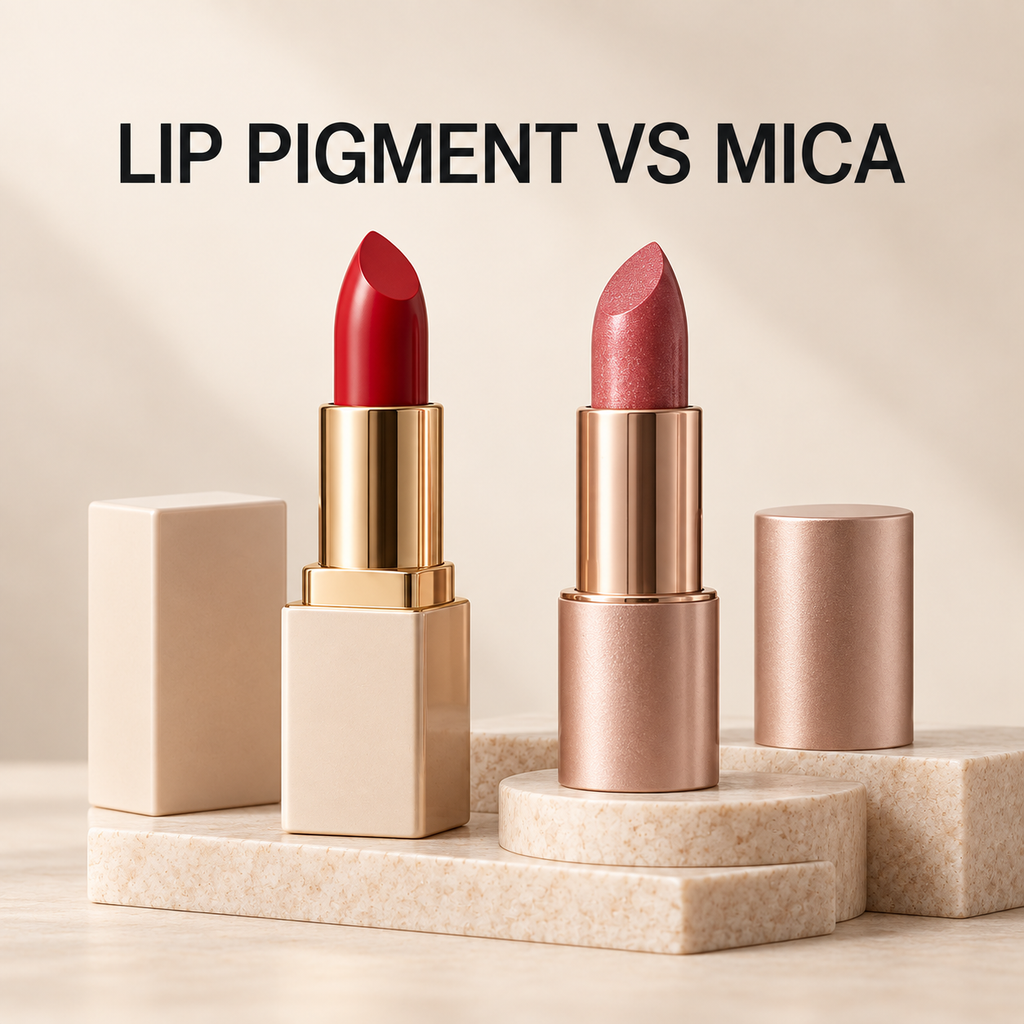
Lip Pigment vs Mica
Lip pigment and mica do not perform the same function in lipstick.
Lip-safe pigments are mainly responsible for providing strong colour.
Mica is used more for shine, pearliness and special visual effects. It generally contributes less actual colour than pigment.
Both can be present in the same lipstick, but they serve different purposes.
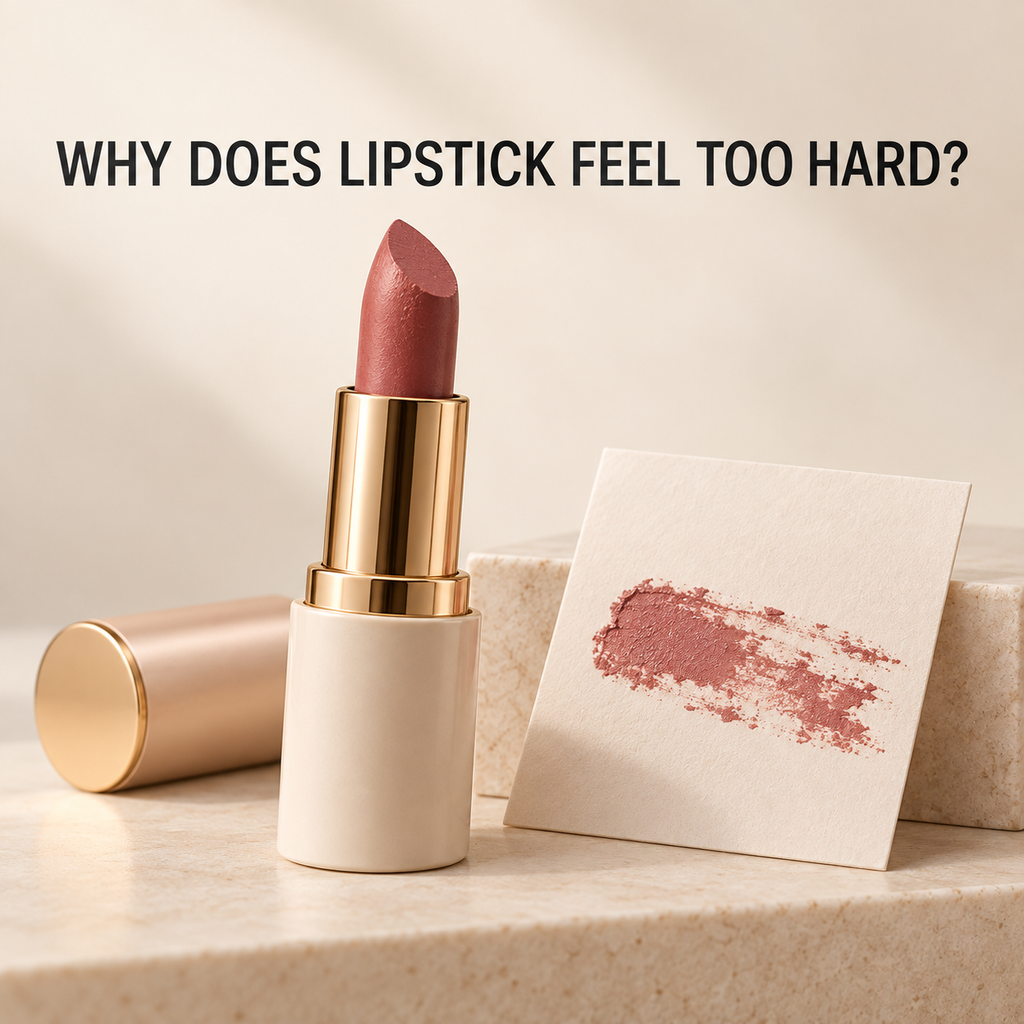
Why Does Lipstick Feel Too Hard or Not Glide Properly?
A lipstick needs structure so that the bullet can remain firm inside its tube.
However, lipstick can also become excessively hard.
When this happens, it may drag during application or fail to transfer colour smoothly onto the lips.
Waxes contribute structure, while oils, butters and other emollient ingredients contribute slip and creaminess.
A good lipstick therefore needs the right balance between firmness and glide.
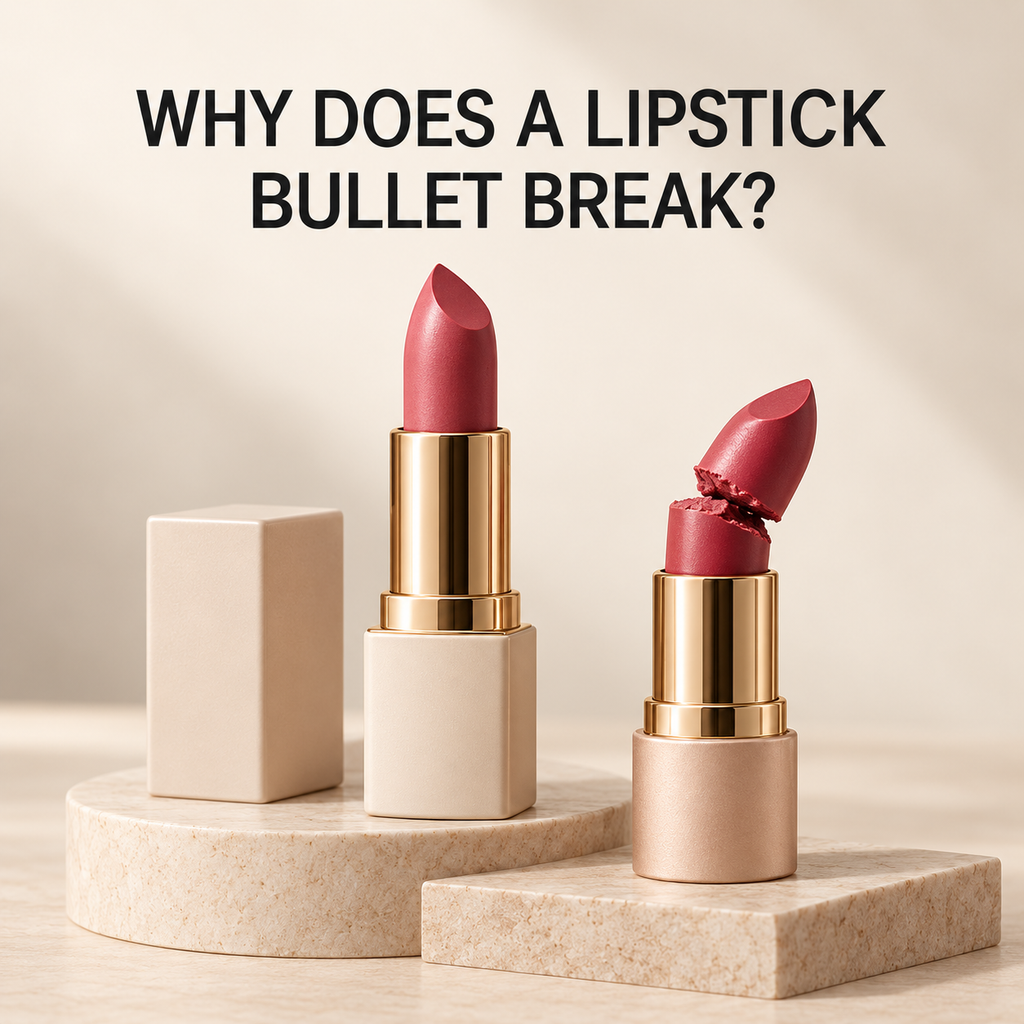
Why Does a Lipstick Bullet Break During Application?
A lipstick bullet should have both strength and some flexibility.
If a lipstick is excessively brittle, it may break more easily.
Application technique can also contribute to breakage. Twisting too much of the lipstick bullet out of the tube creates more leverage and can make the exposed portion easier to break.
Only a small portion of the lipstick needs to be exposed during normal application.
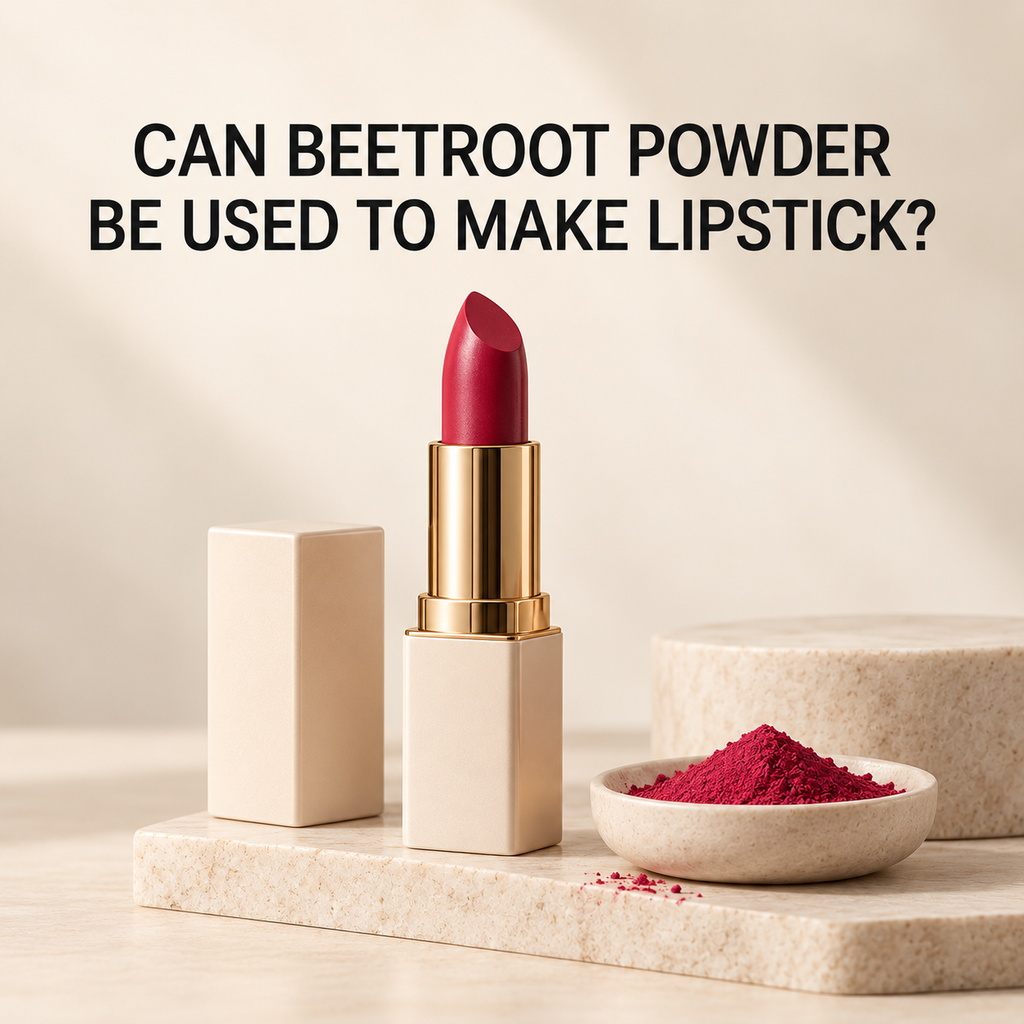
Can Beetroot Powder Be Used to Make Lipstick?
Beetroot powder is often associated with naturally coloured lip products.
However, beetroot powder does not behave in the same way as a strong lip-safe pigment.
It may provide a mild tint, but the colour is generally much lighter than the intensity normally expected from conventional lipstick.
Beetroot powder may also contribute to a grainy feel depending on how it is incorporated.
This is why the visible colour of a beetroot lip product does not necessarily come entirely from beetroot.
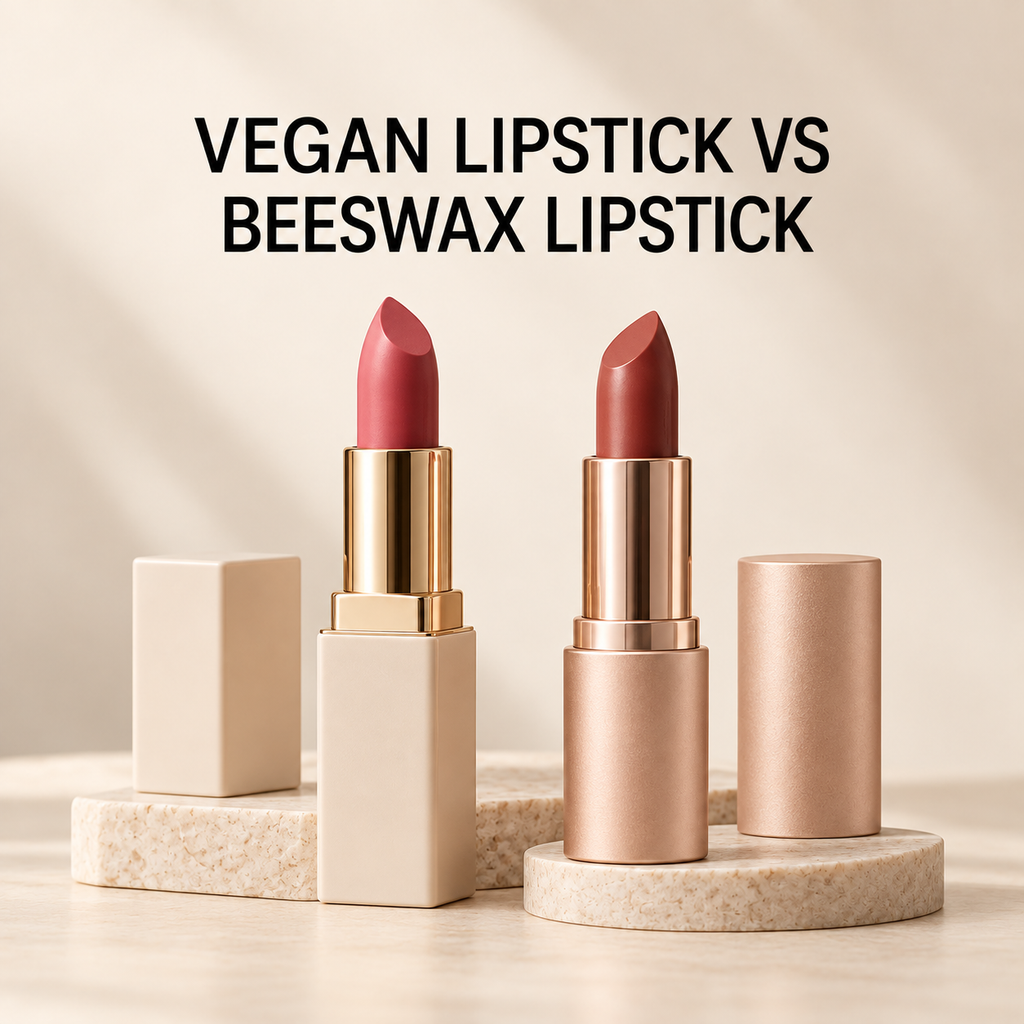
Vegan Lipstick vs Beeswax Lipstick
Waxes are important in lipstick because they provide structure to the bullet.
Beeswax contributes firmness while also providing some flexibility. However, because beeswax comes from bees, it is not suitable for a vegan lipstick.
Plant-based waxes such as carnauba wax and candelilla wax can be used in vegan lipstick systems.
These waxes behave differently, which means creating a vegan lipstick involves more than simply removing beeswax.
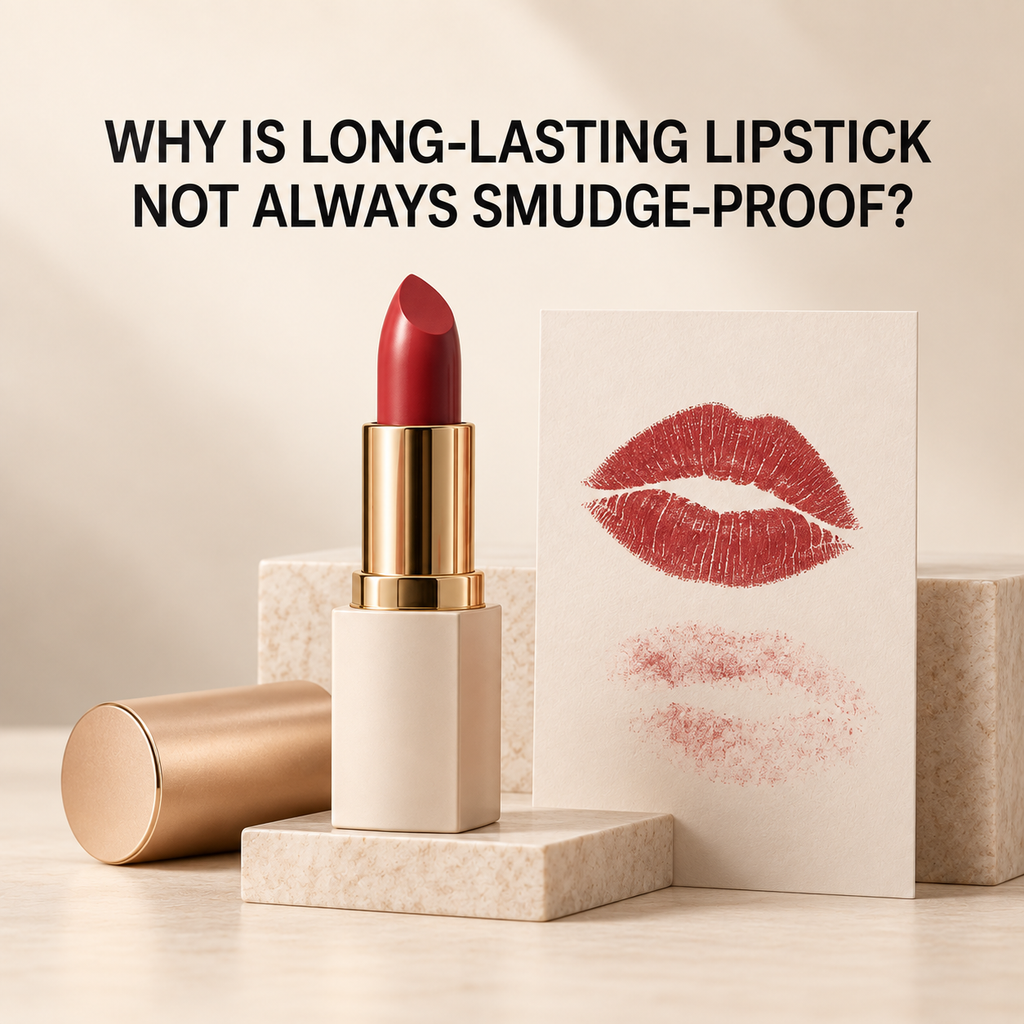
Why Is Long-Lasting Lipstick Not Always Smudge-Proof?
Long-lasting and smudge-proof are often used as if they mean the same thing, but they describe different properties.
A lipstick may remain visible on the lips for a long time while still transferring when the lips touch another surface.
Pigment provides colour, but stronger colour alone does not automatically make lipstick transfer-proof.
Oils and emollients help create softness and glide, but they can also influence how easily lipstick transfers.
What Makes a Good Lipstick?
When evaluating a lipstick, colour is only one part of the finished product.
A good lipstick should have a suitable balance of:
Structure
Glide
Creaminess
Colour transfer
Uniform application
Strength
Flexibility
Comfortable feel
Suitable matte or glossy finish
A lipstick can look beautiful inside the tube but perform poorly if it drags across the lips.
Another lipstick may glide very easily but become too soft or greasy.
Lipstick formulation is therefore about balancing several different characteristic
Lipstick Making Course
Lipstick becomes easier to understand when you look at the function of each ingredient group rather than thinking of it simply as wax, oil and colour.