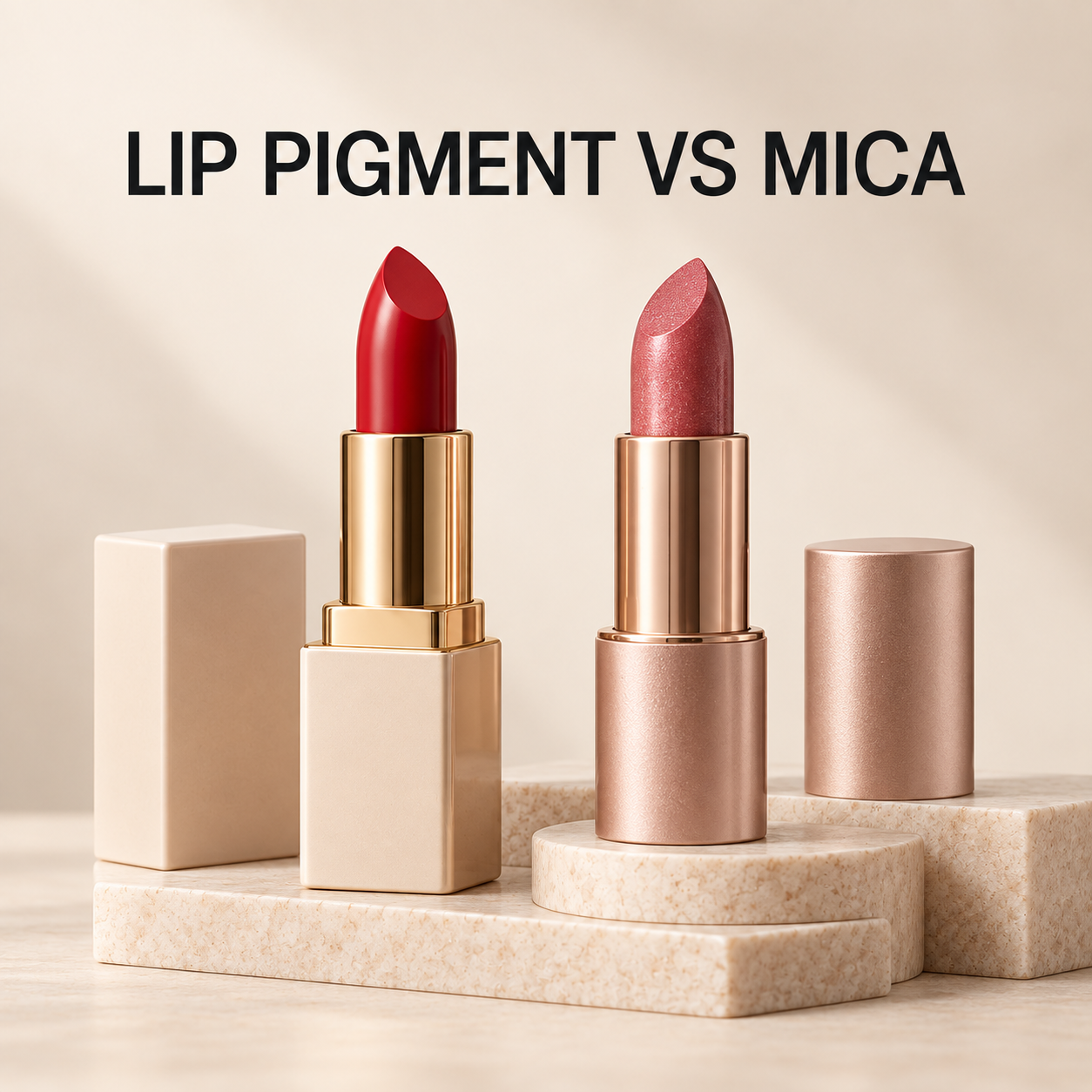
Pigment and mica are both used to change the appearance of lipstick, but they do very different jobs.
Understanding this difference is one of the most important parts of understanding lipstick colour.
What Does Lip Pigment Do?
Lip pigment provides the main colour.
It creates stronger shades and gives the visible stain associated with reds, pinks, browns, maroons and other lipstick colours.
For lip products, the colour should be specifically suitable for lip use rather than being a random colour intended for another type of product.
What Does Mica Do?
Mica is mainly used to create:
- shine
- pearliness
- shimmer
- special visual effects
Mica can have colour, but it normally does not create the same intensity as a strong lip pigment.
A lipstick made mainly with mica may look very shiny in the tube but leave only a subtle tint on the lips.
Can Mica and Pigment Be Used Together?
Yes.
Using the two together can create stronger colour with some shine.
However, there is an important practical observation: as stronger pigment is introduced, the visible pearliness of mica can become less noticeable.
This means adding more mica does not necessarily guarantee a highly pearly result if a strong opaque pigment is dominating the shade.
Is Shine the Same as Sparkle?
No.
Shine gives an overall glossy or pearly appearance.
Sparkle looks more like visible glitter.
A lipstick can have a beautiful sheen without looking glittery.
Why Does This Matter When Choosing a Lipstick?
If you want a strong red, pink, brown or maroon, you are looking mainly for pigment-driven colour.
If you want a subtle shiny lipstick with less visible colour, mica can play a bigger role.
This distinction is also useful when creating mild lip products or gloss-like finishes.
Key Takeaway
Think of it simply:
Pigment gives colour.
Mica gives effect and shine.
They can be combined, but they are not interchangeable.